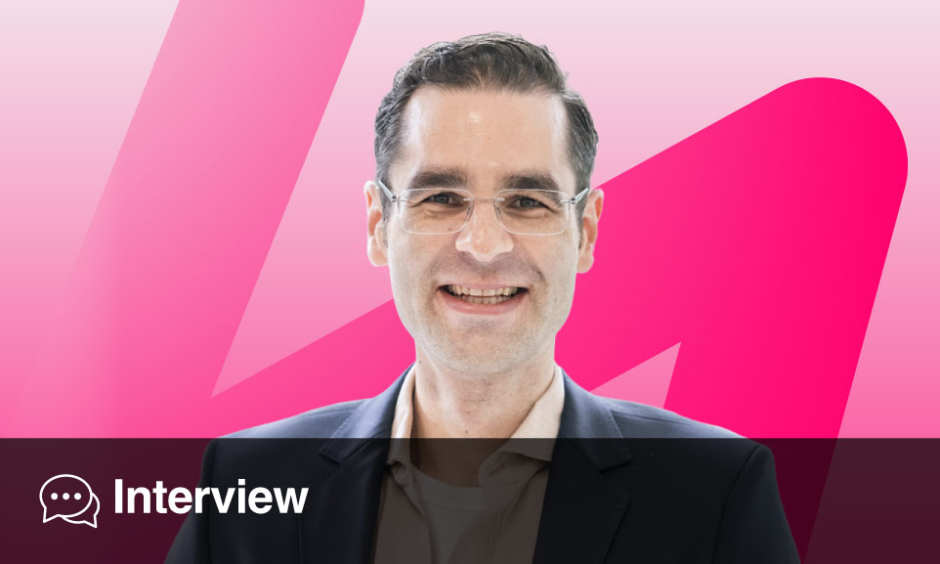
Felix Mahfoud | Professor of Cardiology, University of Basel; Chairman, Department of Cardiology, University Hospital Basel, Switzerland; Councillor (2024–2026), Board of the European Society of Cardiology (ESC); Chair (2024–2026), Communication Committee, ESC; Chair (2024–2026), Scientific Documents Committee, European Association of Percutaneous Cardiovascular Interventions (EAPCI)
Citation: EMJ Cardiol. 2026;14[1]:66-68. https://doi.org/10.33590/emjcardiol/41L08N36

The European Society of Cardiology (ESC) Congress continues to grow in both scale and international reach. What do you think makes the meeting such an important event for the global cardiovascular community?
I think what makes the ESC Congress unique is the combination of science, education, and a truly global cardiovascular community. For a few days, we bring together clinicians, scientists, nurses, allied professionals, patients, industry, and policymakers from around the world. We see new clinical trials, new guidelines, and new technologies, but what is equally important is the opportunity to discuss what these findings actually mean for our patients. Cardiovascular medicine is evolving incredibly quickly, and no individual can keep up with everything. The ESC Congress provides a place where we can discuss the science together, challenge it, and ultimately translate it into better cardiovascular care for our patients.
You are board-certified across several specialties, including internal medicine, cardiology, intensive care, emergency medicine, and hypertension. How has this broad clinical background shaped your approach to patient care and research?
It has taught me that cardiovascular disease rarely exists in isolation. Patients with heart failure, for example, very often also have renal dysfunction, hypertension, metabolic disease, and arrhythmias, or require intensive care. Understanding these interactions and instances of organ crosstalk should impact how we think about both clinical medicine and research. My own research has increasingly focused on these connections, particularly the interaction between the cardiovascular system, kidneys, autonomic nervous system, metabolism, and inflammation. Ultimately, patients do not come to us divided into specialties. They come with complex diseases, and our responsibility is to understand the whole patient.
Without giving away too many surprises, which scientific themes or areas of research do you expect will generate the greatest interest and discussion during the Congress?
There will obviously be important late-breaking clinical trials. But several broader themes are particularly exciting. One is the continuing transformation of cardiovascular medicine through AI. We will also see continued innovation in cardiometabolic therapies, structural and interventional cardiology, heart failure, hypertension, electrophysiology, imaging, and digital medicine. And increasingly, the question is not only whether a therapy works, but which individual patient should receive which treatment, at what time, and how we implement it effectively in clinical practice.
When attendees leave the ESC 2026 Congress, what do you hope they will take away from the meeting, and what would you most like the cardiovascular community to focus on in the years ahead?
I hope people leave the ESC Congress with new knowledge, new ideas, and new friends, but also with something they will change in their clinical practice when they return home. We have made extraordinary progress in cardiovascular medicine. But there remains a substantial gap between what we know from clinical trials and guidelines and what patients actually receive. One of our major priorities must be focused on implementation: better prevention, earlier diagnosis, appropriate use of evidence-based therapies, and equitable access to cardiovascular care. The next major improvement in cardiovascular outcomes will not come from innovation alone. It will come from combining innovation with effective implementation at scale.
In your role as Chair of the ESC Communication Committee, how have you seen the way cardiovascular science is communicated evolve in recent years?
The biggest change is probably speed. Twenty years ago, scientific communication was largely centred around journals and congress presentations. Today, a major trial can be presented at the ESC Congress, and, within minutes, it is being discussed globally across digital and social media. That is a tremendous opportunity. Scientific knowledge has become much more accessible and the discussion much more inclusive. But speed also creates responsibility. Fast communication must not become superficial. We need to preserve context, uncertainty, methodological quality, and appropriate interpretation. For scientific societies such as the ESC, our role is therefore increasingly to help people not only access information, but also to understand what that information means and serve as a valued and trusted resource.
The volume of scientific data being published continues to grow rapidly. How can clinicians identify and focus on the evidence that is most likely to influence practice?
This is becoming one of the central challenges in medicine and beyond. We need to distinguish between information and evidence. Not every statistically significant result is clinically important, and not every extensively discussed study should change practice. I would ask a few relatively simple questions: was the study well designed? Was the comparator appropriate? Are the endpoints clinically meaningful? Is the effect sufficiently large and robust? Is it applicable to the patients that I treat? And is it consistent with the totality of the evidence? This is also why high-quality guidelines, systematic reviews, and critical scientific discussion remain so important. They help clinicians move from an individual publication to an assessment of the entire evidence base. I am sure that AI-based platforms will soon help clinicians to identify relevant studies.
What qualities separate evidence that leads to meaningful changes in clinical practice from findings that attract interest but prove less impactful over time?
Practice-changing evidence usually has three characteristics: it is robust, clinically meaningful, and reproducible. The strongest studies answer an important clinical question with rigorous methodology and endpoints that matter to patients, such as mortality, morbidity, symptoms, quality of life, or meaningful healthcare utilisation. The magnitude of benefit also needs to be considered together with safety, feasibility, and costs. And, importantly, practice rarely changes because of a single p value.
Social media has become an important platform for discussing new research. What opportunities and challenges do social media platforms present for scientific societies such as the ESC?
The opportunity is enormous. Social media allows scientific societies to communicate rapidly, globally, and directly with HCPs, but also with patients and the public. But the characteristics that make social media powerful also create risks. Complex issues can be reduced to a headline, preliminary findings can be overinterpreted, and opinions can sometimes travel faster than evidence. Our challenge is therefore not to avoid social media, but to use it responsibly: to be fast and trusted.
Misinformation remains a challenge across many areas of healthcare. What responsibility do scientific organisations have in combating misinformation and promoting trustworthy evidence?
I think scientific organisations have a very significant responsibility because trust is fundamental to medicine. We need to communicate reliable evidence in a way that is understandable, transparent, timely, and accessible. As science evolves, recommendations may change when novel evidence becomes available. Organisations such as the ESC can provide something particularly valuable: independent scientific expertise combined with rigorous evaluation of evidence.
Looking ahead to the next decade, how do you expect scientific communication in cardiology to change, and what should the next generation of cardiologists do now to prepare for that future?
Scientific communication will become faster, more digital, more visual, more interactive, and increasingly supported by AI. AI will help us search, translate, and personalise the enormous amount of scientific information. The next generation of cardiologists therefore needs two complementary skills. They must understand how to use new technologies, but they must also understand the methods and outcomes to recognise bias and uncertainty. And, perhaps most importantly, they need to learn how to communicate complex science simply without oversimplifying it. But the major responsibility will remain the same: to turn reliable scientific evidence into better care for our patients.