Abstract
Women make up nearly half of all people living with cardiovascular disease, yet they remain underrepresented in the trials that set diagnostic thresholds, dosing regimens, and treatment algorithms. This narrative review, built on a targeted search of PubMed, the JAMA Network, and regulatory databases through July 2026, examines that gap through a bioethical lens rather than an epidemiological one. Existing state-of-the-art reviews have documented the scale of underrepresentation in detail. What has not been done systematically is testing that evidence against the four principles of biomedical ethics (autonomy, beneficence, nonmaleficence, and justice), and extending the same framework to the algorithmic tools now being trained on decades of sex-imbalanced data. That persistent underrepresentation, where it lacks scientific justification, constitutes a multidimensional bioethical problem rather than a purely methodological one. This article reviews the biological, structural, and regulatory drivers of the gap, the pharmacokinetic and pharmacodynamic consequences of sex-based evidence deficits, the regulatory arc from the FDA’s 1977 exclusion guidance to the 2024 Diversity Action Plans, and the emerging risk that AI-driven cardiovascular tools, trained on that same imbalanced evidence, could encode and scale it further. Meaningful progress has occurred, particularly in heart failure, hypertension, and obesity trials, but coronary heart disease, acute coronary syndrome, and arrhythmia trials remain well below proportional representation. Closing the gap requires treating sex as a cardinal biological variable in trial design, powering, and reporting, not merely as an issue of meeting enrolment quotas.
Key Points
1. Women comprise nearly half of all cardiovascular disease patients, yet historical trial underrepresentation and data gaps hinder accurate clinical risk estimation and treatment guidelines.2. This narrative review evaluates sex representation across major cardiovascular trials through a biomedical ethics framework, assessing the downstream risk of algorithmic bias in medical AI.
3. Addressing the cardiovascular evidence gap requires treating sex as a cardinal biological variable in trial design, mandating disaggregated reporting, and holding AI models to strict representativeness standards.
INTRODUCTION: WHAT THIS REVIEW ADDS
Evidence-based medicine rests on the assumption that trial populations resemble the patients who will later receive the treatment. For most of the modern history of cardiovascular research, that assumption did not hold for women. Several recent reviews, most notably the state-of-the-art Burgess et al.1 analysis, have already catalogued the scale of the problem: eligibility barriers, recruitment gaps, and the clinical consequences that follow.1,2 This review does not attempt to re-establish that case. Its contribution is narrower, and still missing from the literature: it is a systematic application of the four principles of biomedical ethics to the evidence now available on cardiovascular trials, paired with an extension of that same framework to the algorithmic tools trained on the resulting data. To the authors’ knowledge, no prior publication has combined these two analyses. Effort has been made to hold two things in view at once: real regulatory and enrolment progress over the past decade, and the gaps that remain, rather than treating the picture as static.
A 2025 systematic review of 1,079 cardiovascular trials registered on ClinicalTrials.gov between 2017–2023 found that women accounted for 41.0% of the more than 1.39 million participants overall.2 That aggregate figure, however, conceals sharp variation by disease category.
SEX, GENDER, AND THE SCOPE OF THIS REVIEW
In accordance with the Sex and Gender Equity in Research (SAGER) guidelines, this review focuses primarily on sex, the biological and physiological differences between male and female bodies that shape drug metabolism, disease presentation, and trial-relevant endpoints, rather than gender and the social roles and identities that affect health through different mechanisms.3 Where a structural barrier is better described as gendered, such as the disproportionate caregiving burden that limits trial participation, it is stated explicitly. The distinction matters for how the argument that follows should be read. The bioethical claims rest on documented sex-based physiological and epidemiological differences, not on assumptions about gender identity or social role, even though the two intersect in practice.
The authors also want to be precise about what counts as ethically unacceptable underrepresentation, since not all imbalance in enrolment reflects a violation. Following the Council for International Organizations of Medical Sciences (CIOMS) framework, the authors treated the underrepresentation as ethically problematic when at least one of three conditions held: representation was inadequate without a sound scientific justification for the imbalance (principles of justice and autonomy); eligible women did not have a fair opportunity to participate, independent of the aggregate enrolment number; or the trial, despite intending to generalise its findings to both sexes, lacked the statistical power to estimate clinically important sex-specific benefit or harm (principles of beneficence and non-maleficence).4 A trial that deliberately restricts enrolment to one sex for a biologically justified reason does not fall under this definition. Most of the cardiovascular trials discussed below do.
THE EPIDEMIOLOGICAL AND EPISTEMIC GAP
Cardiovascular disease affects men and women at similar rates overall, but manifests differently by sex. Women with ischaemic heart disease more often present with non-obstructive coronary artery disease, microvascular dysfunction, and myocardial infarction with non-obstructive coronary arteries.1,2 Takotsubo cardiomyopathy and spontaneous coronary artery dissection disproportionately affect women, and atypical symptoms, dyspnoea, fatigue, and nausea, rather than classic chest pain, contribute to delayed or missed diagnoses.5-7
Table 1 summarises the systematic review findings from Rivera et al.2 by disease category, using the participation:prevalence ratio (PPR), which is the proportion of women enrolled divided by the proportion of women with the disease in the reference population. A PPR below 0.8 indicates underrepresentation relative to disease burden; above 1.2 indicates overrepresentation.2
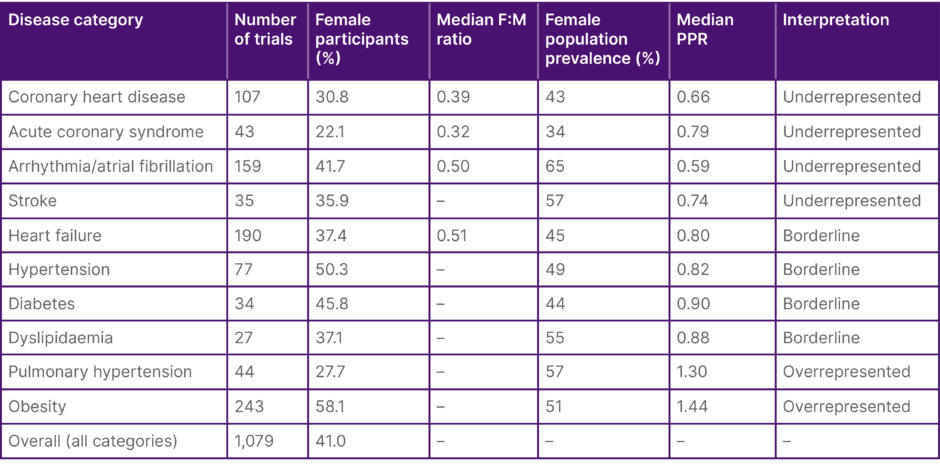
Table 1: Representation of women across cardiovascular disease categories, 2017–2023 (n=1,079 trials).2
PPR: participation:prevalence ratio.
The pattern is uneven rather than uniform. Obesity and pulmonary hypertension trials show proportional or greater representation, reflecting both higher female disease prevalence and more accessible trial designs.2 Heart failure representation has improved meaningfully, with PPR rising from roughly 0.5 in trials completed between 2010–2017, to 0.8 in the 2017–2023 window.2 Coronary heart disease, acute coronary syndrome, and arrhythmia trials remain the weakest area, with PPRs of 0.66, 0.79, and 0.59, respectively, despite these being among the conditions with the highest disease burden and mortality consequence for women.2 A frequently repeated figure, that women fall to 32% of participants in acute coronary syndrome trials, conflates two different measures: 0.32 is the median female-to-male participant ratio in acute coronary syndrome trials, not the percentage of female participants, which the same data place at approximately 22%.2 The distinction matters because the two numbers imply different magnitudes of the gap, and because precision here is part of the argument about the evidence base.
The clinical consequences of the enrolment gap are documented independently of trial-level data. Women with acute myocardial infarction are less likely to receive primary percutaneous coronary intervention (55.4% versus 68.8% in comparable settings), receive evidence-based therapies less consistently, and face higher re-admission rates.2 Fricker’s concept of testimonial injustice, the systematic discounting of a group’s experiential knowledge within institutional knowledge-generating practices, offers one useful frame for why these gaps persist even where clinicians act in good faith: the underlying evidence base was not built to register them.8
A BIOETHICAL FRAMEWORK: THE FOUR PRINCIPLES APPLIED
The framework of Beauchamp and Childress9 provides a widely used structure for evaluating research ethics, reaffirmed by the 2024 Declaration of Helsinki and the CIOMS Guidelines.4,9,10 Applied to the enrolment patterns above, each principle surfaces a distinct concern. The four principles can be described as:
- Autonomy: the respect for the self-governing choices of persons capable of intentional, informed deliberation, free from controlling interference.
- Nonmaleficence: the obligation not to inflict harm on others.
- Beneficence: the obligation to act for the benefit of others, weighing benefits against risks and costs.
- Justice: the fair, equitable, and appropriate distribution of benefits, risks, and costs across persons.
Autonomy
The Physicians’ Health Study, conducted exclusively in male physicians, generated the evidence base that guided aspirin use in primary cardiovascular prevention for decades; it found that aspirin reduced myocardial infarction risk (44% reduction in risk [relative risk: 0.56; 95% CI: 0.45–0.70]) with little non-significant effect on stroke.11 When the Women’s Health Study later tested aspirin in women, it found the opposite pattern: a significant reduction in stroke, particularly ischaemic stroke, with no effect on myocardial infarction risk, but with high risk of subarachnoid haemorrhage when aspirin was used at high doses.12 Read together, the two trials do not show that aspirin works less well in women; they show a genuinely different pattern of benefit by sex, one that women had no opportunity to weigh in on until decades after men had already been offered the choice. The FDA’s 1977 guidance recommending that exclusion of women of reproductive potential from early-phase trials, intended as protection, functioned instead as a decision made on women’s behalf rather than with their informed consent.13,14 Women were excluded, and they were never asked if they wanted to participate in the study, violating their autonomy.
Beneficence
When pivotal trials enrol predominantly male cohorts, extrapolation of the findings to women is, at best, unproven. The statin literature illustrates the pattern: early HMG-CoA reductase inhibitor trials relied on largely male cohorts, and post-marketing surveillance later identified higher rates of myopathy and new-onset diabetes in women, associations that underpowered female subgroups in the original trials could not have detected.15,16 To comply with the principle of beneficence, the drug must have evidence of efficacy; in these cases, there has been none.
Nonmaleficence
Sex differences in cytochrome P450 enzyme expression (CYP3A4, CYP2C9), body composition, plasma protein binding, renal clearance, and cardiac ion channel sensitivity translate into differences in drug metabolism and toxicity risk.16 Women experience serious adverse drug reactions at roughly 1.7 times the rate of men across cardiovascular and non-cardiovascular drug categories.16 Dosing regimens calibrated in male-dominant trials and applied unmodified to women leave clinicians working with incomplete safety information.
Justice
The 2016 CIOMS Guidelines address this directly: Guideline 3 states that categorical exclusion from research without strong scientific justification can cause or aggravate health disparities, and Guideline 18 holds that no third-party permission can substitute for a woman’s own informed consent.4 Decades of research on large-vessel atherosclerotic models, optimised for a male-predominant presentation, left diagnostic algorithms poorly calibrated for the microvascular disease and non-obstructive ischaemia more common in women.17 An unequal distribution of knowledge is unfair and inequitable.
STRUCTURAL MECHANISMS AND THE DISPARITIES THEY PRODUCE
Underrepresentation is better explained by systemic trial-design conventions than by individual investigator bias. Figure 1 summarises the main contributing factors identified in the literature.
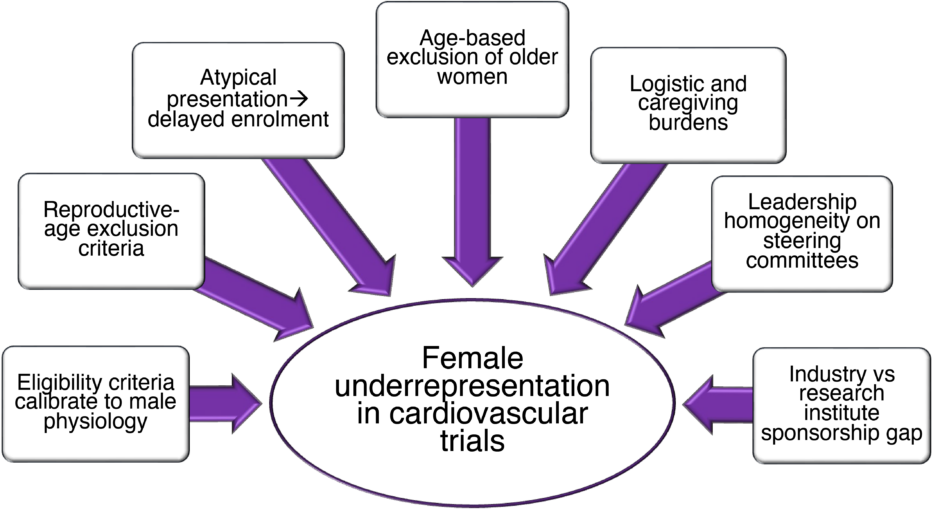
Figure 1: Structural determinants of female underrepresentation in cardiovascular trials.
vs: versus.
Eligibility criteria calibrated to younger male reference ranges, for renal function, electrocardiographic parameters, and comorbidity thresholds, have functioned as de facto exclusion instruments since the FDA’s 1977 guidance.1,2,14 Diagnostic phenotypes more common in women, myocardial infarction with non-obstructive coronary arteries and angina with non-obstructive coronary arteries presentations in particular, trigger delays that cause missed enrolment windows in acute-phase trials.1,17 Leadership composition is also a measurable factor: Burgess et al.1 found that the underrepresentation of women as trial participants correlates with the underrepresentation of women as trial principal investigators, suggesting that trial leadership composition shapes who is enrolled.1,18 Finally, logistical burdens, largely tied to caregiving responsibilities that fall disproportionately on women, make trials with rigid attendance schedules harder to complete for female participants.1,2
These structural gaps translate into measurable clinical disparities, summarised in Table 2.
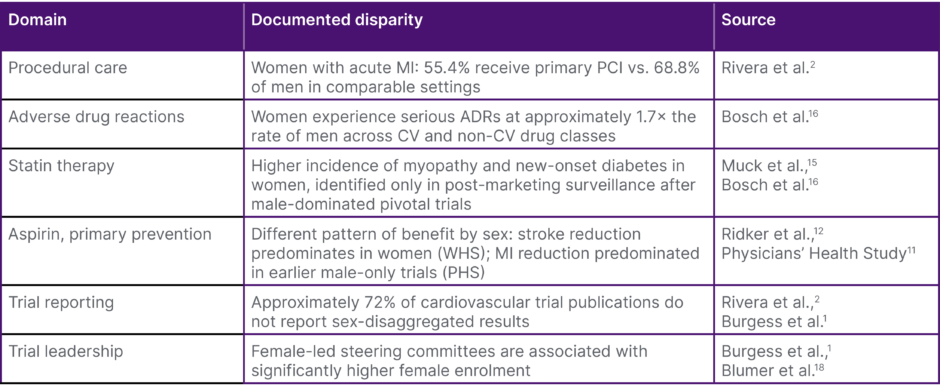
Table 2: Documented sex-based disparities in cardiovascular diagnosis, treatment, and outcomes.
ADR: adverse drug reactions; CV: cardiovascular; MI: myocardial infarction; PCI: percutaneous coronary intervention; PHS: Physicians’ Health Study; WHS: Women’s Health Study.
REGULATORY EVOLUTION: FROM 1977 TO THE CURRENT MANDATE
US regulatory history spans nearly 5 decades. The FDA’s 1977 guidance recommending the exclusion of women of reproductive potential from early-phase trials removed female physiology from precisely the developmental stage at which pharmacokinetic parameters and safety margins are determined.13,14 The National Institute of Health Revitalization Act of 1993 required the inclusion of women and minorities in federally funded research along with disaggregated subgroup analysis, though its reach did not extend to industry-sponsored trials and enforcement remained inconsistent.1 The FDA Reauthorization Act of 2022 required sponsors to submit demographic diversity plans alongside trial applications, and the FDA’s June 2024 Diversity Action Plan guidance now requires sex-, race-, and age-stratified enrolment targets for investigational new drug submissions.13 The 2024 Declaration of Helsinki and the 2016 CIOMS Guidelines provide the accompanying international ethical framework.4,10 This trajectory, from exclusion to mandate, represents genuine institutional progress; it is also, on its own, insufficient, since a diversity action plan sets an enrolment target without guaranteeing the statistical power needed to detect a sex-specific effect once women are enrolled.
ALGORITHMIC BIAS: DISTINGUISHING THE SOURCES AND SETTING THE VALIDATION BAR
Cardiovascular AI tools, risk stratification models, imaging algorithms, and clinical decision-support systems are trained on historical data. Where that data reflects decades of sex-imbalanced enrolment, the resulting models can encode and reproduce the imbalance with the added authority of a numerical score.2,19 Figure 2 sketches the resulting feedback loop: an imbalanced evidence base produces guideline and dosing gaps, those gaps produce clinical disparities, and AI tools trained on the same historical data risk locking the pattern in at scale.

Figure 2: From trial underrepresentation to clinical disparity, and the AI amplification loop.
It is worth being precise about what kind of bias this is, because not all algorithmic bias in medicine shares the same mechanism. The widely cited Obermeyer et al.19 study found that a commercial algorithm used to allocate care-management resources systematically underestimated the health needs of Black patients. The bias in that case did not arise from underrepresentation in a training sample, it arose because the algorithm used healthcare cost as a proxy for health need, and less money was historically spent on Black patients with equivalent clinical need, so the proxy itself was contaminated by unequal access to care. That is a proxy-label problem. The concern with sex and cardiovascular AI is different in kind: it is a training data representation problem, in which models trained predominantly on male ischaemic presentations, namely chest pain in middle-aged men, learn a pattern that systematically underestimates risk in women who present with dyspnoea or fatigue instead. Both are forms of algorithmic bias worth taking seriously, but they call for different fixes: representation problems are addressed by rebalancing or stratifying training data, while proxy-label problems require rethinking what the model is being asked to predict in the first place.
For sex-based representation bias specifically, the authors argue that clinical deployment of a cardiovascular AI tool should require, at minimum: sex-stratified discrimination and calibration statistics reported separately, not pooled; false-negative and false-positive rates broken out by sex; external validation across independent clinical settings; intersectional performance data by sex, age, and ethnicity, where feasible; a period of prospective silent validation before the tool influences any clinical decision; post-deployment outcome surveillance; and transparent documentation of the training data’s demographic composition and the tool’s intended use. CIOMS Guidelines 5 and 10 already require sample representativeness in research design generally; applying that same standard to AI training data seems a reasonable and non-negotiable extension of existing research ethics oversight, one that the FDA and EMA are beginning to articulate in early guidance.4,13
TOWARDS EPISTEMIC JUSTICE: WHAT WOULD ACTUALLY CLOSE THE GAP
Fricker’s account of epistemic justice, the right of all persons to contribute to and benefit from their society’s knowledge-producing practices, gives a useful vocabulary for what remediation would require here.8 In practice, it means three concrete changes, not a general call for more inclusion.
First, in trial design, there should be prospective sex stratification built into randomisation and power calculations from the outset, with sample sizes calculated to detect clinically meaningful sex-specific differences in primary and secondary endpoints, not added as a post-hoc subgroup analysis.20 Second, in data collection, there needs to be prospective capture of physiologically relevant variables, menopausal status, exogenous hormone use, and reproductive history, which are increasingly recognised as determinants of later cardiovascular risk.20,21 Third, in reporting, there should be an end to what might be called statistical silence, where sex-disaggregated data are collected but published only when the result is statistically significant. Approximately 72% of contemporary cardiovascular trials still do not publish sex-disaggregated results.1,2 The data exist, but the resulting knowledge is withheld from the clinicians who would use it. Making disaggregated reporting a condition of publication, not merely an option, would close that gap without requiring a single additional participant.
Regulatory bodies, research ethics committees, and journals each have a distinct role. For regulators, genuine compliance with the FDA’s 2024 Diversity Action Plan framework means trials powered to detect sex-specific effects, not just enrolment quotas met in aggregate.2,13 For research ethics committees, evaluation criteria should extend to the sex composition of the eligible population and the sex-specific hypotheses being tested, not stop at procedural review of consent forms.1,2,4,10 For journals and peer reviewers, making sex-disaggregated reporting a condition of acceptance, regardless of statistical significance, is the single lowest-cost intervention available, since the data are frequently already collected.
CONCLUSION
The systematic review discussed here found real, measurable progress in some areas of cardiovascular trial enrolment, obesity, pulmonary hypertension, and heart failure among them, alongside a persistent and well-documented gap in others, principally coronary heart disease, acute coronary syndrome, and arrhythmia.2 Read against the four principles of biomedical ethics, that residual gap functions as more than a methodological limitation. It bears on women’s autonomy, in the sense that women have historically had less opportunity to participate in generating the evidence that later governs decisions about their own care; on beneficence, in an evidence base that cannot yet fully serve female patients; on nonmaleficence, in avoidable pharmacological harm that adequate sex-disaggregated evidence would have flagged earlier; and on justice, in a distribution of cardiovascular disease burden that has not been matched by proportional investment in the evidence base meant to address it.5,6,8,9,12,15,16
Regulatory progress, from the 1993 National Institute of Health Revitalization Act to the FDA’s 2024 Diversity Action Plans, gives reasonable grounds for optimism, and it is reinforced by the international frameworks of the 2024 Declaration of Helsinki and the CIOMS Guidelines.4,10,13 Mandate alone, however, will not finish the job; it needs to be matched by adequately powered trials, disaggregated reporting as a default rather than an exception, and AI development held to the same representativeness standard as the trials from which it learns. Equity in biomedical knowledge is not a matter of aspiration. It is closer to a basic condition of the evidence-based medicine that clinical practice already claims to deliver, and one that, on the evidence reviewed here, has not yet been fully delivered for half of its patients.