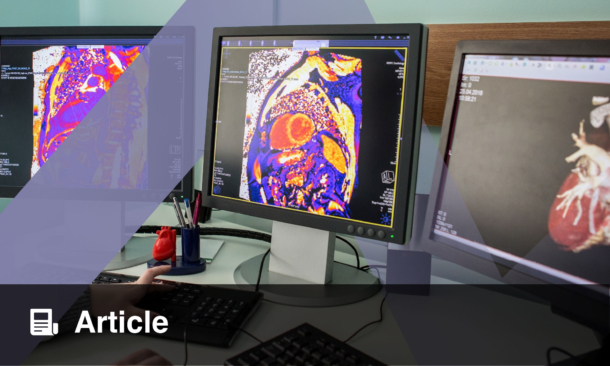
SPINAL cord diffusion tensor imaging (DTI) was associated with balance and gait function in patients with degenerative cervical myelopathy (DCM), with specific measurements also predicting functional improvement after surgical decompression.
Understanding Degenerative Cervical Myelopathy
DCM is the leading cause of spinal cord dysfunction in adults and a major contributor to balance impairment and gait instability. Surgical decompression can halt disease progression, but predicting functional recovery after surgery remains challenging. Conventional magnetic resonance imaging (MRI) poorly reflects spinal cord microstructural integrity, limiting its ability to quantify sensorimotor deficits or predict outcomes.
Diffusion tensor imaging (DTI) provides quantitative measures of tract-specific microstructure and may offer a more sensitive biomarker of functional impairment and recovery. The prospective longitudinal study therefore investigated whether preoperative DTI measurements were associated with functional status and postoperative recovery in patients with DCM.
Spinal Cord DTI Reveals Functional Associations
The cohort included 57 patients with DCM undergoing surgical decompression. Researchers acquired spinal cord DTI at 3T before surgery and assessed fractional anisotropy (FA), mean diffusivity, radial diffusivity (RD), axial diffusivity and filtered apparent diffusion coefficient.
Measurements were obtained from the dorsal, lateral and ventral funiculi and grey matter at the C2 Level. Functional assessments included the Berg Balance Scale (BBS), Functional Gait Assessment (FGA), 10-metre walk test and eyes closed feet Together test before surgery and three months afterwards.
Dorsal column FA was associated with baseline BBS scores (p=0.034; q=0.086), as was RD (p=0.025; q=0.086). Dorsal column mean diffusivity and RD predicted postoperative improvement in BBS scores (p=0.010; q=0.026 and p=0.009; q=0.026, respectively).
Potential Role in Functional Prognosis
Filtered apparent diffusion coefficient in the lateral funiculi predicted postoperative improvement in FGA scores (p=0.008; q=0.038). Grey matter FA was associated with baseline FGA scores (p=0.014; q=0.070). No significant associations were identified for measurements from the ventral funiculi.
Forty-nine participants completed the three-month follow-up. Overall, the data indicated that spinal cord DTI measures had tract-specific relationships with balance and gait function in DCM.
The researchers concluded that dorsal column microstructure was most strongly associated with static balance, while lateral funiculi and grey matter microstructure were more closely related to dynamic balance and gait. The findings supported spinal cord DTI as a potential quantitative imaging biomarker for functional prognostication and postoperative outcome prediction in DCM.
Reference
Raju VB et al. Spinal cord diffusion tensor imaging predicts balance in degenerative cervical myelopathy. Front Neurosci. 2026;20:1911141.
Featured Image: methaphum on Adobe Stock