Key Summary:
- Resistant Salmonella protected probiotics from high cefotaxime concentrations.
- Two probiotic strains maintained their inhibitory activity against Salmonella.
- The findings could inform future probiotic–antibiotic combination therapies.
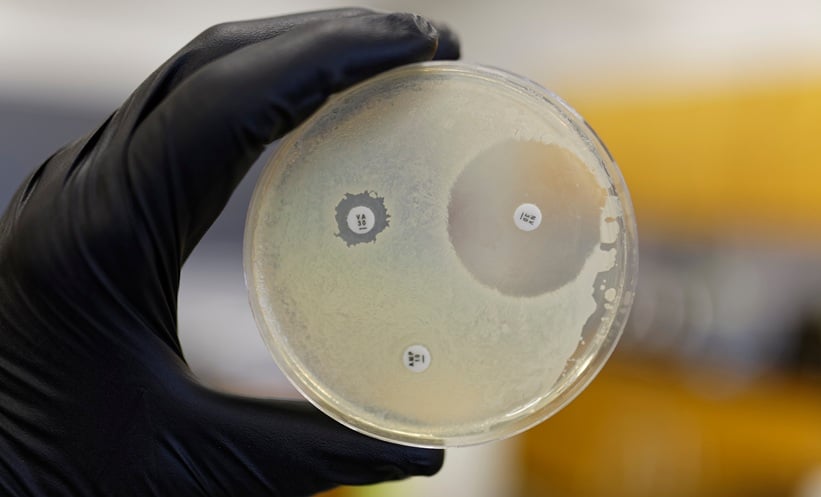
ANTIBIOTIC-resistant Salmonella may inadvertently protect beneficial bacteria during antibiotic treatment, allowing probiotics to continue inhibiting the pathogen, according new research.
The study demonstrated that β-lactamase-producing Salmonella Typhimurium could protect two probiotic bacterial strains from otherwise inhibitory concentrations of cefotaxime. The findings highlight a potential new approach to combining probiotics and antibiotics to combat resistant infections.
Probiotics are increasingly being investigated as potential alternatives or complements to conventional antibiotics, particularly as antimicrobial resistance continues to threaten the effectiveness of existing treatments.
However, probiotics generally demonstrate lower killing efficacy against susceptible pathogens than traditional antibiotics. Combining the two approaches could therefore offer advantages, with antibiotics targeting susceptible bacteria while probiotics help suppress resistant strains.
A major challenge is that probiotics are preferably selected without antibiotic resistance mechanisms to minimise the risk of spreading resistance. Consequently, antibiotics used in combination treatments may also inhibit the probiotics, reducing their effectiveness.
Researchers investigated whether resistance mechanisms produced by pathogenic bacteria themselves could overcome this limitation.
The study focused on public antibiotic resistance mechanisms, which can benefit neighbouring bacteria rather than exclusively protecting the resistant organism.
These mechanisms include enzymes such as β-lactamases, which degrade certain antibiotics, and chloramphenicol acetyltransferases, which chemically modify chloramphenicol. By detoxifying the surrounding environment, resistant pathogens can inadvertently protect nearby antibiotic-susceptible bacteria.
Researchers demonstrated that β-lactamase-producing Salmonella Typhimurium protected two distinct probiotic bacteria, Escherichia coli Nissle 1917 and Bacillus subtilis, against high concentrations of cefotaxime.
This protective effect was observed across a range of laboratory conditions, enabling the probiotics to retain their inhibitory activity against Salmonella despite antibiotic exposure.
The findings suggest that resistance mechanisms ordinarily associated with treatment failure could potentially be exploited to support probiotic–antibiotic combination therapies.
In this proposed approach, antibiotics would target susceptible pathogens, while resistant bacteria capable of detoxifying their surroundings could enable otherwise susceptible probiotics to survive and continue suppressing the resistant population.
Importantly, the study demonstrated this mechanism under in vitro conditions, and its effectiveness in human infections remains unknown. Further research will be needed to determine whether the approach can provide meaningful therapeutic benefits without introducing additional risks.
The researchers concluded that exploiting pathogen-mediated antibiotic detoxification could provide a framework for developing combination treatments that maintain probiotic activity during antibiotic exposure, potentially offering another strategy for addressing antimicrobial resistance.
Reference
De Wit et al. Public antibiotic resistance mechanisms in Salmonella can maintain inhibition by probiotics during antibiotic treatment. BMC Microbiol. 2026; 10.1186/s12866-026-05415-8.
Adobe Stock
Each article is made available under the terms of the Creative Commons Attribution-Non Commercial 4.0 License.