Key Summary:
- Preschool children were less likely to have an asthma diagnosis.
- Regular follow-up was linked to fewer severe exacerbations.
- Home-based management was associated with better outcomes.
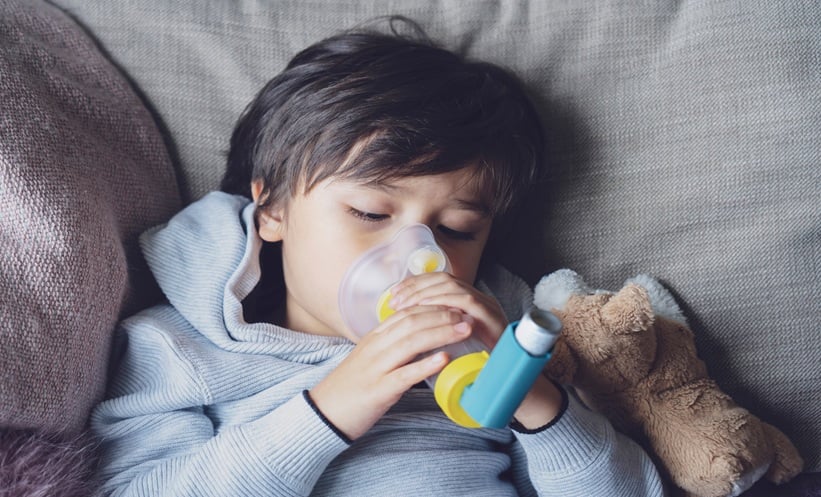
PRESCHOOL children hospitalised with acute asthma exacerbations are significantly less likely to have received a previous asthma diagnosis than school-aged children, according to new research highlighting gaps in early recognition and disease management.
The retrospective study, involving 104 children hospitalised with moderate-to-severe asthma exacerbations, also found that regular clinical follow-up was associated with fewer recurrent exacerbations and emergency department visits. The findings highlight the potential importance of earlier asthma recognition, consistent monitoring, and practical caregiver education in improving paediatric asthma management.
Asthma is a common chronic respiratory condition in childhood, but recognising the disease can be particularly challenging in younger children, where recurrent wheezing may be attributed to other respiratory conditions.
To investigate age-related differences in asthma recognition and management, researchers conducted a retrospective observational study involving 104 children aged 25 months to younger than 18 years who had been hospitalised with moderate-to-severe asthma exacerbations.
Participants were divided into preschool-aged children (25–60 months) and school-aged children (61 months to younger than 18 years).
The researchers compared previous asthma diagnoses, regular follow-up attendance, controller medication use, caregiver education, home-based exacerbation management, exacerbation history, and healthcare utilisation.
Before hospitalisation, only 56.5% of preschool children had received an asthma diagnosis, compared with 83.3% of school-aged children (p=0.008).
Preschool children were also more frequently managed under alternative diagnoses, including bronchiolitis and bronchitis.
Notably, antibiotic use before asthma diagnosis was reported in 87.5% of the overall cohort, highlighting the frequency of antibiotic exposure before the condition was recognised.
Regular clinical follow-up was strongly associated with several indicators of improved asthma management.
Children attending routine follow-up appointments were significantly more likely to receive controller therapy, education on home-based exacerbation management, and guidance that supported the initiation of treatment at home (all p<0.001).
These children also experienced fewer moderate-to-severe asthma exacerbations (p<0.001) and fewer emergency department visits (p=0.036) compared with those without regular follow-up.
In multivariable analysis, regular follow-up remained independently associated with substantially lower odds of recurrent moderate-to-severe exacerbations.
The adjusted odds ratio was 0.03 (95% CI 0.004–0.20; p<0.001), indicating a strong association between follow-up attendance and reduced exacerbation recurrence.
However, the observational study design means that regular follow-up cannot be established as the direct cause of these differences.
The study also investigated whether initiating treatment at home was associated with differences in asthma exacerbation outcomes.
Children whose caregivers initiated home-based treatment had a greater previous burden of asthma exacerbations, suggesting that families managing more frequently symptomatic children may have been more likely to receive or use home-management strategies.
Despite this history, children who initiated treatment at home experienced fewer moderate-to-severe exacerbations during the preceding year than those who did not initiate home treatment (p=0.004).
These findings suggest that caregiver education and the ability to recognise and respond to worsening asthma symptoms may be important components of paediatric asthma care.
However, differences in baseline disease severity, previous healthcare engagement, and other factors may have influenced the observed associations.
The findings also reinforce the importance of providing families with practical information about recognising exacerbations and implementing appropriate management strategies.
The researchers highlighted several potential opportunities to strengthen asthma management in children, particularly those of preschool age.
The lower rate of previous asthma diagnosis among preschool children suggests that recurrent wheezing and other respiratory symptoms may not always prompt timely consideration of asthma.
Meanwhile, the high prevalence of antibiotic use before diagnosis raises questions about how respiratory symptoms are initially assessed and managed.
The association between regular follow-up and improved outcomes further suggests that continuity of care may be an important marker of effective asthma management.
Nevertheless, the study was limited by its retrospective design and relatively small sample of hospitalised children, meaning the findings may not be generalisable to all children with asthma.
The researchers concluded that timely recognition of asthma, consistent clinical follow-up, and practical caregiver education should remain priorities for children experiencing recurrent wheezing or asthma exacerbations.
Further prospective research is needed to determine whether interventions designed to improve these aspects of care can directly reduce severe exacerbations and emergency healthcare utilisation.
Reference
Turk SB et al. Age-Related Differences in Asthma Recognition, Follow-Up and Home-Based Exacerbation Management among Children Hospitalized for Acute Asthma Exacerbations. Int Arch Allergy Immunol. 2026;DOI: 10.1159/iaa/adfag018.
Adobe Stock
Each article is made available under the terms of the Creative Commons Attribution-Non Commercial 4.0 License.