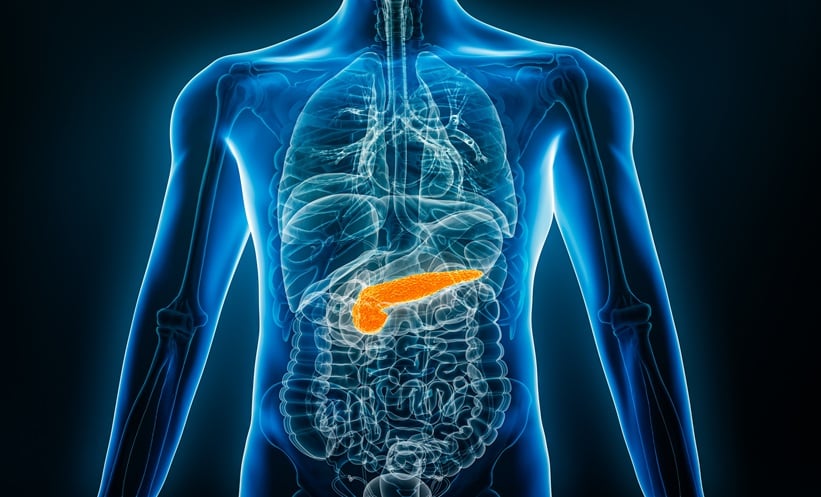
Restaging localised pancreatic ductal adenocarcinoma (PDAC) after systemic therapy remains challenging. A scoping review found that current imaging methods do not consistently predict surgical outcomes and overall survival.
The findings highlight the limitations of relying on established size-based criteria alone and suggest that integrating additional imaging features and carbohydrate antigen 19-9 (CA19-9) may improve treatment response assessment and resectability evaluation.
Reviewing Current Pancreatic Cancer Restaging Methods
Researchers assessed methods used to restage localised PDAC following systemic therapy, focusing on computed tomography (CT), positron emission tomography combined with CT (PET/CT), and their associations with resectability, overall survival, and complete tumour removal with negative margins.
CT was evaluated in 15 studies, while five investigated PET/CT. The reviewed approaches included alternative response categories, tumour size and volume measurements, vascular contact, tumour attenuation, metabolic imaging parameters, and established resectability criteria. Dual-energy CT-derived extracellular volume was also investigated as a baseline biomarker for predicting treatment response.
CT Criteria Show Inconsistent Associations
Researchers found that associations between restaging methods and clinical outcomes varied across studies. Some approaches demonstrated significant associations with particular outcomes, while others did not.
The findings also highlighted limitations of the Response Evaluation Criteria in Solid Tumors (RECIST) 1.1, particularly when classifying partial response and stable disease following systemic treatment. These categories may not adequately reflect treatment response or reliably establish whether surgery is feasible.
Additional imaging characteristics, alternative imaging modalities, and CA19-9 measurements could provide complementary information to support assessments of resectability and prognosis.
Integrating Imaging and Biomarkers
The findings suggest that pancreatic cancer restaging could benefit from a more comprehensive assessment incorporating multiple sources of clinical information.
Combining CT features with PET/CT-derived metabolic parameters and CA19-9 may help improve the evaluation of treatment response and inform decisions about surgical suitability.
Researchers concluded that standardised recommendations, informed by evidence or expert opinion, are needed to guide the restaging of localised PDAC following systemic therapy. Further work to refine these approaches may help clinicians interpret treatment response more accurately and support decisions about potential surgical intervention.
Reference:
Lamoré A.M et al. Restaging the primary tumor in localized pancreatic ductal adenocarcinoma after systemic therapy: a scoping review of the role of CT, FDG-PET, and CA19-9. Eur Radiol.2026.DOI;10.1007/s00330-026-12954-1.