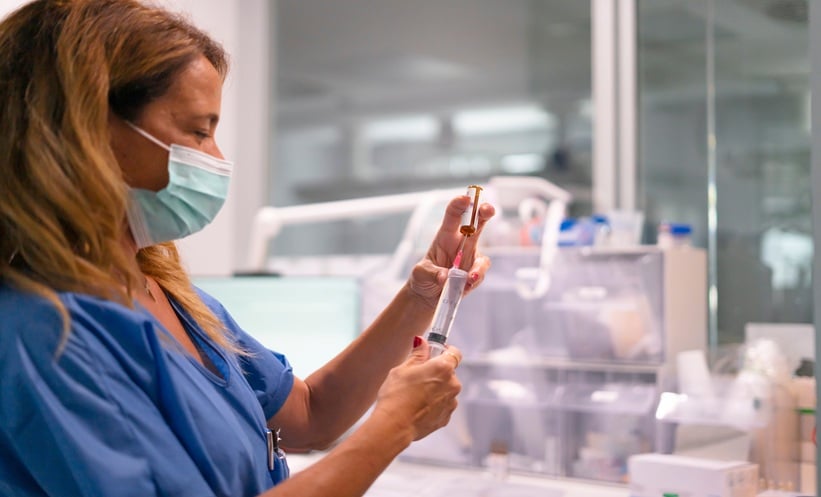
A PHASE II/III Ebola vaccine trial has begun in Congo as the Bundibugyo outbreak approaches 4,800 deaths. The first participants have received vaccinations in a major effort to evaluate protection against a deadly strain of Ebola for which no licensed vaccine is currently available.
The trial began enrolling participants on October 23 in Bunia, Democratic Republic of the Congo (DRC), with mobile vaccination teams potentially extending access to other affected areas.
Ebola Vaccine Trial Targets Bundibugyo Strain
The trial, known as Tumaini, meaning “hope” in Swahili, uses an adaptive platform designed to evaluate multiple vaccine candidates concurrently.
Initially, participants are receiving Ervebo, an existing vaccine licensed against the Zaire strain of Ebola. However, its effectiveness against Bundibugyo remains uncertain, underscoring the need for clinical evaluation.
Two experimental vaccines specifically targeting Bundibugyo are expected to enter the trial following regulatory approvals and World Health Organization recommendations.
These include ChAdOx1 BDBV, developed by the University of Oxford, and mRNA-1469, an mRNA-based vaccine candidate developed by Moderna.
Both candidates have already entered Phase I safety and immunogenicity trials, including an Oxford vaccine study launched in Uganda earlier in October.
Ring Vaccination Strategy Supports Clinical Evaluation
The Phase II/III study incorporates a ring vaccination approach, allowing researchers to evaluate candidate vaccines during an active Ebola outbreak.
The trial also includes populations historically underrepresented in clinical research, including pregnant women and children aged 12 years and older. Children as young as 1 year are eligible for the Ervebo vaccine component.
These evaluations could provide important evidence regarding vaccine safety, immune responses, and protection across different population groups.
Ebola Outbreak Highlights Health Worker Safety
The vaccination milestone comes amid escalating concerns over healthcare worker safety.
On October 24, a nurse was killed and another healthcare worker seriously injured while responding to an Ebola alert in Tshopo province. The United Nations condemned the attack and called for an investigation.
Since the outbreak began in May, nearly 10,000 confirmed Bundibugyo Ebola cases and approximately 4,800 deaths have been reported, predominantly in the DRC.
International transmission has also been documented, with Nigeria reporting its first Ebola case in more than a decade.
The expanding trial represents an important step toward establishing effective vaccination strategies, although protective efficacy against Bundibugyo remains unconfirmed.
Reference
Baraniuk C. Ebola: First people vaccinated in phase 2/3 Bundibugyo jab trial as health worker killed. BMJ. 2026;395. doi:10.1136/bmj-2026-101250.