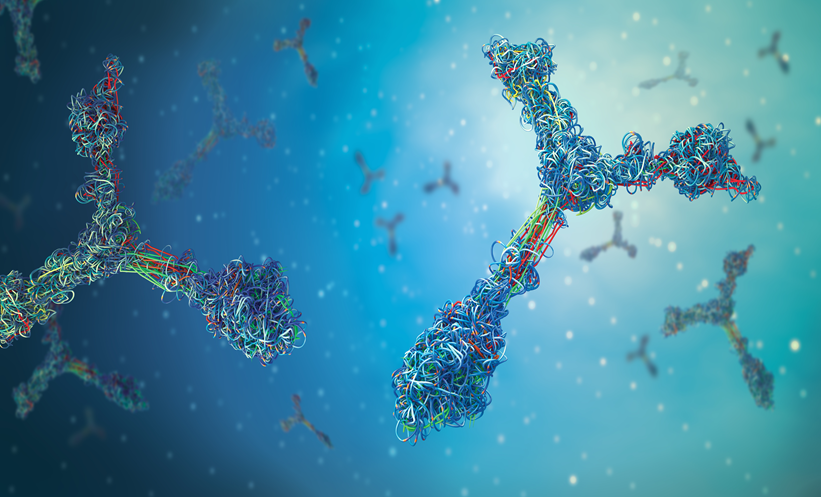
ARTIFICIAL intelligence has demonstrated the ability to identify antigen-specific antibodies directly from immune repertoire sequencing data, offering a potentially scalable approach to antibody discovery without requiring prior selection of antigen-binding sequences.
Researchers developed an Antigen Specificity Predictor (ASPred) using protein language models trained on antibody heavy-chain sequences, demonstrating predictive performance across SARS-CoV-2, influenza and HIV-associated antigens.
AI Antibody Discovery Uses Immune Repertoire Data
Identifying antigen-specific antibodies from large immune repertoire datasets remains a major challenge in biomedical engineering.
The study investigated whether protein language models could recognise antigen specificity directly from antibody heavy-chain sequences obtained through immune repertoire V(D)J sequencing.
Researchers fine-tuned protein language models to develop ASPred, a computational framework designed to predict which antibody sequences recognise particular antigens.
The model was evaluated using antigens associated with SARS-CoV-2, influenza and HIV, demonstrating comparable predictive performance across the three viral targets.
These findings suggested that antibody heavy-chain sequences contain sufficient information for computational models to infer antigen specificity.
Importantly, the approach was designed to identify potential antigen-binding antibodies within unselected immune repertoires, supporting the possibility of broader antibody discovery applications.
SARS-CoV-2 Antibody Predictions Validated Experimentally
Researchers applied ASPred to whole immune repertoire sequences obtained from mice immunised with the receptor-binding domain of the SARS-CoV-2 spike protein.
The model identified candidate antibody sequences predicted to recognise the viral receptor-binding domain.
Several candidates subsequently underwent experimental validation, including one developed as a heavy chain-only nanobody.
This nanobody demonstrated a dissociation constant of 20.7 nM, providing evidence of measurable binding affinity to the target antigen.
Molecular dynamics simulations further supported the predicted antibody–antigen interactions at both coarse-grained and atomic levels.
Notably, the identified SARS-CoV-2-binding sequences differed substantially from those used during model training.
This suggested that ASPred could generalise beyond previously encountered antibody sequences rather than relying exclusively on sequence memorisation.
Protein Language Models Support Scalable Antibody Identification
To assess the model’s performance against another antibody discovery approach, researchers compared ASPred predictions with Barcode-Enabled Antigen Mapping results from B-cell receptor sequencing data.
The comparison revealed highly statistically significant overlap between the two approaches, supporting the potential scalability of computational antibody identification.
The findings highlighted the value of protein language models for extracting antigen-specific information from antibody sequence data.
By identifying candidate binders directly from immune repertoires, ASPred could help expand the range of antibody sequences available for subsequent experimental investigation.
However, computational predictions still require validation to establish antibody binding characteristics and potential biological applications.
Overall, the study demonstrated that antibody heavy-chain sequences can support antigen specificity prediction, establishing a promising framework for scalable antibody discovery across different viral targets.
Reference
Paco K et al. Fine-tuned protein language model identifies antigen-specific B cell receptors from immune repertoires. bioRxiv. 2025.