Abstract
Health data are generated across Europe in great volume, yet remain distributed across institutions, registries, and national systems that do not communicate. For clinicians, relevant information is hard to assemble, and eligible patients remain invisible to research. The European Health Data Space (EHDS) Regulation is the EU’s response. Its primary use is setting common interoperability requirements and individual rights, so that records can be exchanged and accessed by citizens and HCPs across systems and borders. Its secondary use is to establish a governance framework in which national Health Data Access Bodies (HDAB) grant controlled access for research, innovation, and policy-making. Most obligations will apply in stages from 2029. This article considers the implications for clinical practice, clinical studies, and AI, with examples from two European projects. REpresentative Clinical Research – ADvancing Inclusivity in Europe (READI) addresses the representativeness of clinical studies, in part by helping study sites and patients find each other. The Supporting Health Data Access Bodies to establish AI pathways enabling Deployment of AI as medical device tools (SHAIPED) project examines HDAB pathways for AI-based medical devices, including the transportability of a chronic kidney disease risk model to other European countries. The EHDS offers a foundation, not a guarantee: legacy systems, uneven digital maturity, partly paper-based documentation, governance, and patient trust will shape whether better access translates into more equitable care and research. Whether implementation narrows or widens existing gaps between member states remains open.
Key Points
1.The European Health Data Space regulation, applying in stages from 2029, aims to make health records accessible across borders for care and to provide governed access to health data for research and innovation.2.Examples from the REpresentative Clinical Research – ADvancing Inclusivity in Europe and Supporting Health Data Access Bodies to establish AI pathways enabling Deployment of AI as medical device tools projects illustrate how better access to data could make clinical studies more representative and allow AI-based medical devices to be validated across European populations.
3.The European Health Data Space offers a foundation, not a guarantee. Legacy systems, uneven digital maturity and patient trust will determine whether it narrows or widens existing gaps in care and research.
INTRODUCTION
Consider a German woman whose renal function is gradually declining. Over several years, she has received care from several general practitioners and at three hospitals in Germany and Spain, each episode recorded in a separate information system. At one of those hospitals, an AI-based device monitored her kidney function; at the hospital treating her now, no such device is available. Elsewhere, an investigator searching for her exact phenotype cannot find her, because the systems that could identify her do not communicate.
Her situation reflects a broader challenge. Health data are generated across Europe in great volume, yet remain distributed across institutions, registries, and national systems using different infrastructures, data models, standards, and terminologies. What exists is therefore neither interoperable nor portable. For her clinician today, assembling the relevant information is hard and takes up time better spent on care. The same limitations keep patients invisible to research for which they may be eligible.
The European Health Data Space (EHDS) is the EU’s response to this issue. It is the first EU-wide regulation dedicated to the data of a single sector, and it entered into force in March 2025.1 Its premise is straightforward but ambitious: electronic health data should be accessible to the right person, at the right time, and in the right context. Access should be secure, with patients’ rights safeguarded, both for treating individuals and for improving health and care. To that end, the regulation combines common rules and standards, stronger interoperability requirements and individual rights, and new governance mechanisms and infrastructures for both primary and secondary use (Table 1).
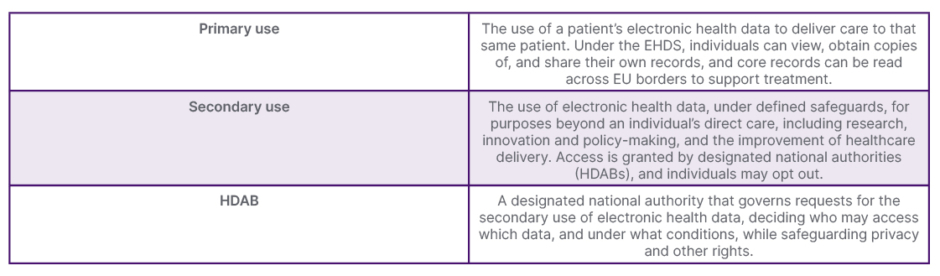
Table 1: Concise definitions of key terms used in this article, for readers new to the field.
EHDS: European Health Data Space; HDAB: Health Data Access Body.
This article considers what that could mean in and for clinical practice, drawing on two European projects working towards its implementation: REpresentative Clinical Research – ADvancing Inclusivity in Europe (READI),2 which addresses the representativeness of clinical studies, and the Supporting Health Data Access Bodies to establish AI pathways enabling Deployment of AI as medical device tools (SHAIPED) project,3 which addresses the development and validation of medical AI across countries.
WHY THE EHDS MATTERS TO HEALTHCARE PROFESSIONALS
The EHDS establishes a common European framework for two complementary uses of electronic health data. The first, which the regulation terms primary use, creates the conditions for relevant health information to be exchanged and accessed by citizens and HCPs across systems and borders. Common interoperability requirements and the European electronic health record exchange format will let systems exchange priority data categories in a shared format: first patient summaries and prescriptions, and later laboratory results, imaging, and discharge reports.1,4 The German patient who becomes unwell in Spain should have her records available to the treating clinician in a format her Spanish clinicians can read. She should also have access to them herself, free of charge, in an easily readable, consolidated, and accessible format.
For the second, which the regulation terms secondary use, the EHDS establishes a governance framework through which health data can be made available for permitted purposes beyond an individual’s direct care, including research and innovation, public health and policy-making, and the improvement of healthcare delivery. This is a controlled process, not open access: health data are a special category of personal data under the GDPR and warrant heightened protection. Data access is controlled by designated national Health Data Access Bodies (HDAB), which assess applications and issue data permits, with the EHDS infrastructure (HealthData@EU) supporting cross-border requests. Individuals may opt out of the secondary use of their identifiable data, subject to the exceptions the regulation sets out.4 Implementation will be gradual. Most obligations will apply in stages from 2029, beginning with cross-border exchange of patient summaries and electronic prescriptions and the core framework for secondary use; further categories are to follow from 2031 (Figure 1).
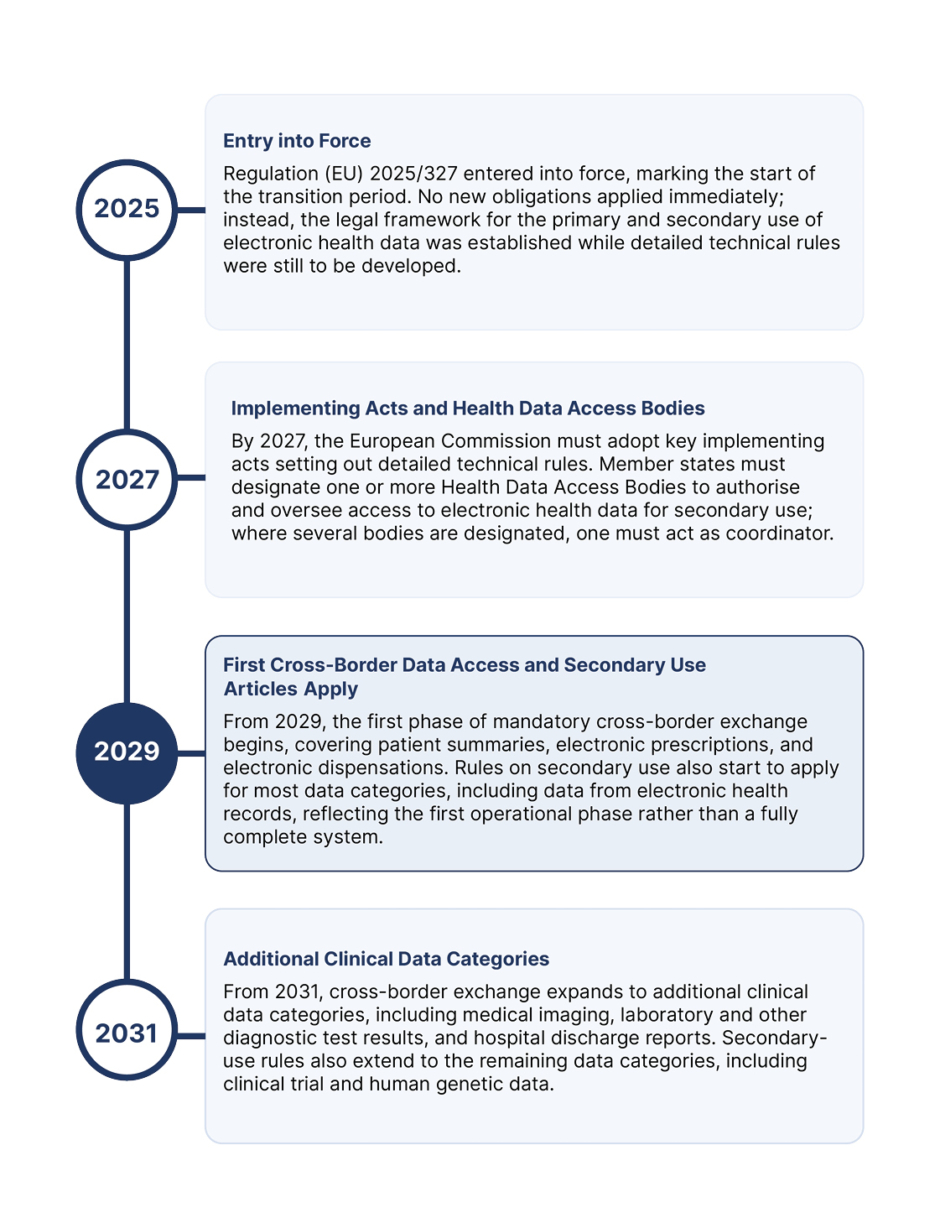
Figure 1: The phased implementation of the European Health Data Space Regulation (EU) 2025/327.
Much of the operational detail awaits implementing acts that have yet to be adopted, and member states are only now building the structures the regulation requires. That sequence gives clinicians, researchers, and data holders a real, if time-limited, opportunity to shape how the EHDS is translated into practice.
For HCPs, the implications are practical. Greater interoperability and more timely access to relevant information could support continuity and quality of care, give a fuller clinical picture when care has occurred elsewhere, and reduce manual requests for historical records and duplicated investigations. By making data from routine practice available for secondary use under common governance, the EHDS also ties care more directly to research, so that patients may benefit from research opportunities and, in time, from technologies evaluated on data that resemble them.
Making Clinical Studies More Representative: The READI Connection
Clinical studies carry a long-recognised limitation: the participants enrolled frequently fail to represent the patients who will ultimately receive the intervention. Under-served and under-represented populations are defined by the barriers they face in reaching research, not by demographic characteristics alone. Eligibility criteria, site selection, and distance to the nearest participating centre shape who is enrolled, and sponsors set most of those.5 This is not solely a matter of equity; it may also weaken the evidence, since less is learned about how an intervention performs across patient groups.
The READI project is a large, European, public–private partnership addressing this issue.5,6 The EHDS will not make studies representative by itself. What it offers is a foundation: better access to health data. READI will develop a digital platform to enable innovation in the recruitment of under-served and under-represented populations for clinical studies, working in two complementary directions. Both turn that access into recruitment: study sites using records to find eligible patients, and patients sharing their own data to find studies. One approach is for the study site to reach out to the patient. Where records are sufficiently structured, interoperable, and complete, a site can, under appropriate ethical and governance frameworks, identify and pre-screen potentially eligible patients rather than only those who present to it. At Aarhus University Hospital, Denmark, approaches linking hospital systems with digitised study protocols and pre-screening algorithms are being used or explored within READI, allowing records to be assessed against structured eligibility criteria and candidates identified more efficiently.2 Matching based on records, however, reaches only those who are already documented; which populations are missing altogether remains a separate question.
A complementary approach is for the patient to seek out research. The ‘Yellow Button’, developed within the xSHARE project, lets individuals share their health data with research teams in a standardised, computable format.2 Through a patient portal, a patient can share relevant information, have it assessed against predefined eligibility criteria, then choose a study and centre and authorise the transfer. This creates a patient-driven recruitment pathway in which individuals signal their interest rather than waiting to be found. For the German patient, that could be the difference between remaining invisible to research and becoming eligible for it.
Neither direction follows from intent alone. Both require interoperable, reasonably complete data; workable governance; and mechanisms that researchers and patients can actually use.
Validating Medical AI Across Borders: The SHAIPED Connection
AI-based medical technologies have considerable potential to support diagnosis, prediction, and monitoring, yet moving them from development into routine care remains difficult. This requires appropriate, high-quality data; evaluation across the populations and settings where the tool will be used; and navigation of complex regulatory and technical requirements. A model that performs well in one setting may not perform equally well in another, because patient characteristics, clinical practice, and the way data are recorded differ.
The SHAIPED project examines how the EHDS Regulation can help.3 It asks how HDABs, together with the data-access mechanisms and services the EHDS establishes, can support each stage of the AI medical device lifecycle, and how those pathways interact with the wider framework for medical AI, including the EU Artificial Intelligence Act and medical device legislation.7,8 SHAIPED therefore aims both to map practical routes for developers and to build capacity within the HDABs themselves.
One of its use cases, led by Aarhus University Hospital, concerns chronic kidney disease and whether an existing risk model9 can be transported to patient populations in other European countries using nationwide data from three countries.3 This is the situation of the German woman described at the outset, where a tool available at one hospital was not at the next. Testing the model against data from several countries is how such divergence is detected rather than assumed. The EHDS can make that data discoverable through more consistent, governed routes; SHAIPED tests whether those routes work in practice.
An important point of convergence is the representativeness of clinical studies: READI works towards greater representativeness among study participants, while SHAIPED leverages the EHDS to mobilise AI-ready data for evaluating medical devices across populations and settings (Figure 2).
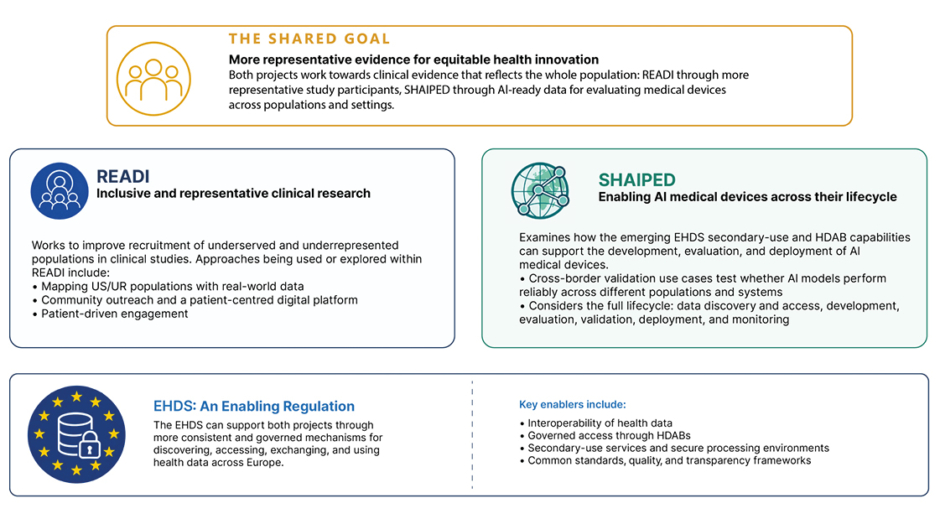
Figure 2: How the EHDS Regulation can support complementary work in READI and SHAIPED.
EHDS: European Health Data Space; HDAB: Health Data Access Bodies; US/UR: undeserved and underrepresented.
Together, they help translate the regulatory and technical foundations of the EHDS into practical, operational pathways for the primary and secondary use of health data.
PRACTICAL CHALLENGES: INTEROPERABILITY, WORKFLOW, AND GOVERNANCE
These developments require substantial investment. Many hospitals still rely on legacy systems never designed for data exchange; raising them to a common standard demands funding, time, and personnel. Connectivity alone does not guarantee meaningful interoperability: data vary in structure, terminology, completeness, and quality, and aligning them while preserving clinical meaning is essential. Clinicians are legitimately concerned about additional steps in already pressured workflows. A related question is recognition. The value of secondary use rests on how carefully data are recorded at the point of care. The EHDS metadata model (HealthDCAT-AP) can document dataset creators and provenance. Data users may be charged for access, but these fees can only cover the costs of making the data available. For public data holders, they cannot include the costs of collecting the data. How the effort involved in documenting the data is recognised is left to national and institutional arrangements.1
Institutional capacity also varies widely. Member states of the EU begin from very different levels of digital maturity and must establish or adapt infrastructure, governance, and expertise. In parts of Europe, documentation remains partly paper-based, which risks a compounding inequity: people whose care is not recorded electronically will not appear in the data at all, and so will be absent from both the research and the AI it supports. Rural populations and groups historically excluded from research are the most exposed.
The governance itself is intricate. HDABs must balance data provision for research against patient privacy, ethics, and commercial confidentiality, and will operate alongside existing authorities for data protection and research, and the Artificial Intelligence Act. Patient trust will be equally critical, across both primary and secondary use: willingness to have data recorded, shared, and used underpins the whole framework. Were opt-outs to cluster among groups already underserved or less trusting of health systems, the gaps could affect both continuity of care and the representativeness of data for research, undermining the very aims that READI, SHAIPED, and the European Commission’s push for inclusive research are meant to advance.
OUTLOOK FOR CLINICAL PRACTICE AND STUDIES
Health systems that have yet to achieve full digitalisation face the steepest path, and the demands fall in several places at once: on information systems, which must be rebuilt to common standards; on their vendors; on HDABs and digital health authorities, which must be established and resourced; and on institutions and professionals, whose practice must accommodate new ways of recording, accessing, and sharing information. Preparation need not wait. Clinicians and their institutions can contribute to national and European consultations and press for a strong clinical voice, particularly in ensuring that interoperability brings data quality and clinical meaning with it, and that new processes support rather than burden care.
Several questions remain. Will implementation narrow the existing gap between more and less prepared member states, or widen it? How will the responsibility for data quality, and for bias in clinical AI, be distributed? And can the governance of the EHDS build the public trust that responsible secondary use depends on?
For the woman with whom this article began, the measure is simpler: that her records, the tools that could support her care, and the research for which she may be eligible are no longer held apart by systems that cannot speak to one another, but are brought together, securely, where her care is delivered.