A NEW medical study is raising questions about the reliability of artificial intelligence in breast cancer detection, revealing that nearly one in three cancers may be overlooked by current AI tools. But researchers say a specialised MRI technique could help close that gap.
In a review of 414 women, with a mean age of 55.3 years, recently diagnosed with breast cancer, investigators evaluated how well an AI-based computer-aided diagnosis system (AI-CAD) performed when reading mammograms and breast MRI scans. To count as “detected,” the system had to both score a lesion as suspicious and correctly locate it. When it failed to meet those criteria, the cancer was labelled as AI-missed.
AI Misses More Cancers in Dense Breast Tissue
The results were striking: 127 cancers, 30.7% of all cases, were missed by the AI system. The study found two major factors strongly linked to missed cancers: dense breast tissue, which can obscure tumours on imaging, and small tumour size, particularly cancers 2 cm or smaller, which were nearly five times more likely to be missed.
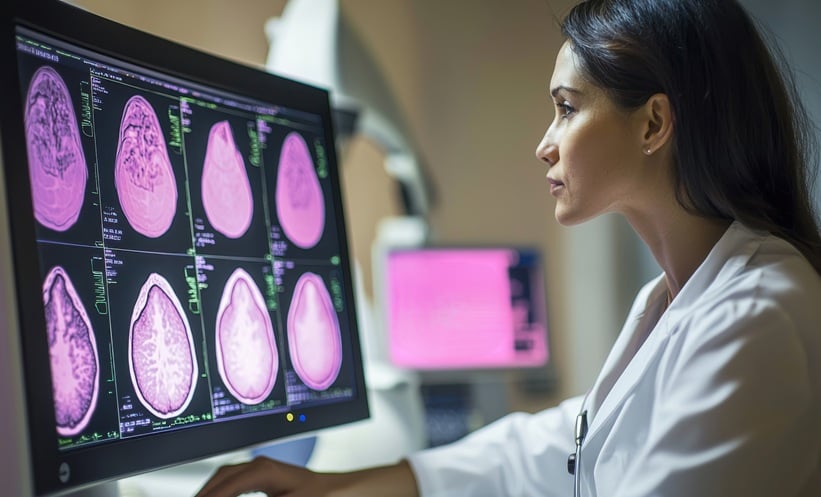
However, the researchers also tested a potential solution. Two radiologists reviewed only the diffusion-weighted imaging (DWI) portion of the MRI scans, a rapid, contrast-free technique that measures how water moves through tissue. Using a simple confidence scale, they determined whether the DWI images suggested cancer.
Their findings offered reassurance: DWI alone identified the majority of cancers the AI had overlooked, detecting 83.5% of missed lesions for one radiologist and 79.5% for the other. The readers showed substantial agreement in their interpretations, suggesting the method is both reliable and reproducible. DWI performed best for cancers larger than one centimetre and for tumours that were invisible on mammograms, though its accuracy dropped for very small lesions under one centimetre.
Next Steps for Improving AI in Breast Imaging
Experts say the results show that while AI is becoming a powerful tool in breast imaging, it is not infallible. The study indicates that supplementing AI-based screening with DWI could serve as an effective safety net, especially for women with dense breasts, where both human and machine readers tend to struggle.
Still, the authors caution that the research has limits. Because the study included only women already diagnosed with cancer and was conducted at a single institution, the findings may not represent broader screening populations. They call for prospective, multicentre trials to confirm whether DWI can reliably enhance AI-assisted breast cancer detection.
Reference
Kim JY et al. Added value of diffusion-weighted imaging in detecting breast cancer missed by artificial intelligence-based mammography. Radiol Med. 2025. doi:10.1007/s11547-025-02161-1
- Author: