BACKGROUND AND AIMS
Non-steroidal anti-inflammatory drugs (NSAID) are among the most common triggers of drug hypersensitivity reactions (HSR) in paediatric patients. Diagnosing NSAID-HSR in children remains challenging, as clinical history alone is often insufficient to distinguish HSRs from non-allergic reactions. A drug provocation test (DPT) is the gold standard, but it is time- and resource-consuming and carries potential risks to patients undergoing the procedure.1-3 Identifying tools to stratify NSAID-HSR risk before DPT remains challenging.4
The authors previously developed a clinical prediction scale to facilitate diagnostic evaluation of suspected NSAID-HSR in children.5 It included five variables: age >12 years, presence of angioedema, absence of exanthema, ≥2 NSAID-related reactions, and pain as an indication for NSAID administration. Each variable was scored 0–1 (total 0–5); a cutoff ≥3 yielded 82.4% sensitivity and 62.4% specificity (Table 1).
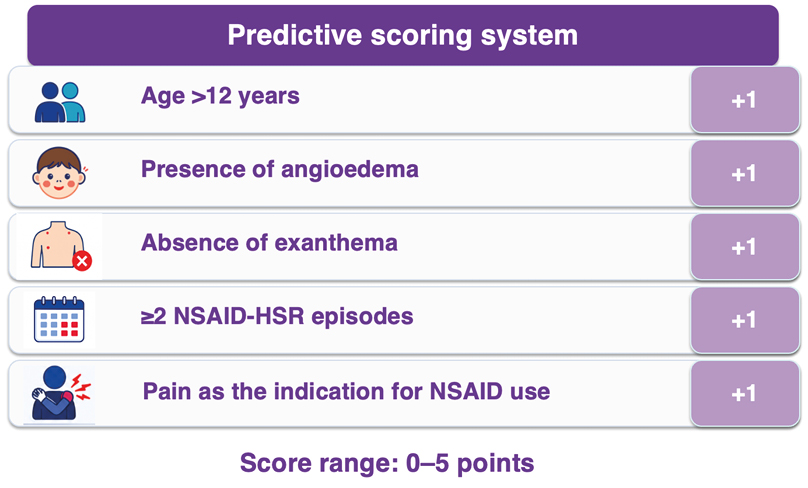
Table 1: Clinical predictive score for NSAID hypersensitivity (0–5 points).
HSR: hypersensitivity reaction; NSAID: nonsteroidal anti-inflammatory drugs.
The present prospective, tertiary, single-centre study aimed to validate the performance of this scale in a real-world cohort of paediatric patients referred to the authors’ tertiary paediatric allergy department for suspected NSAID-HSR between 2022–2025.
MATERIALS AND METHODS
All patients included underwent standardised NSAID-DPT according to institutional protocols. Hypersensitivity phenotypes were classified following the European Academy of Allergy and Clinical Immunology (EAACI) 2018 position paper.
A total of 72 paediatric patients were evaluated, with an equal distribution by sex. Median age at onset was 9 years, while the median age at DPT was 11 years (interquartile range: 5–12 years). Nearly half the patients had a personal history of atopy, predominantly respiratory allergy. Ibuprofen was the most frequently implicated drug, representing more than three-quarters of suspected HSR. Pain was the primary indication for NSAID use, followed by fever.
RESULTS
Angioedema (78%) was the most common symptom at onset, and in 39% of patients it occurred in an isolated form. Exanthema was presented in 53% of patients, either alone or associated with other symptoms. Respiratory symptoms were less common (five patients). More than 40% of children reported at least two previous suspected NSAID-HSRs. At baseline, 16 patients presented with isolated exanthema; of these, 14 (87.5%) tolerated the drug upon evaluation. NSAID-HSR was confirmed in only two of these cases (2/16), with paracetamol identified as the culprit drug in both.
A total of 105 DPTs were performed, confirming NSAID-HSRs in 30.6% (n=22) of patients. Cross-intolerance phenotypes predominated (17/22), particularly NSAID-induced urticaria/angioedema/anaphylaxis (NSAID-induced urticaria/angioedema, NSAID-induced urticaria/angioedema/anaphylaxis), while selective-HSRs (5/22) were less frequent.
After applying the predictive scale, the authors observed that: among patients with a score of less than 3 points, 94.3% had negative DPT results (p<0.001), while among those with a positive DPT (n=22), 90.9% had a score of ≥3 (p<0.001). Analysis of the receiver operating characteristic (ROC) curve yielded an area under the curve of 0.815 (95% CI: 0.700–0.919), indicating a good discriminatory power. A cut-off value of ≥3 points was used, with a sensitivity of 90% and a specificity of 66%.
CONCLUSION
The scale applied to the prospective cohort demonstrated improved diagnostic performance, particularly in terms of sensitivity, when compared to the original model. Its use could improve patient selection for DPT, helping to prioritise testing and reduce procedures in low-risk patients. In this cohort, the presence of isolated exanthema indicated a low risk of developing an NSAID-HSR. Further prospective multicentre studies are needed to validate these findings and facilitate their implementation in clinical practice.