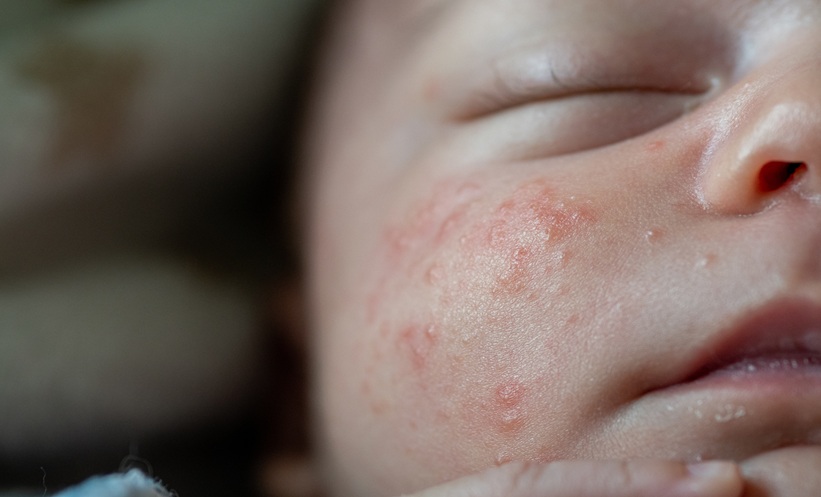
A LONGITUDINAL study of children born during Ireland’s COVID-19 lockdown found that lower rates of food allergy observed in early childhood persisted to 5 years of age, while patterns of eczema and aeroallergen sensitisation followed more typical developmental trends. The findings were presented at the 2026 annual congress of the European Academy of Allergy and Clinical Immunology.
The Impact of Coronavirus Pandemic on Allergic and Autoimmune Dysregulation in Infants Born During Lockdown (CORAL) study was established to examine how the uniquely altered environment experienced by infants born during Ireland’s stringent SARS-CoV-2 restrictions affected allergic disease development. Earlier analyses at 2 years of age reported lower food allergy rates but higher levels of atopic dermatitis compared with pre-pandemic cohorts.
Pandemic-Born Children Show Persistent Low Food Allergy Rates
Researchers reassessed the same cohort at 5 years through clinical evaluations, including skin prick testing for food and airborne allergens, assessment of atopic dermatitis, and collection of blood and stool samples. Parents also completed questionnaires on allergic symptoms, medication use, healthcare utilisation, and environmental exposures.
The study found that aeroallergen sensitisation increased significantly from 8.9% at 2 years to 24.0% at 5 years (p<0.001). Children who were sensitised were substantially more likely to experience allergic symptoms, with sensitisation associated with a more than fivefold increase in symptom risk (OR 5.68; p<0.001). Parent-reported wheeze remained stable between assessments and was strongly linked to a diagnosis of asthma (χ²=33.0; p<0.001). Meanwhile, most cases of atopic dermatitis had resolved by age 5, and food allergy remained relatively uncommon within the cohort.
Early-Life Lockdown Exposures May Influence Allergy Development
The authors noted that pandemic-related environmental factors, including higher breastfeeding rates and reduced antibiotic exposure during infancy, may have contributed to the lower prevalence of food allergy first observed at 2 years and still evident at 5 years. In contrast, the trajectory of eczema and increasing aeroallergen sensitisation appeared consistent with the well-established ‘atopic march’, in which allergic conditions evolve over childhood from eczema and food allergy towards respiratory allergic disease.
The researchers concluded that this represents the first longitudinal assessment of atopic outcomes in children born during COVID-19 lockdown restrictions. Their findings suggest that some early-life environmental changes associated with the pandemic may have had lasting effects on food allergy risk.
Reference
Sokay A et al. Atopic outcomes of the CORAL cohort born in COVID-19 lockdown at 5 years. Abstract 000233. EAACI, 12-15 June, 2026.
Featured image: barskefranck on Pixabay
- Author: