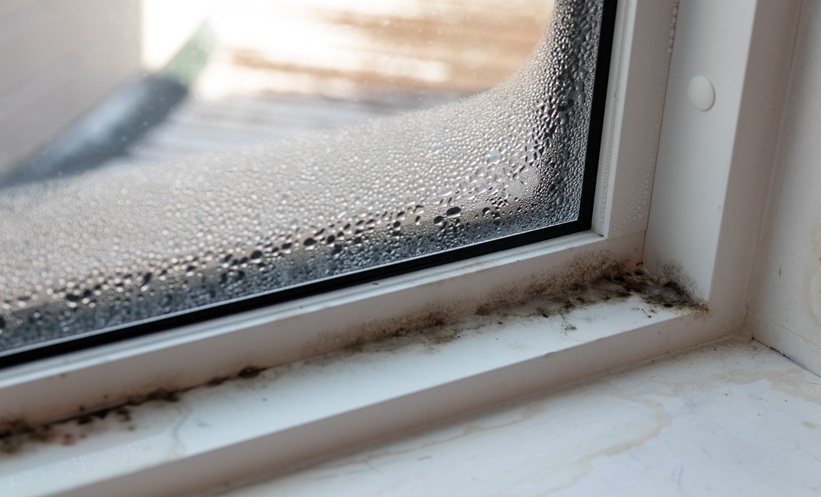
DOMESTIC mold contamination significantly limits asthma and rhinitis symptom relief among patients with house dust mite allergies. While indoor environmental counseling improves respiratory outcomes overall, hidden fungal proliferation creates a persistent barrier to full disease control.
Researchers evaluated 380 patients sensitized to house dust mites who underwent standardized home environmental inspections between 2022 and 2024. Participants were divided into two cohorts based on mycological assessments during home visits: 280 patients without abnormal fungal growth and 100 patients with confirmed indoor contamination. Quantitative real-time polymerase chain reaction testing on settled dust and airborne spore sampling identified fungal burden across six common species.
Impact of Domestic Mold on Sensitization and Baseline Control
Analysis revealed that fungal sensitization occurred five times more frequently in patients exposed to domestic mold than in unexposed individuals, at 21.0% versus 3.9%. At baseline, allergic rhinitis control scores were identical across both groups. However, patients living in contaminated homes presented with significantly worse baseline asthma control scores than those in mold-free residences. Furthermore, measured house dust mite levels in bedrooms and living rooms did not correlate with indoor fungal spore concentrations, showing that mite burden alone cannot predict coexisting fungal exposure. Testing identified Penicillium chrysogenum and Alternaria alternata as the most prevalent indoor species, with Alternaria alternata reaching the highest contamination levels.
Twelve-Month Outcomes Following Environmental Interventions
After 12 months of personalized environmental counseling and exposure reduction strategies, both groups achieved clinically meaningful symptom improvements exceeding minimal clinically important difference thresholds. Despite these overall gains, patients exposed to domestic mold experienced a blunted therapeutic response. At the 1-year follow-up, mean Allergic Rhinitis Control Test scores were significantly lower in the exposed group at 21.9 compared with 23.1 in the unexposed group. Similarly, Asthma Control Test scores remained lower among exposed patients at 21.3 versus 22.7.
Clinical Implications for Allergic Respiratory Care
Uncontrolled asthma prevalence dropped substantially in both cohorts over the year, yet it remained nearly four times higher in mold-contaminated homes at 4.8% compared with 1.3%. Notably, respiratory outcomes did not differ between fungal-sensitized and non-sensitized subgroups, indicating that direct environmental irritant and inflammatory effects drive poorer control. Incorporating targeted fungal remediation and structured home assessments into allergy care is essential for patients with refractory asthma and rhinitis.
Reference
Shahali Y et al. Association Between Domestic Mold Detection and Clinical Outcomes in House Dust Mite Allergic Patients. Clin Exp Allergy. 2026;56(8):943-945.