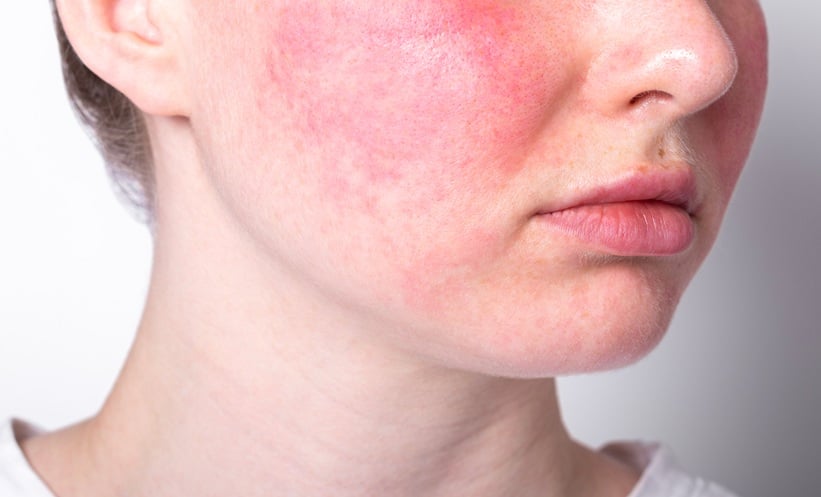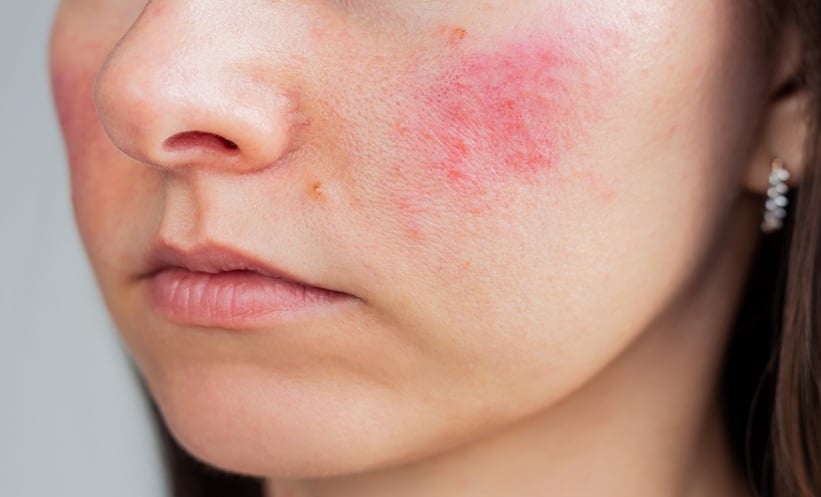
A NEW retrospective cohort study has identified a significant association between rosacea and an increased risk of developing depression, highlighting the need for more integrated dermatological and mental health care.
Rosacea, a chronic inflammatory skin condition, is increasingly recognised for its potential systemic and psychological impacts. However, evidence linking rosacea to depression has remained limited, particularly in Asian populations. To address this gap, researchers analysed data from the Korean National Health Insurance Service-Health Screening Cohort spanning 2003 to 2017.
The study included 3,052 patients newly diagnosed with rosacea and a matched control group of 30,520 individuals without the condition. Participants were matched by age, sex, and index year to ensure comparability. The primary outcome assessed was the development of depression over the follow-up period.
Rosacea Associated with 34% Increased Risk of Depression
Among the total cohort of 33,572 individuals, 4,057 cases of depression were recorded. Notably, 485 cases occurred in the rosacea group. Patients with rosacea demonstrated a 34% higher risk of developing depression compared with those without the condition (adjusted hazard ratio 1.34; 95% confidence interval 1.22-1.48; p < 0.001).
The association remained robust across multiple analyses, including subgroup analyses, propensity score matching, and sensitivity tests accounting for different washout periods. These consistent findings strengthen the reliability of the observed link between rosacea and subsequent depression.
The authors suggest that the visible and chronic nature of rosacea may contribute to psychological distress, potentially increasing vulnerability to depression. While the study does not establish a direct causal relationship, it reinforces the importance of considering mental health outcomes in patients with dermatological conditions.
Importantly, the findings support a more holistic, multidisciplinary approach to patient care. Clinicians managing rosacea may benefit from increased awareness of the potential for comorbid depression, enabling earlier identification and intervention.
Further Research Needed to Understand Causal Mechanisms
The researchers conclude that further studies are needed to clarify the biological and psychosocial mechanisms underlying this association. Nevertheless, the current evidence underscores the value of integrating dermatological and psychiatric care to improve overall patient well-being.
Reference
Choi YG et al. Association between rosacea and the risk of depression: A retrospective cohort study. Arch Dermatol Res. 2026;318:132.
Featured image: Ольга Шефер on Adobe Stock