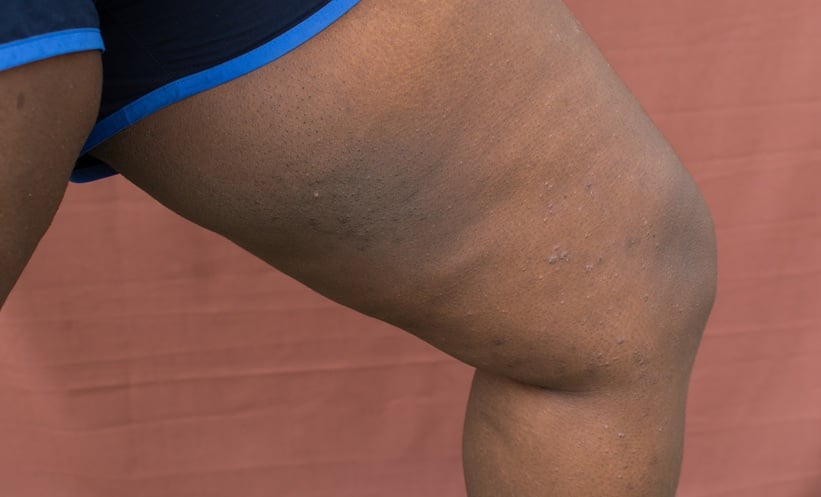
VIXARELIMAB, a monoclonal antibody targeting the oncostatin M receptor β, demonstrated significant and sustained clinical benefit in patients with moderate to severe prurigo nodularis (PN), according to results from a phase 2b randomised clinical trial.
PN is a chronic inflammatory skin disease marked by intense pruritus and nodular lesions, with limited effective treatment options. The international, double-blind, placebo-controlled study evaluated the long-term efficacy, safety, tolerability, and pharmacokinetics of monthly dosed vixarelimab.
The trial enrolled 190 adults aged 18 to 80 years with physician-diagnosed PN of at least six months’ duration and moderate to severe itch. Participants were randomised to receive subcutaneous vixarelimab at high (540 mg), mid (360 mg), or low (120 mg) doses, or placebo, every four weeks for a 16-week double-blind period. This was followed by a 36-week open-label extension in which all participants received vixarelimab 360 mg every two weeks.
Vixarelimab Reduces Prurigo Nodularis Severity
At week 16, vixarelimab met its primary efficacy endpoint, producing a statistically and clinically meaningful reduction in itch severity compared with placebo, as measured by the Worst Itch Numeric Rating Scale (WI-NRS). Mean percentage reductions from baseline were -56.2% in the high-dose group, -51.0% in the mid-dose group, and -33.0% in the low-dose group, versus -14.5% with placebo. A clinically meaningful improvement of at least four points on the WI-NRS was achieved by 66.0%, 61.7%, and 29.8% of patients in the high-, mid-, and low-dose groups, respectively, compared with 16.7% of those receiving placebo.
Improvements were also observed in skin disease severity. Investigator Global Assessment scores of 0 or 1 (clear or almost clear) at week 16 were achieved by up to 38.3% of patients treated with high-dose vixarelimab, compared with 10.4% in the placebo group.
Vixarelimab was generally well tolerated. No fatal or serious drug-related treatment-emergent adverse events were reported during the study, and no serious treatment-related adverse events occurred during the double-blind phase.
Future Clinical Implications of Vixarelimab for Prurigo Nodularis
The authors conclude that vixarelimab provides rapid, dose-dependent, and sustained improvements in both itch and skin lesions in PN, with a favourable benefit-risk profile. These findings support further development of vixarelimab as a potential therapeutic option for this challenging condition.
Reference
Ständer S et al. Vixarelimab in Patients with Prurigo Nodularis: A Randomized Clinical Trial. JAMA Dermatol.2025; 10.1001/jamadermatol.2025.4950