Key Summary:
- Threshold CGM alerts increased time in range from 71.2% to 75.1%.
- Predictive alerts provided no additional improvement in glycaemic control.
- Standard alerts added around 56 minutes in target range per day.
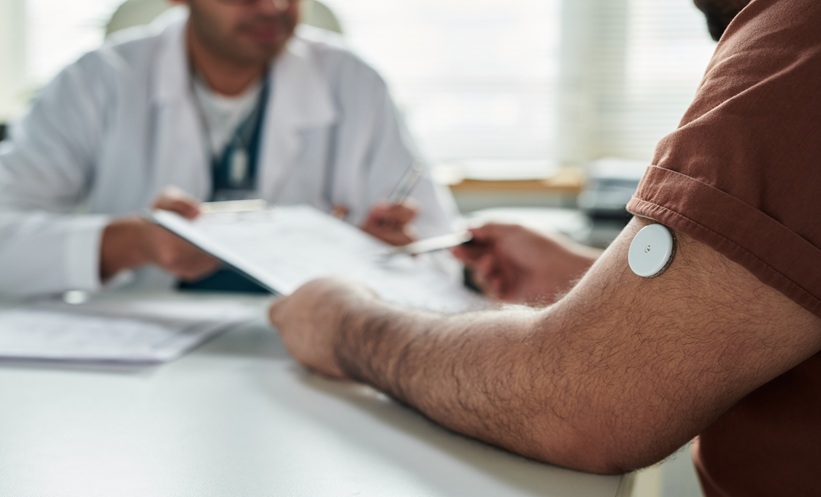
ADVANCE continuous glucose monitoring alerts do not improve glycaemic control among hospitalised adults with diabetes, according to a new study.
The clinical trial suggests that while conventional threshold alerts, which notify users when glucose levels cross predefined limits, can increase the amount of time patients spend within the recommended glucose range, more advanced predictive alerts did not appear to provide additional benefit.
Researchers conducted a single-centre, randomised clinical trial involving 533 adults with Type 1 or Type 2 diabetes admitted to endocrinology wards at a tertiary hospital in Shanghai, China
Out of the participants, who had an average age of 62 years and a mean HbA1c of 9.2%, the majority of them (94%) had Type 2 diabetes, while only 6% had Type 1 diabetes. Participants used CGM for approximately 1 week, and more than half received continuous subcutaneous insulin infusion during hospitalisation.
Participants were randomly assigned to one of three continuous glucose monitoring (CGM) strategies. The first had all CGM alerts completely switched off, the second were only alerted when their glucose fell within a certain threshold, and the final group received both threshold alerts and also predictive alerts when their glucose was expected to reach high or low levels.
The primary outcome of the study was time in range, defined as the percentage of time a participant’s glucose remained between 70–180 mg/dL (3.9–10.0 mmol/L) limit.
Overall, it was found that those who had CGM alerts had significantly more stable glucose levels than the group who had no CGM alerts at all. Patients using threshold alerts without predictive alerts spent an average of 75.1% of their time within the target glucose range, compared with 71.2% among patients using CGM without alerts.
After adjustment, this represented a 3.9 percentage point increase in time in range. Over 24 hours, this is equivalent to approximately 56 additional minutes within the recommended glucose range each day.
Threshold alerts were also associated with less time spent above the upper threshold limit of 180 mg/dL, without increasing the amount of time patients experienced glucose levels below 70 mg/dL
Importantly, adding predictive alerts to want patients when their blood sugar may stray from the target range did nothing to further improve glycaemic control. Time in range was 74.7% among patients receiving both threshold and predictive alerts, with no significant difference compared with threshold alerts alone.
The findings suggest that increasing the sophistication of CGM alerts may not necessarily translate into improved glucose management in hospital settings.
The researchers noted that future systems combining CGM with clinical decision support or automated insulin delivery may offer greater benefits than additional alerts alone.
The results suggest that conventional CGM threshold alerts could offer a relatively simple approach to improving inpatient glycaemic control, while highlighting the need to determine how more advanced glucose predictions can be translated into effective clinical action, if at all.
Wang Y et al. Threshold and Predictive Alerts of Continuous Glucose Monitoring and Glycemic Control in Hospitalized Adults With Diabetes: A Randomized Clinical Trial. JAMA Network Open. 2026. 9(8)
Featured image: pressmaster on AdobeStock
Each article is made available under the terms of the Creative Commons Attribution-Non Commercial 4.0 License.