Abstract
The Period genes, PER1, PER2, and PER3, encode core negative regulators of the mammalian circadian clock and provide an important link between circadian disruption and chronic disease states. Although they belong to the same gene family, PER1, PER2 and PER3 show partially distinct roles in environmental entrainment, feedback-loop stability, sleep homeostasis, and disease susceptibility. Beyond maintaining circadian rhythmicity, PER proteins participate in cellular processes relevant to chronic disease, including metabolic regulation, immune responses, cell-cycle control, DNA-damage responses, and treatment sensitivity. Clinically, PER dysregulation has been associated with circadian rhythm sleep disorders, cancer, neurodegenerative and psychiatric disorders, cardiovascular dysfunction, and chronic inflammation. The strength of evidence varies across disease contexts. Defined PER2-related alterations provide relatively strong causal evidence in selected sleep-phase disorders, whereas PER abnormalities in most cancers and complex chronic diseases are mainly associative, prognostic, or preclinical.
In cancer, PER dysregulation frequently involves altered expression, promoter methylation, disrupted rhythmicity or genetic variation, with potential relevance to prognosis and treatment response. Current circadian-based strategies, including behavioural entrainment, treatment timing, supportive circadian regulation, and pharmacological clock modulation, remain at different stages of clinical maturity. Overall, the PER axis should be viewed as a context-dependent clinical modifier and biomarker candidate rather than a universal disease driver, with future value in risk stratification and chronotherapy-oriented research.
Key Points
1. PER1, PER2, and PER3 are core negative regulators of the mammalian circadian clock and connect circadian disruption with chronic disease through their roles in environmental entrainment, feedback-loop stability, sleep homeostasis, metabolism, immune regulation and treatment sensitivity.
2. The strongest causal evidence for PER-related disease mechanisms is found in selected circadian rhythm sleep disorders, whereas evidence in cancer, cardiovascular, neurological, psychiatric and inflammatory diseases remains mainly associative, prognostic or preclinical.
3. PER-centred chronomedicine may support future biomarker-guided risk stratification, circadian-informed treatment timing and personalised supportive interventions, but disease-specific clinical validation is still required before routine clinical implementation.
INTRODUCTION
Circadian disruption has become an increasingly relevant issue in modern clinical medicine, particularly in the context of chronic disease prevention and management. Shift work, night-time light exposure, irregular sleep-wake schedules, and altered feeding patterns can disturb internal biological timing and have been associated with metabolic and cardiovascular dysfunction, as well as broader chronic disease risk.1 The circadian clock normally coordinates major physiological processes, including nutrient metabolism, immune signalling, hormone secretion, and cell-cycle regulation, so that tissue functions occur at appropriate times of day.2 Understanding how circadian misalignment contributes to disease is therefore clinically relevant not only for risk assessment, but also for prognosis, treatment tolerance, and therapeutic timing in chronic disease settings.
Among the core molecular components of the circadian system, the Period genes, PER1, PER2 and PER3, encode central negative regulators of the mammalian circadian feedback loop.3 Period circadian protein homolog (PER) proteins help maintain approximately 24-hour rhythms and also participate in clock-controlled cellular processes, including sleep timing, metabolic regulation, immune responses, cell-cycle checkpoints, and DNA-damage responses.4 These functions provide a plausible biological basis for linking PER dysfunction to clinical phenotypes such as sleep-phase disorders, tumour progression, treatment response, cardiovascular dysfunction, and inflammatory activity. However, the strength of evidence varies across diseases. Defined PER2 pathway alterations provide relatively strong causal evidence in selected circadian rhythm sleep disorders, whereas PER abnormalities in most cancers and complex chronic diseases are more often associative, prognostic, or preclinical.5,6
This review focuses on clinically relevant PER dysregulation across chronic human disease, with emphasis on disease associations, evidence level, biomarker potential, and chronotherapy-related implications. Rather than providing an exhaustive molecular account of the circadian clock, the authors summarise the essential PER biology required to interpret disease-specific findings and then discuss the clinical relevance of PER alterations in sleep disorders, cancer, neurological and psychiatric conditions, cardiovascular dysfunction, and inflammatory disease. Particular attention is given to distinguishing causal genetic evidence from risk-modifying, prognostic, and preclinical observations, because this distinction is essential for evaluating the current and future clinical utility of PER-centred chronomedicine.7
CLINICALLY RELEVANT PER BIOLOGY
The founding member of the PER family was first discovered in Drosophila melanogaster as a regulator of circadian behavioural rhythms.8 In mammals, the Period gene family comprises three canonical members, PER1, PER2, and PER3. PER proteins contain conserved structural regions, including the Per-ARNT-Sim (PAS) domain and a C-terminal threonine-glycine/serine-glycine repeat tract, which support PER-cryptochrome (CRY) interactions,9 mediate circadian repression, immune signalling, neuronal homeostasis,10 and temperature compensation (Figure 1). Although PER1, PER2, and PER3 belong to the same Period gene family, they exhibit distinct functional specialisations. PER1 is closely linked to environmental entrainment and light-responsive signalling,11 and has also been associated with chronotype and behavioural timing.12 PER2 functions as the central stabiliser of the core circadian feedback loop, regulating circadian phase, and phosphorylation-dependent clock stability, and has been strongly associated with familial advanced sleep phase syndrome.3 In contrast, PER3 has a weaker role in the core oscillator but is more closely related to sleep homeostasis, cognitive vulnerability, chronotype, and delayed sleep timing.13,14
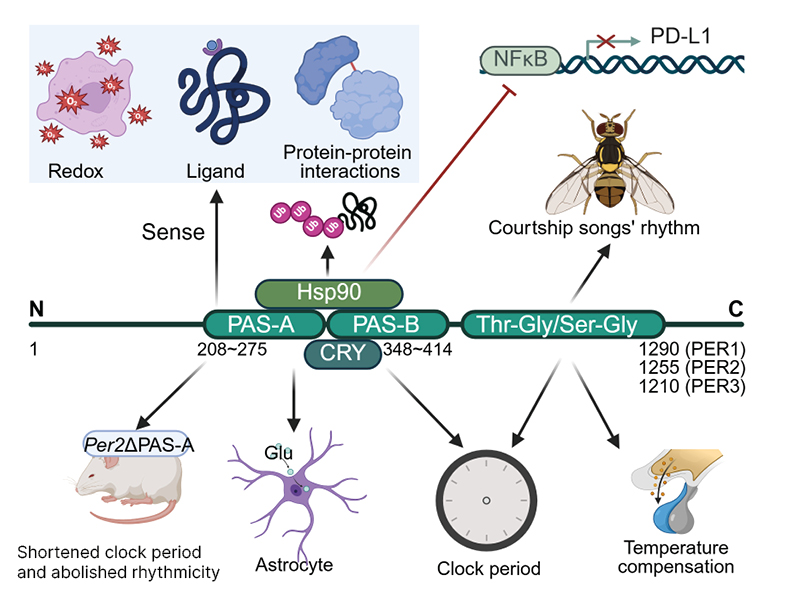
Figure 1: Structural architecture of PER proteins.
Human PER1, PER2 and PER3 share conserved PAS-A/PAS-B domains and a C-terminal threonine-glycine/serine-glycine repeat tract. These structural elements support PER-CRY and PER-PER interactions and contribute to circadian feedback regulation, protein stability and approximately 24-hour rhythmicity. Alterations in PER structural domains may affect circadian period, temperature compensation, immune-related signalling and neuronal function.
CRY: cryptochrome; Glu: glutamate; Gly: glycine; HSP90: heat-shock protein 90; NFκB: nuclear factor kappa B; PAS: Per-ARNT-Sim; PD-L1: programmed death-ligand 1; PER: period circadian protein homolog; Ser: serine; Thr: threonine; Ub: ubiquitin.
The mammalian circadian clock is based on interlocked transcription-translation feedback loops that generate approximately 24-hour rhythmicity (Figure 2).15
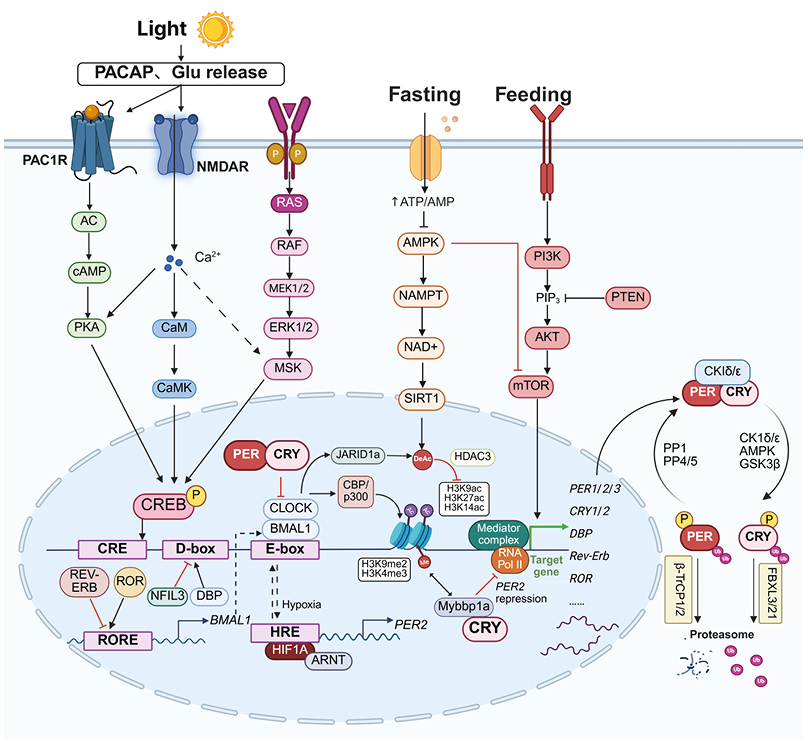
Figure 2: PER-centred transcriptional-translational feedback loop and entrainment pathways.
BMAL1-CLOCK heterodimers activate PER and CRY transcription through E-box elements, while auxiliary regulatory pathways acting through CRE, D-box, RORE and HRE motifs further shape rhythmic clock-gene expression. Accumulated PER and CRY proteins form repressive complexes that inhibit BMAL1-CLOCK activity and close the core transcriptional-translational feedback loop, while phosphorylation, ubiquitination and proteasomal degradation regulate PER/CRY stability and timing. In the suprachiasmatic nucleus, light-induced PACAP and glutamate signalling promotes acute PER transcription through calcium- and kinase-dependent signalling pathways. In peripheral tissues, fasting- and feeding-related nutrient-sensing pathways, including AMPK/SIRT1 and PI3K/AKT/mTOR, align local PER rhythms with metabolic state.
AC: adenylyl cyclase; AKT: protein kinase B; AMPK: adenosine monophosphate-activated protein kinase; ARNT: aryl hydro-carbon receptor nuclear translocator; BMAL1: brain and muscle ARNT-like 1; CaM: calmodulin; CaMK: Ca2+/calmodulin-dependent protein kinase; CBP: CREB-binding protein; CK1δ/ε: casein kinase 1δ/ε; CRE: cAMP response element; CREB: cAMP response element-binding protein; CRY: cryptochrome; DBP: D-box-binding protein; ERK1/2: extracellular signal-regulated kinase 1/2; FBXL3/21: F-box and leucine-rich repeat proteins 3 and 21; Glu: glutamate; HDAC3: histone deacetylase 3; HIF1A: hypoxia-inducible factor 1 alpha; HRE: hypoxia response element; JARID1a: Jumonji/ARID domain-containing pro-tein 1A; MEK1/2: mitogen-activated protein kinase kinase 1/2; MSK: mitogen- and stress-activated kinase; mTOR: mechanistic target of rapamycin; Mybbp1a: MYB-binding protein 1A; NAD+: nicotinamide adenine dinucleotide; NAMPT: nicotinamide phosphoribosyltransferase; NFIL3: nuclear factor, interleukin 3 regulated; NMDAR: N-methyl-D-aspartate receptor; PAC1R: pituitary adenylate cyclase-activating polypeptide receptor 1; PACAP: pituitary adenylate cyclase-activating polypeptide; PER: period circadian protein homolog; PI3K: phosphoinositide 3-kinase; PIP3: phosphatidylinositol (3,4,5)-trisphosphate; PKA: protein kinase A; PP1/PP4/5: protein phosphatases 1, 4 and 5; PTEN: phosphatase and tensin homolog; RAS: rat sar-coma; RAF: rapidly accelerated fibrosarcoma kinase; RNA Pol II: RNA polymerase II; ROR: retinoic acid receptor-related or-phan receptor; RORE: ROR response element; SCN: suprachiasmatic nucleus; SIRT1: sirtuin 1; TTFL: transcriptional-translational feedback loop; Ub: ubiquitin.
In the core transcription-translation feedback loops, basic helix-loop-helix ARNT-like protein 1 (BMAL1)-circadian locomotor output cycles kaput (CLOCK) heterodimers activate the transcription of PER and CRY genes, whereas accumulated PER and CRY proteins subsequently inhibit BMAL1-CLOCK activity and close the negative feedback cycle.15 Environmental cues synchronise these rhythms at both central and peripheral levels. In the suprachiasmatic nucleus, light acts as the primary entrainment signal by inducing PER gene expression and resetting circadian phase.16 Disruption of this light-entrainment pathway, such as through abnormal light exposure during shift work or nighttime lighting, leads to circadian misalignment and has been associated with increased risks of metabolic and cardiovascular dysfunction.17 In peripheral tissues, feeding-fasting cycles act as major synchronisers that coordinate local molecular clocks and metabolic rhythms; however, mistimed or disrupted feeding can uncouple peripheral oscillators from the central pacemaker and contribute to metabolic dysfunction.18
PER protein stability, degradation timing, nuclear dynamics, and feedback repression within the core circadian loop are tightly regulated by post-translational modifications, among which casein kinase 1δ/ε (CK1δ/ε)-mediated phosphorylation represents the central regulatory mechanism controlling PER turnover and circadian periodicity.19 Glycogen synthase kinase-3β (GSK-3β) regulates PER2 localisation and phase.20 Adenosine monophosphate-activated protein kinase (AMPK)/salt-inducible kinase 3 (SIK3)-related pathways link PER regulation to metabolic and stress-related signals.21 O-GlcNAcylation also connects cellular metabolic status with circadian regulation by modulating PER2 and BMAL1 stability and activity under high-glucose conditions, thereby contributing to circadian misalignment.22 Beyond timekeeping, PER-dependent circadian rhythms regulate phospholipid biosynthesis and membrane homeostasis, thereby influencing mitochondrial function, inflammatory signalling, and cellular metabolism.23,24
Together, these biological features provide a concise framework for understanding how PER dysregulation may contribute to chronic diseases, including cancer, metabolic dysfunction, inflammation, and treatment response. Pharmacological modulation of PER-regulatory pathways, including CK1δ/ε inhibition by PF670462, GSK-3β inhibition by CHIR99021, and CRY stabilisation by KL001, can alter circadian timing, PER/CRY repressor dynamics, and cancer-associated cellular phenotypes, highlighting the therapeutic potential of clock-targeting chronomedicine while remaining limited to preclinical investigation.25
PER DYSREGULATION IN CHRONIC HUMAN DISEASES
Accumulating evidence indicates that PER-related dysregulation is associated with multiple chronic disease states, including sleep disorders, malignancies, metabolic and cardiovascular diseases, neurological and psychiatric disorders, and immune-related conditions. The major disease associations, proposed mechanisms, model systems, and potential therapeutic implications are summarised in Table 1.5,6,13,26-49
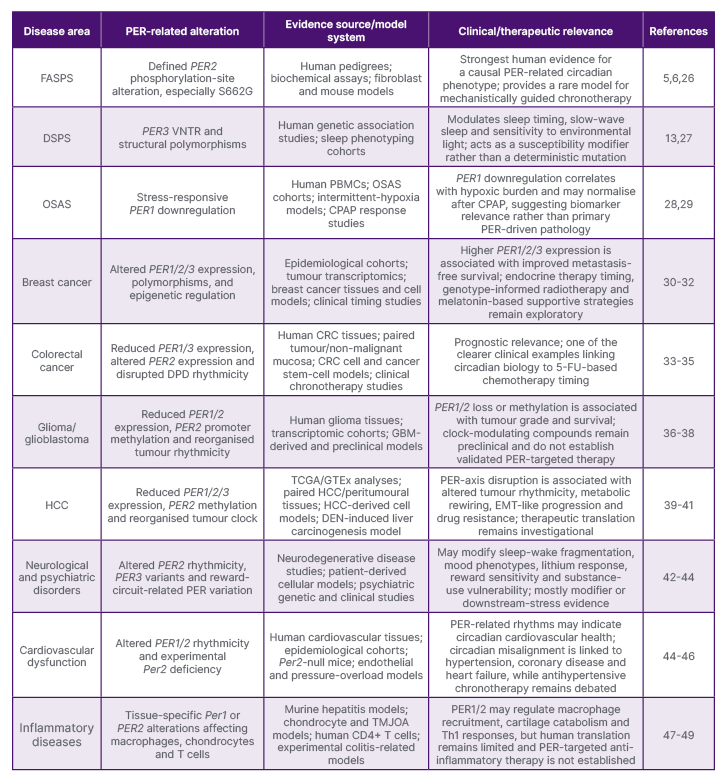
Table 1: PER dysregulation across chronic disease states: evidence sources and clinical relevance.5,6,13,26-49
5-FU: 5-fluorouracil; CPAP: continuous positive airway pressure; CRC: colorectal cancer; DEN: diethylnitrosamine; DPD: dihydropyrimidine dehydrogenase; DSPS: delayed sleep-phase syndrome; EMT: epithelial-mesenchymal transition; FASPS: familial advanced sleep-phase syndrome; GBM: glioblastoma; GTEx: Genotype-Tissue Expression; HCC: hepatocellular carcinoma; OSAS: obstructive sleep apnoea syndrome; PBMCs: peripheral blood mononuclear cells; PER: period circadian protein homolog; S662G: serine-to-glycine substitution at residue 662; TCGA: The Cancer Genome Atlas; Th1: T helper 1; TMJOA: temporomandibular joint osteoarthritis; VNTR: variable-number tandem repeat.
Circadian Rhythm Sleep Disorders
Sleep disorders provide the clearest clinical evidence linking PER gene dysfunction to human pathologies, with evidence ranging from monogenic phase shifts to stress-responsive rhythm changes. Mechanistically, these disorders highlight a critical distinction between rare causal mutations that directly alter core clock timing and more common susceptibility variants that modulate environmental sensitivity. Consequently, PER gene alterations display diverse penetrance, manifesting either as deterministic drivers or modulatory risk factors across different clinical phenotypes.
Familial Advanced Sleep-Phase Syndrome
Familial advanced sleep-phase syndrome (FASPS) represents a rare but powerful heritable model where a single-gene defect directly causes a reproducible human circadian phenotype. Clinically characterised by extreme morningness, early sleep onset, and premature awakening, FASPS was first mapped to a large pedigree exhibiting a shortened endogenous circadian period.26 Missense mutations that alter the S662 site, particularly the S662G substitution that removes the CK1δ priming site, shorten the circadian period and produce extreme morningness.5,6 This alteration disrupts the sequential phosphorylation cascade governing PER2 stability and degradation. Enhanced CK1δ activity (T44A) accelerates PER2 degradation, advances sleep phase, and reduces behavioural period (τ) by ~1.3 hours.50 Biochemical modelling confirms that these precise phosphorylation defects alter PER2 nuclear accumulation and protein stability, establishing a direct causal link between discrete molecular perturbations and advanced sleep timing.6 These findings highlight FASPS as one of the strongest human examples in which a defined PER-related molecular alteration produces a reproducible clinical sleep-phase phenotype.
Delayed Sleep-Phase Syndrome
Delayed sleep-phase syndrome (DSPS) is most prevalent in adolescents and young adults and is characterised by delayed sleep onset, delayed awakening, and heightened sensitivity to environmental light exposure. A 54 bp variable-number tandem repeat (VNTR) in PER3 modulates slow-wave sleep and slow-wave activity: longer 5-repeat alleles favour morning preference and higher slow-wave activity, whereas shorter 4-repeat alleles are enriched (75% homozygosity) in DSPS and correlate with latitude-dependent photoperiod sensitivity.13,27 Further genetic analyses indicate that structural variations across the PER3 locus modulate vulnerability to delayed sleep timing and altered homeostatic sleep pressure under sleep deprivation, rather than functioning as deterministic causal mutations. Consequently, PER3 variants serve as genetic modifiers that shape inter-individual differences in environmental light responsiveness and sleep-wake scheduling.
Obstructive Sleep Apnoea Syndrome
In obstructive sleep apnoea syndrome (OSAS), intermittent hypoxia and increased plasma norepinephrine suppress PER1 transcription in peripheral blood mononuclear cells; the magnitude of PER1 down-regulation correlates with apnoea-hypopnoea index and normalises after effective continuous positive airway pressure (CPAP) therapy, suggesting that PER1 expression reflects nocturnal hypoxia burden rather than a primary circadian defect.28 Subsequent work demonstrated that intermittent hypoxia broadly alters circadian gene regulation through hypoxia-responsive and inflammatory pathways, including NFκB and hypoxia-inducible factor 1α (HIF-1α) signalling, providing a mechanistic basis for the widespread transcriptional changes observed in OSAS.29 Overall, OSAS illustrates a stress-responsive PER alteration that may serve as a marker of disease burden and treatment response, rather than evidence of primary PER-driven sleep pathology.
PER Proteins in Human Cancers
PER dysregulation has been reported across multiple cancers, mainly as altered expression, promoter methylation, disrupted rhythmicity, or genetic variation. Current evidence ranges from epidemiological and transcriptomic associations to functional cell and animal models. This section focuses on tumour-specific prognostic relevance, treatment-response implications, and chronotherapy-related evidence, while distinguishing associative findings from preclinical mechanisms.
Breast Cancer
Circadian disruption has been investigated as a risk-modifying factor in breast cancer (BC), although much of the human evidence remains associative. Data from the Nurses’ Health Studies suggest that the association between rotating night-shift work and BC risk may depend on exposure duration and life stage.51 Large cohort-based transcriptomic studies show that higher PER1/2/3 expression correlates with prolonged metastasis-free survival, particularly in ER+/HER2− BC, supporting their potential prognostic value.30
PER polymorphisms have also been associated with BC susceptibility, though these associations describe risk-modifying rather than causal evidence.
At the mechanistic level, PER dysregulation may intersect with epigenetic regulation and oncogenic signalling in BC, but most evidence remains preclinical. Experimental studies indicate that PER1 silencing may be partly reversible through histone deacetylase inhibition, while PER2 or PER3 dysregulation has been linked to proliferation, invasion, and tumour-suppressive phenotypes in preclinical models.52 Specifically, PER3 deficiency activates downstream MEK/ERK proliferative signalling, whereas restoring PER3 expression or blocking this pathway attenuates malignant phenotypes in vitro.53
Circadian-informed therapeutic strategies in BC remain exploratory. In HR+/HER2− early BC, evening or nighttime tamoxifen intake was associated with improved disease-free survival in an observational sub-study, whereas a randomised trial comparing morning versus evening endocrine therapy did not show consistent benefits in tolerability, quality of life, or adherence.31,54 In breast radiotherapy, treatment time may interact with circadian genotype to influence late toxicity, supporting further research on genotype-informed radiotherapy scheduling.32 Melatonin has been evaluated as supportive therapy for sleep, cognition, and quality of life, with preclinical evidence linking circadian disruption to tamoxifen resistance.55,56 Overall, PER-related findings in BC support prognostic and circadian-informed research, but not clinically validated PER-targeted therapy.
Colorectal Cancer
Circadian disruption in the intestinal epithelium may contribute to colorectal cancer (CRC) risk by weakening temporal control of intestinal stem-cell proliferation and intestinal tumourigenesis.33 Reduced PER1 and PER3 expression has been observed in CRC tissues compared with paired non-malignant mucosa and has been associated with advanced disease or poorer prognosis, supporting the potential prognostic value of circadian gene profiling.57,58 PER2 expression has also been associated with tumour differentiation, metastatic risk, and aberrant Wnt pathway activation, supporting its potential prognostic relevance rather than a deterministic role.59
Mechanistically, PER proteins may influence CRC progression through Wnt/β-catenin, cancer stem cell, and epithelial-mesenchymal transition (EMT)-related pathways. PER2 suppresses intestinal tumorigenesis by downregulating β-catenin and proliferative target genes such as cyclin D and c-Myc.33
CRC provides one of the clearer clinical examples linking circadian biology to chemotherapy timing. The chronomodulated irinotecan-oxaliplatin-5-fluorouracil (5-FU) regimen, chronoIF-LO5, has shown acceptable safety and antitumour activity in clinical trials.34 The biological rationale is supported by circadian variation in dihydropyrimidine dehydrogenase (DPD), the rate-limiting enzyme for 5-FU catabolism, and by evidence that reduced PER1 transcription contributes to loss of DPD rhythmicity,35 providing a molecular basis for optimising 5-FU dosing schedules, though optimal regimens and patient selection remain incompletely standardised.
Glioma/Glioblastoma
PER expression patterns have been associated with glioma molecular subtypes and patient survival, although human data remain primarily prognostic and associative. Promoter methylation-driven silencing of PER2 occurs frequently in glioma biopsies and is linked to shorter overall survival.36 A notable disease-specific feature is the spatially heterogeneous disruption of the negative clock limb: human glioma specimens show lower PER1 and PER2 expression in tumour cells than in surrounding non-malignant tissue, with further reduction of PER1 in high-grade glioblastoma (GBM).60
Crucially, GBM-associated clock disruption appears reorganised rather than completely abolished. Proliferative glioblastoma cells retain temporal control over their intracellular redox state and glycerophospholipid metabolism despite exhibiting disrupted core clock-gene rhythmicity.37 In vivo glioma studies further support time-of-day-dependent tumour growth and chemotherapeutic response, with lower PER1 expression in tumour tissue than in adjacent tissue.61
Mechanistically, PER2 has shown tumour-suppressive functions in preclinical models through p53-related DNA-damage responses and Wnt/β-catenin-associated glioma stem-cell regulation.38 Pharmacological clock-modulating compounds, including CHIR99021, PF670462, and KL001, have been shown to alter GBM cell viability, migration, and cell-cycle distribution in vitro.25 While these findings support clock-informed therapeutic strategies, they do not establish clinically validated, PER-targeted chronotherapy.
Hepatocellular Carcinoma
Circadian disruption is clinically relevant in hepatocellular carcinoma (HCC) and has been associated with altered tumour rhythmicity, metabolic rewiring, and prognosis. These findings support the prognostic relevance of PER-axis dysregulation but remain mainly associative.
Rather than completely losing circadian rhythmicity, HCC appears to retain a reorganised tumour clock. Genome-wide time-course analyses show that liver tumours preserve circadian organisation but develop tumour-specific rhythmic transcriptional programmes and altered peak timing.39 In HepG2 cells, a human hepatoblastoma-derived cell line commonly used as an HCC model, molecular clock disruption remodels lipid metabolic outputs, including glycerophospholipid metabolism, triglyceride content, and lipid-droplet dynamics, linking circadian rewiring to lipid homeostasis.24
Mechanistically, functional evidence supports PER2 as a liver tumour suppressor, as PER2 loss-of-function increases DEN-induced hepatocarcinogenesis and disrupts clock-controlled proliferation, DNA-damage response, and inflammatory programmes.40 Recent in vitro HCC evidence further links reduced PER2 expression or impaired nuclear localisation to EMT-like marker changes, tumour aggressiveness, and resistance to everolimus or sorafenib.41 Together, PER1/2 dysfunction may contribute to HCC progression through circadian-metabolic rewiring, impaired damage control, and EMT-like progression; however, therapeutic translation requires further validation.
Other Tumour Types
Across additional tumour types, PER dysregulation shows context-dependent prognostic and treatment-response relevance, although most evidence remains associative or preclinical. In non-small-cell lung cancer, clinical timing studies suggest that chemotherapy infusion time may influence tolerability or progression-free survival in advanced non-small-cell lung cancer, but prospective validation remains limited.62 In prostate cancer, circadian disruption and PER variants have been associated with disease susceptibility, while preclinical studies link PER1 to tumour growth and androgen-receptor signalling and PER3 to taxane resistance, Notch/Wnt-related stemness and metastatic potential.63,64 In pancreatic ductal adenocarcinoma, reduced PER gene expression and circadian clock-related signatures have been associated with shorter survival and immune-related prognostic features, while experimental evidence suggests that PER1 restoration can promote cell-cycle arrest and suppress tumour growth.65 In oesophageal squamous-cell carcinoma, PER2 oscillation may influence cisplatin sensitivity in preclinical models, suggesting a time-dependent chemotherapy window.66
PER dysregulation has also been reported in oral, gynaecological, and haematological malignancies, but these findings are generally based on tumour-specific expression, methylation, or cell-model studies and remain insufficient for clinical implementation. Overall, these findings support PER-related prognostic and treatment-response research across solid tumours, but clinical implementation remains investigational.
Neurological, Psychiatric, Cardiovascular and Inflammatory Diseases
Beyond primary sleep disorders, PER gene variations are increasingly recognised as genetic modifiers or stress-responsive downstream indicators in neurodegenerative and psychiatric conditions. In Alzheimer’s disease, sleep-wake fragmentation and circadian disruption are clinically prominent, while experimental evidence suggests that amyloid-β pathology may perturb PER2 rhythmicity and broader clock regulation.42 Rather than acting as an obligatory primary feature or inherited driver, clock gene disruption in neurodegeneration likely functions as a regulatory modifier that reflects downstream physiological stress and accelerates cognitive decline.43 In bipolar disorder, therapeutic concentrations of lithium alter circadian period length by inhibiting GSK-3β, a kinase that phosphorylates and destabilises PER3, while specific PER3 variants and VNTR polymorphisms associate with altered mood phenotypes, age at onset, and individual lithium dosage requirements.44
The clinical relevance of PER genes also extends to chronic cardiovascular dysfunction, shifting from direct single-gene causality in experimental models to systemic risk modulation in human cohorts. Animal models demonstrate that homozygous PER2 deficiency impairs endothelium-dependent vasorelaxation and limits vascular repair, while myocardial clock gene oscillations are flattened by pressure-overload haemodynamic stress.45,67 In humans, rhythmic expression of PER1 and PER2 documented in cardiovascular tissues becomes attenuated in pathological states such as hypertension and heart failure.68 Correspondingly, epidemiological studies confirm that chronic circadian misalignment is strongly associated with higher risks of hypertension, coronary artery disease, and heart failure.1,46 However, translating these findings into routine clinical practice remains complex, underscoring that PER gene expression variations function primarily as systemic indicators of circadian health rather than standalone therapeutic targets.
Finally, PER genes play a crucial, tissue-specific role in modulating the amplitude of inflammatory and immune responses. In murine models of fulminant hepatitis, PER1 coordinates macrophage recruitment and downstream TNF-α/IL-6 release through a peroxisome proliferator-activated receptor- γ/C-C motif chemokine receptor 2 (PPAR-γ/CCR2)-dependent pathway.47
Similarly, in temporomandibular joint osteoarthritis models, chronic circadian misalignment elevates PER1 expression in mandibular chondrocytes, which promotes GSK-3β phosphorylation and β-catenin liberation to accelerate cartilage matrix catabolism.48 In the context of intestinal immunity, low PER2 expression is observed in active cluster of differentiation (CD)4+ T cells from patients with ulcerative colitis, whereas PER2 overexpression experimentally suppresses Th1 cell polarisation and attenuates colonic inflammation.49 However, despite these clear insights from cell cultures and animal models, the translation of these pathways to human inflammatory diseases remains unclarified, and current clinical evidence does not support broad implementation of PER-targeted anti-inflammatory therapeutic strategies.
CLINICAL IMPLICATIONS AND CONCLUSION
PER1, PER2 and PER3 encode core negative regulators of the mammalian circadian clock and provide an important link between circadian timing and human disease. Across the diseases reviewed here, PER-related abnormalities are most clearly connected to circadian rhythm sleep disorders, where defined PER2 pathway alterations can produce reproducible sleep-phase phenotypes, while PER3 variants mainly modulate sleep homeostasis and vulnerability to delayed sleep timing.5,13 In cancer, PER dysregulation is clinically relevant mainly through altered expression, promoter methylation, disrupted rhythmicity and prognostic associations, as shown in breast and colorectal cancer cohorts.30,57-59 In neurological, psychiatric, cardiovascular, and inflammatory diseases, current evidence is generally associative, prognostic, or preclinical rather than causal.42,44
Current circadian-based therapeutic strategies can be grouped into behavioural entrainment, treatment timing, supportive circadian regulation, and pharmacological clock modulation. Behavioural approaches, such as structured light exposure and sleep-wake regularisation, aim to restore systemic circadian alignment when rhythm disruption is driven by lifestyle or environmental exposure.69 Treatment-timing strategies seek to align drug delivery with circadian variation in metabolism, DNA-damage repair, toxicity, and tissue vulnerability, with the most developed evidence in selected oncology settings.34 Melatonin-based supportive care may improve sleep or quality of life in selected patients, whereas pharmacological modulation of PER-regulatory pathways remains largely preclinical.25
Future research should prioritise two clinically reliable directions. First, biomarker-guided circadian risk stratification should integrate PER variants, promoter methylation, tissue- or blood-based PER expression, sleep-wake timing, light exposure, and wearable-derived rhythm metrics.70 This may help identify patients with circadian vulnerability and distinguish stable genetic susceptibility from reversible circadian misalignment. Second, prospective chronotherapy trials should define which diseases, drugs, and patient subgroups benefit from circadian scheduling, using baseline circadian phenotyping, treatment-time randomisation, toxicity endpoints, and efficacy outcomes.32,34 Overall, the PER axis is best viewed as a context-dependent clinical modifier and biomarker candidate rather than a universal disease driver. Its translation into precision chronomedicine will require standardised circadian assessment, disease-specific validation and carefully designed clinical trials.