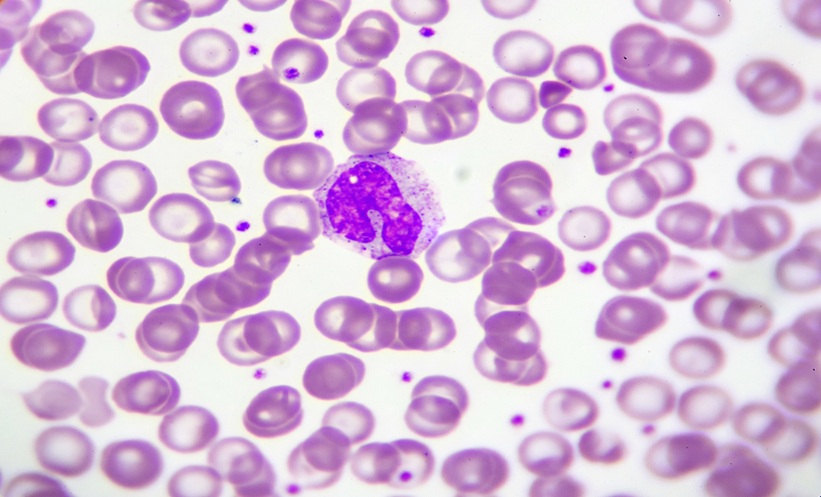
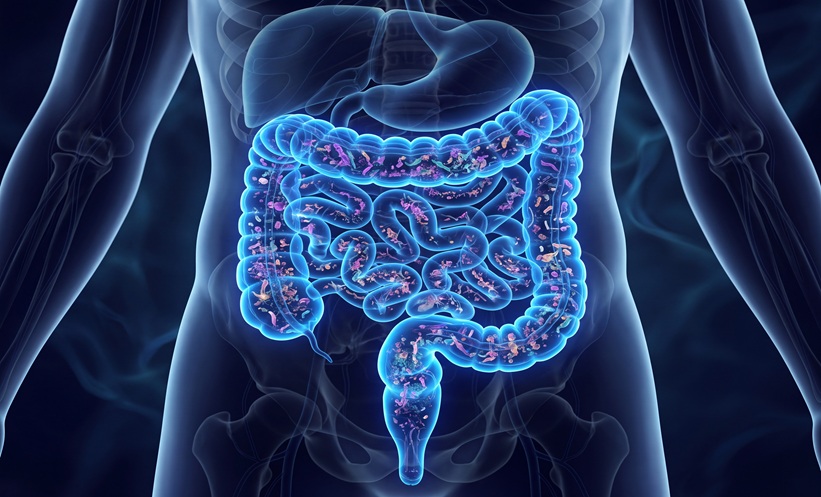
CROHN’S disease monocytes showed systemic transcriptional and functional reprogramming that may contribute to intestinal inflammation, according to data from newly diagnosed, treatment-naïve patients.
Monocyte Reprogramming in Crohn’s Disease
Bone marrow-derived circulating monocytes continuously replenish intestinal macrophages, which can become dysregulated in inflammatory bowel disease (IBD) and contribute to disease pathology. However, the origins of this dysfunction have remained poorly understood.
The study investigated whether circulating monocytes were already altered in IBD before entering intestinal tissue. Researchers used single-cell transcriptomic, epigenomic and functional approaches to examine blood monocytes from patients with newly diagnosed IBD and healthy controls.
The data showed that monocytes from patients with Crohn’s disease had a distinct transcriptional profile and altered distributions across inferred developmental trajectories. These changes were less pronounced in patients with ulcerative colitis.
Crohn’s Disease Monocytes Show Inflammatory Programming
The researchers linked transcriptional changes associated with Crohn’s disease to alterations in chromatin accessibility. Several transcription factor families, including NFκB, EGR, KLF and AP-1, were identified as potential regulators of an inflammatory gene programme in circulating monocytes.
The findings also indicated a potential role for interferon-γ in preparing blood monocytes for inflammatory activity. Specifically, interferon-γ appeared to limit the cells’ capacity to be regulated by interleukin-10, suggesting that systemic signalling could influence monocyte responses before they reach the intestine.
Importantly, the transcriptional and functional changes identified in circulating monocytes were maintained in monocyte-derived cells from the intestine. This finding connected systemic monocyte reprogramming with the inflammatory behaviour observed within intestinal tissue.
Implications for Intestinal Inflammation
Together, the data suggested that intestinal macrophage dysfunction in Crohn’s disease may be partly established before monocytes are recruited to the intestine. Rather than arising solely from exposure to the intestinal inflammatory environment, altered macrophage behaviour may therefore have a systemic component.
The findings highlighted circulating monocytes as a potential contributor to intestinal inflammatory function in Crohn’s disease. They also suggested that signals acting in the circulation, including interferon-γ-mediated effects on inflammatory function and interleukin-10 regulation, could influence subsequent immune activity within the intestine.
Further understanding of these systemic changes could help clarify how monocyte behaviour becomes dysregulated in Crohn’s disease and how inflammatory function is established before tissue recruitment.
Reference
Hornsby E et al. Systemic reprogramming of monocytes in Crohn’s disease promotes their intestinal inflammatory function. JCI Insight. 2026;DOI:10.1172/jci.insight.192830.
Featured Image: jarun011 on Adobe Stock