SUBCLINICAL pulmonary dysfunction was identified in patients with inflammatory bowel disease (IBD), with small airway abnormalities emerging despite the absence of respiratory symptoms, according to a prospective observational study.
Study Evaluates Pulmonary Function
The study evaluated 80 patients with IBD and 20 healthy controls without known respiratory disease. Of the patients with IBD, 41 were in remission and 39 had active disease. Participants were recruited from the IBD clinic of the Tropical Medicine and Gastroenterology Department at Alrajhi Hospital, Assiut University.
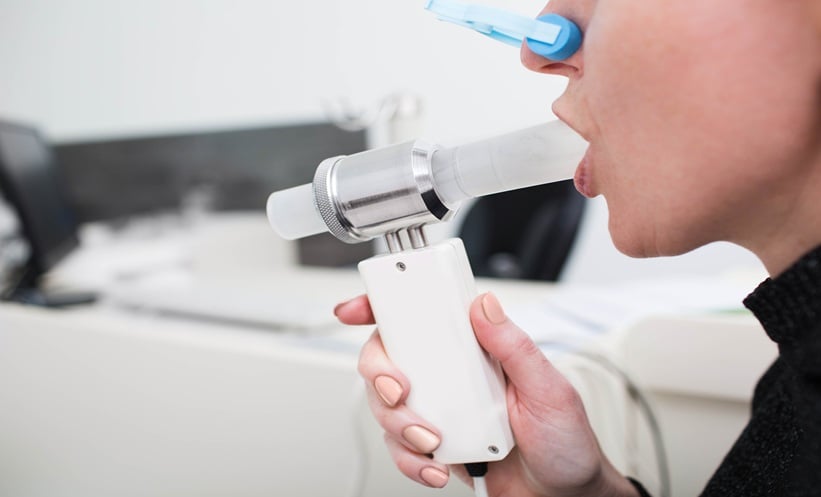
All participants underwent clinical and laboratory assessment alongside spirometry. Researchers measured forced expiratory volume in one second (FEV₁), forced vital capacity (FVC), the FEV₁/FVC ratio, and several small airway parameters, including forced expiratory flow at 25–75% of FVC (FEF25–75%) and maximum expiratory flow at 25%, 50%, and 75% of FVC (MEF25, MEF50 and MEF75).
Disease activity was assessed using endoscopy, magnetic resonance enterography, intestinal ultrasound and the endoscopic Mayo score, according to IBD subtype.
Small Airway Changes Detected
A substantial proportion of patients with IBD had abnormal spirometric findings despite being asymptomatic. The study found differences in small airway measures, particularly FEF25–75% and MEF50, between patients with IBD and healthy controls.
These findings suggested that small airway involvement may provide a more sensitive indication of pulmonary changes than conventional spirometric measures alone. Although conventional parameters did not significantly differ between active and inactive IBD, small airway indices captured more subtle alterations.
The researchers also examined relationships between pulmonary function and markers of IBD activity. Faecal calprotectin demonstrated weak-to-moderate correlations with selected pulmonary function parameters, indicating a potential relationship between intestinal inflammatory activity and pulmonary changes.
Spirometry May Support Earlier Detection
The findings highlighted the potential value of spirometry as a non-invasive approach to identifying pulmonary abnormalities before respiratory symptoms develop. In particular, assessment of small airway indices may help clinicians detect subtle pulmonary involvement that could otherwise remain unrecognised.
The researchers concluded that pulmonary dysfunction may be prevalent among patients with IBD and that small airway involvement represented an important feature. They suggested that routine pulmonary function monitoring could be considered even for patients without respiratory symptoms.
Further assessment of pulmonary function alongside IBD disease activity may therefore help clinicians recognise subclinical respiratory involvement earlier and support more comprehensive monitoring of extraintestinal manifestations.
Reference
Sayed HM et al. Evaluation of subclinical pulmonary involvement in inflammatory bowel disease using spirometry: an observational study. Egypt J Bronchol. 2026;20:139.
Featured Image: Peakstock on Adobe Stock