This opinion piece was written by Professor Joost PH Drenth, President, United European Gastroenterology (UEG), and Professor Debbie Shawcross, Secretary-General, European Association for the Study of the Liver (EASL). It was published in collaboration with EMJ. The opinions expressed in this article belong solely to the authors.
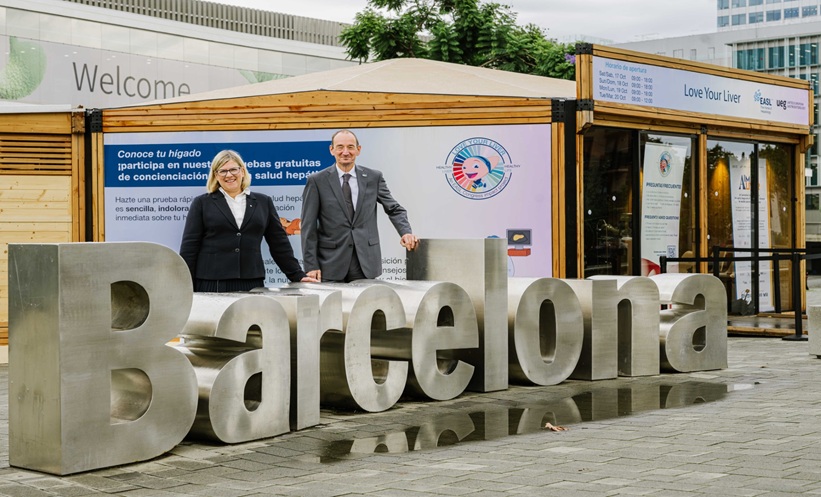
Just outside Fira Barcelona Gran Via during United European Gastroenterology (UEG) Week 2026 local residents, venue staff and congress delegates were invited to do something many may rarely have done before: turn their attention to their own liver health.
For the first time, UEG Week, Europe’s leading multidisciplinary congress for digestive health, hosted the European Association for the Study of the Liver’s (EASL) Love Your Liver initiative, offering free, 10-minute liver tests alongside information and advice on liver health.¹ Over the 4 days of the congress, approximately 700 members of the public and delegates were tested, highlighting the value of accessible liver health checks in raising awareness and identifying when further medical advice may be needed.
Love Your Liver is EASL’s public awareness and health promotion initiative, hosted each year in conjunction with the EASL Congress. Its introduction at UEG Week reflects a shared ambition between EASL and UEG to extend the impact of medical congresses into the communities that host them. It also raises a broader question for medical societies: how can we use our knowledge, expertise and influence, on full display at our congresses, to make a meaningful difference to those communities? For liver disease, that question is particularly urgent.
A Growing but Preventable Burden
Cirrhosis and liver cancer cause almost 780 deaths every day in the WHO European Region, accounting for around 3% of all deaths.2 Liver cancer mortality has risen by more than 50% since 2000.2 As the second EASL–Lancet Commission lays out, liver disease is one of the few major non-communicable diseases in Europe still moving in the wrong direction, even as progress is made against heart disease and several cancers. Liver disease also carries a substantial economic cost, reducing economic output across the EU27, Norway, Iceland, the UK and Switzerland by an estimated €55 billion each year through factors including lost productivity, premature death and workforce absence.²
Crucially, much of this burden is preventable. The Commission estimates that addressing behavioural risk factors alone, particularly alcohol consumption and unhealthy diets, could almost halve the burden of liver disease across these countries.² However, reducing risk must go hand-in-hand with early case finding. Many liver diseases can progress silently, leaving people unaware until substantial damage has occurred, while liver cancer is often diagnosed too late for curative treatment.2,3
Bringing Liver Health Closer to Communities
This is where initiatives such as Love Your Liver can make a difference. Transient elastography uses safe sound waves, similar to an ultrasound, to measure liver stiffness and assess how much fat is stored in the liver. The test is quick and non-invasive, requiring only a three-hour fast beforehand.1 While it does not provide a diagnosis or replace medical care, it is a starting point for people to engage with their liver health and, where appropriate, seek further medical advice.
But tackling liver disease at population level requires action beyond individual awareness. At UEG Week 2025 in Berlin, UEG and the German Society for Gastroenterology, Digestive and Metabolic Diseases (DGVS) published a joint statement on hepatocellular carcinoma prevention and screening, endorsed by EASL. It called for risk-stratified surveillance and for prevention to extend beyond individual choice through structural measures including improved food labelling, restrictions on marketing unhealthy foods to children and stronger nutrition education and public health policies.³
Extending our Impact Beyond the Congress
Taken together, these approaches demonstrate the breadth of the role medical societies can play – from enabling people to engage with their own health to advocating for the wider changes needed to prevent disease, with collaboration helping to strengthen that impact.
Bringing Love Your Liver to UEG Week is one example. Through the partnership, an initiative established at the EASL Congress has now reached a new community: UEG Week delegates, as well as local residents and venue staff in Barcelona. Our ambition is that this kind of activity should eventually become the norm. Major medical congresses bring thousands of healthcare professionals and considerable expertise into a city. We should be asking how that temporary concentration of knowledge can leave a lasting benefit for the people who live there.
As medical societies, our impact should be measured not only by what happens inside our congress halls, but by how far our knowledge, expertise and influence extend beyond them.
References
- European Association for the Study of the Liver (EASL). Love Your Liver. Available at: https://easl.eu/what-we-do/policy-public-health-and-advocacy/love-your-liver/. Last accessed: 23 October 2026.
- Karlsen TH et al. Implementing sustainable liver health in Europe: a second EASL–Lancet Commission. The Lancet. 2026;407:1825-90.
- United European Gastroenterology (UEG), German Society for Gastroenterology, Digestive and Metabolic Diseases (DGVS). UEG and DGVS joint statement on HCC prevention and screening. 2025. Available at: https://ueg.eu/files/4059/75806e8a1c04cad241934a374c1359c0.pdf. Last accessed: 23 October 2026.