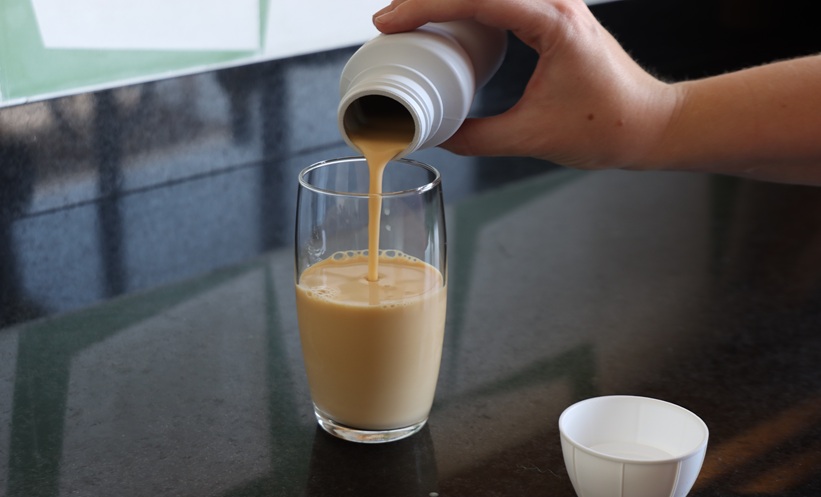
USTEKINUMAB combined with exclusive enteral nutrition (EEN) was associated with higher clinical response, remission, endoscopic response and mucosal healing rates than ustekinumab alone in patients with moderate to severe Crohn’s disease.
A retrospective study evaluated 114 patients with moderately to severely active Crohn’s disease treated between October 2020 and September 2024 across three inflammatory bowel disease centres. All patients received optimised ustekinumab with two initial intravenous doses. Of these, 56 patients received concurrent 16-week EEN, while 58 patients received ustekinumab monotherapy.
Baseline demographic and clinical characteristics did not differ significantly between the two groups.
Higher Clinical and Endoscopic Response
At week 16, clinical response was reported in 94.6% of patients receiving ustekinumab plus EEN, compared with 70.7% of patients receiving ustekinumab alone. Clinical remission was achieved by 89.3% and 55.2% of patients, respectively.
Endoscopic outcomes also differed between the groups. Endoscopic response occurred in 95.2% of patients receiving combination treatment versus 58.8% receiving ustekinumab alone. Mucosal healing was reported in 90.5% and 37.3% of patients, respectively.
The reported differences remained at week 52. Among patients receiving combination treatment, clinical response reached 88.2% and clinical remission reached 80.4%. Endoscopic response was 87.5% for colonic lesions and 87.1% for ileum lesions. Mucosal healing was reported in 71.9% of colonic lesions and 71.0% of ileum lesions.
Potential Role in Crohn’s Disease Treatment
No severe adverse events were reported. The findings indicated that combining ustekinumab with 16-week EEN was associated with sustained clinical and endoscopic outcomes through week 52.
The study authors concluded that the combination provided an efficacious and optimised therapeutic strategy for induction and maintenance treatment in patients with active Crohn’s disease.
The retrospective design and cohort structure should be considered when interpreting the findings. The data support further evaluation of combination treatment with ustekinumab and EEN as a strategy for optimising outcomes in patients with active Crohn’s disease.
Reference
Zhang Z et al. Efficacy of combination treatment by ustekinumab and exclusive enteral nutrition in adult patients with moderate-to-severe Crohn’s disease. Sci Rep. 2026;DOI:10.1038/s41598-026-72567-y.