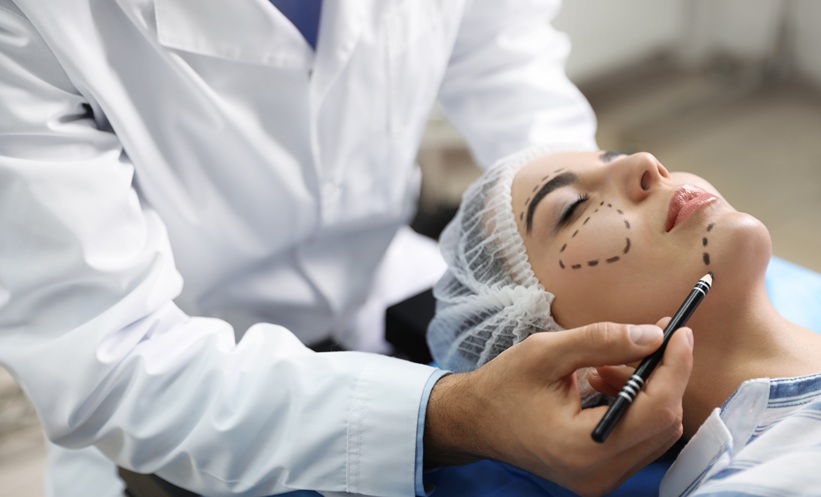
PATIENTS undergoing high-risk cosmetic procedures in England will receive stronger protections under government proposals to restrict who can perform treatments.
The announcement follows reports of unqualified practitioners carrying out procedures that put patients at risk of serious harm or death and come as part of plans to crackdown on so called “cosmetic cowboys”.
Restricting High-Risk Procedures
Under the proposals announced by the UK‘s Department of Health and Social Care, fillers injected outside the face, including in liquid Brazilian butt lifts, would be legally classified as cosmetic surgical procedures, meaning only doctors will be able to perform them.
Other non-surgical treatments considered to be high-risk, including deep chemical peels, vampire facials, dermal micro-coring and some laser procedures, would be restricted to doctors, dentists and specified nurses, midwives and pharmacists with accredited prescribing training.
With the line between surgical and non-surgical procedures becoming increasingly blurred, new rules will also close a dangerous loophole that in some instances, allows under-qualified practitioners to carry out high-risk procedures in hotel rooms without appropriate regulation
Strengthening Patient Protection
The plans would also prevent under-18s from undergoing risky cosmetic surgery and other high-risk treatments, although fillers in under 18s are already banned in a previous law.
Providers found to be breaking the rules could face criminal proceedings, unlimited fines or fixed penalties of up to £4,000.
The government also plans to launch a consultation with clinicians, regulators, businesses and the public before the official plans are drawn out and put through parliament – which is expected to happen in spring of 2027.
Separate to the proposal, the government remains committed to enforcing a licensing scheme that ensures clinicians offering Botox, lip fillers and other lower-risk treatments meet strict safety standards.
Driving Out ‘Cosmetic Cowboys’
Health Minister Karin Smyth said about the plans will aim to “drive cosmetic cowboys out of the market” while and raising standards for cosmetic treatment across the board. She said: “If you’re planning to undergo a major cosmetic procedure, you deserve to know you’re in safe hands – not risking your life with a rogue operator.
She continued: “These changes mean that only properly trained professionals can carry out the most serious, high-risk procedures, and that young people will be shielded from treatments that can go badly wrong.”
Victoria Brownlie MBE, Chief Policy & Sustainability Officer at the British Beauty Council, agreed that the proposal marks a “vital step” towards bolstering the safety of the beaty industry and commended the government for their actions.
She said: “A lack of regulation in what has become a booming market has led to an exploitation of these gaps, placing members of the public at serious risk.
“[The government’s] assurance that a licensing scheme for “lower risk” treatments will follow is also much welcomed as a vital turning point to ensure the highest standards of competence and care across the beauty and aesthetics sector,” she added.