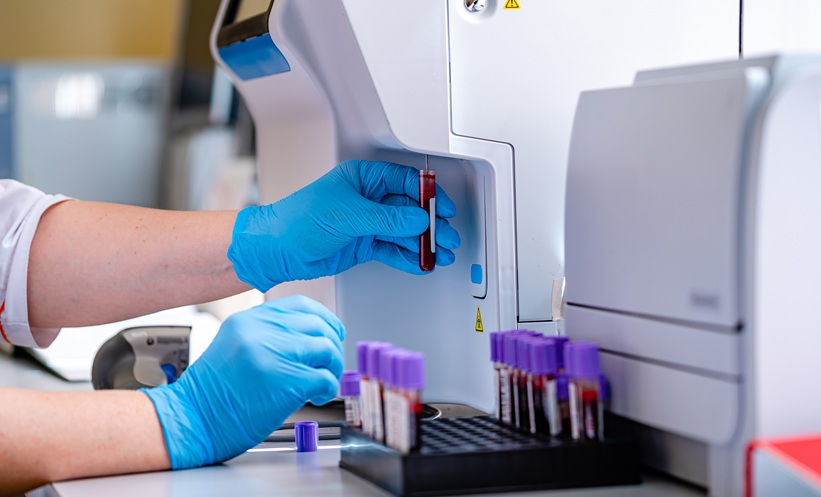
NEW BLOOD tests that can detect multiple types of cancer will be offered to patients across England in a new trial being run by the NHS.
The ‘world-first’ trial, which will start with a roll out of the test to 200 GP surgeries across the country, will aim to detect a range of hard-to-diagnose abdominal cancers, such as liver, ovarian and pancreatic, sooner and before they advance.
Catching Hard-to-Detect Cancer Early
By looking for proteins on small fragments of DNA in the blood that may signal cancer, the test will alert doctors to which patients suffering vague or mild symptoms that may otherwise be dismissed, need referral for more detailed investigations.
The government funded trial, led by the University of Birmingham, will offer more than 20,000 patients who experience problems like persistent bloating or abdominal pain the test. If the tests are deemed accurate after the pilot run, they will be offered for wider NHS use.
Around 71,000 people in England are diagnosed with pancreatic, stomach, liver, ovarian or bowel cancer – and nearly 35,000 die from these diseases – each year.
These cancers are notoriously difficult to diagnose due to symptoms that can often be attributed to a range of other, less serious conditions. This also means that they often aren’t detected until they have progressed into the advanced stages or metastasised to other parts of the body.
This particular trial, known as STRIDE-RCT, is designed to test for the early markers of bowel, small bowel, stomach, oesophageal, pancreatic, liver, bile duct and gallbladder, ovarian, endometrial, kidney, bladder and prostate cancer.
Eligible patients will have access to the blood test, which requires just two vials of blood, through their GP who will carry out routine tests alongside it.
These results sent for testing at the lab will be analysed for signs of cancer and if present, scientist may be able to pinpoint where in the body the tumour is located. However, the test can produce both false positive and false negative results.
Part of National Plans to Cut Cancer Deaths
It is not the first time a cancer-detecting blood test has been trialed in the NHS. Earlier this year, the Galleri test failed to meet its key objective of reducing diagnoses of late-stage cancers, but it is still being assessed for other benefits.
Yvette Cooper, Secretary of State for Health and Social Care said that trialing new innovations such as this is a “key part” of the UK government’s National Cancer Plan, which aims for 75% of people diagnosed with cancer in England to survive for 5 years or more by 2035.
Jonathan Reynolds, Secretary of State for Business, Innovation, Science and Trade, said: “Finding cases early is key – giving patients a clear path to treatment and helping save lives.”
He added: “The UK is a world leader in medical science research, and this trial shows how important that leadership is in bringing forward breakthroughs that can make a real difference to people.”
Currently, just 2% to 6% of urgent referrals on the NHS for cancer result in a diagnosis. By giving GPs another tool to decide who needs further tests, the technology looks to reduce this figure and free up appointments for those with a genuinely urgent need.