CHILDREN whose lung growth had been stunted by high levels of pollution in London have seen significant improvements since the UK introduced a low emissions policy.
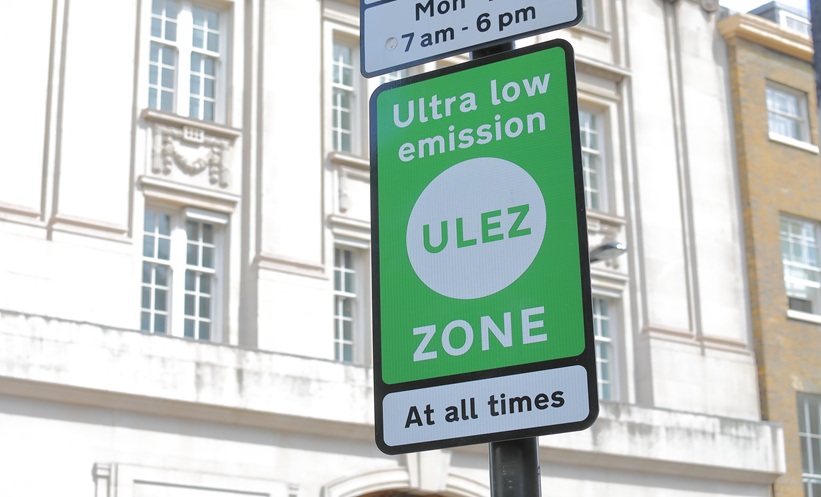
Researchers found that since the introduction of Ultra Low Emissions Zone (ULEZ) scheme in April 2019, a 24/7 London-wide scheme managed by Transport for London that charges a daily fee for driving vehicles that emit high levels of pollution, children’s lung health has markedly recovered.
Pollution Lowered Lung Capacity
Evidence shows that traffic-related air pollution (TRAP) impairs the development of children’s lungs, leading to an increased risk of chronic lung disease, heart disease, and mortality.
While air pollution poses a risk to anyone, children are particularly vulnerable to its effects as their lungs and immune systems are still developing. When outside, they also tend to be closer to the ground and sources of pollution, like exhaust pipes.
In 2020, nine-year-old Adoo-Kissi-Debrah became the first person in the UK to have ‘air pollution’ listed as their cause of death when she lost her life to a fatal asthma attack.
As a result of the growing issue of TRAP in built-up and busy metropolitan cities, governments are increasingly implementing clear emissions zones (CAZ) in areas that pose the highest risk.
Researchers at Queen Mary’s University in the UK looked into whether the UK’s own CAZ policy, introduced in 2019 to cut levels of TRAP in London by limiting the type of vehicles allowed to drive freely in the city, has been effective by comparing the lung health of children in London and nearby Luton – which has no CAZ policies.1
Children’s Lungs Recovered
A year prior to the implantation of ULEZ, the scientists established a cohort of 3414 schoolchildren aged between six and nine years old attending school in London ULEZ zones or living in Luton, who each underwent annual lung function and capacity tests for the next 5 years.
Mixed-effects regression models examined the association between modelled annual nitrogen dioxide exposures (NO2, the pollutant most reflective of tailpipe emissions) and lung function growth.
Initially, it was found that the London participants had a significantly smaller lung capacity than those in Luton – which is less polluted than London but has a similar mix of pollutants – and performed markedly worse in spirometry (FEV1) tests.
Despite the initial disparity in lung health, researchers found that after comparing the children on factors such as socio-economic background, physical activity and ethnicity, the London children saw faster yearly FEV1 growth (233ml per year), than their Luton peers (223ml per year) once ULEZ was implemented.
Although they started behind, by 2023, mean FEV1 was similar between the two cohorts – meaning the children in London had seen a significant improvement in lung health.
Data also showed that annual levels of NO2 decreased faster at household locations in London than Luton, with total estimated reductions of 15.1 vs 7.1µg/m3 over the study period.
Dr Helen Wood, Research Fellow at Queen Mary and lead author, said: “We already knew that the ULEZ reduced air pollution but now we know that children’s lung health has improved at the same time, which is a really important finding for children and parents living in London. 2
Promisingly, the proportion of children in London whose lung capacity was deemed “clinically impaired” (suggesting lung damage resulting in coughs or breathlessness) fell from 14% prior to ULEZ, to 9% when the study concluded 5 years later.
Strongest Evidence Yet
Scientists believe the study provides the strongest evidence yet that local clean air zones effectively reduce harmful pollutants and that in doing so, could help reduce some of the harm caused by pollution during childhood.
They also conclude that the detrimental effects of traffic-related air pollution on children’s lung development are reversible and that children’s lungs can recover and grow once exposure to pollutants is decreased.
Ian Mudway, Associate Professor in the School of Public Health at Imperial College London and joint senior author for the study said: “Air pollution is a global issue. If we want to improve the lives of children living in high-traffic urban environments, we need bold and ambitious measures. 2
“Our data demonstrates that clean air zones can be an effective public health intervention to prevent damage to developing lungs,” he added.
Currently, over a billion children live in areas that are subject to high levels of pollution. The study is compelling evidence for the benefit of government led initiatives to reduce levels of pollution in cities across the globe.
Reference
1 Wood H E et al. Impact of London’s Ultra Low Emission Zone on lung development in children: the CHILL cohort study. Eur J Public Health. 2025;27(35)
2 Queen Mary University London. Introduction of London’s Ultra Low Emission Zone linked to improved lung growth in children. 2026. https://www.qmul.ac.uk/news/latest-news/2026/queen-mary-news/pr/introduction-of-londons-ultra-low-emission-zone-linked-to-improved-lung-growth-in-children–.html
Featured image: tktktk on AdobeStock