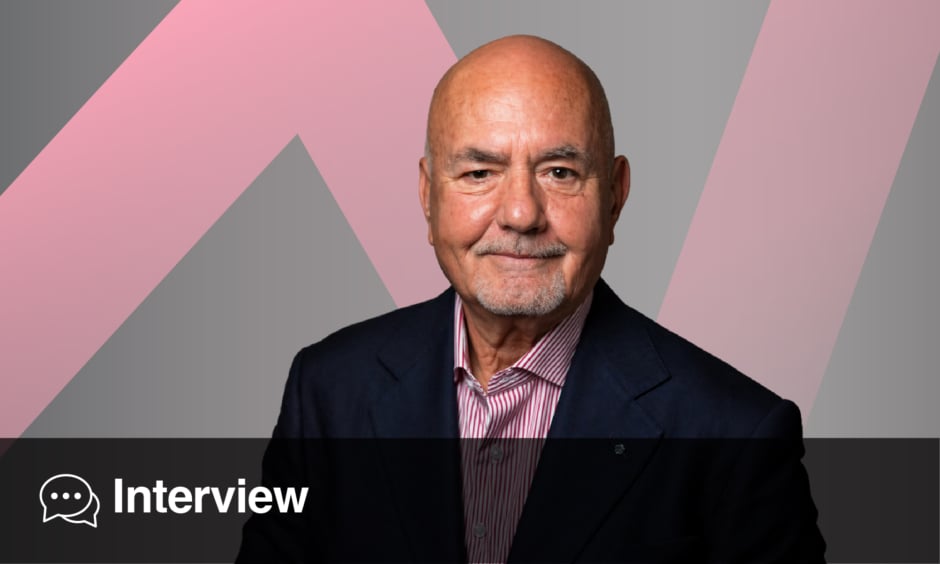
Massimo Pinzani | Emeritus Professor of Medicine, University College London (UCL), UK
Citation: EMJ Hepatol. 2026;14[1]:113-115. https://doi.org/10.33590/emjhepatol/7C760H21

You began integrating laboratory research within a clinical liver unit in the late 1980s. What initially inspired you to pursue a physician–scientist career, and how did your early experiences shape your translational approach to hepatology?
I became a physician–scientist because I had difficulties accepting the gap between diagnosing chronic liver disease and the understanding of the relative mechanisms of disease. I was also fortunate to be offered the right opportunities at the right time and to meet inspiring mentors who showed me the way to satisfy my curiosity. My work has always been guided by patient‑centred questions and human‑relevant models to discover and validate biomarkers and suitable therapeutic targets. This bedside‑to‑bench loop focused me on hepatic stellate cell biology, extracellular matrix remodelling, non‑invasive diagnostics, and biotechnology partnerships to translate discoveries into therapies.
Liver fibrosis and chronic liver disease became central to your life’s work. What drew you specifically to this area, and what unanswered questions continue to motivate you today?
I found the area of tissue fibrosis very fascinating, because, while it is the ultimate remedy ensuring tissue continuity following chronic damage according to the concept of chronic wound healing, the progressive changes of tissue structure lead to disease complication and organ failure. I was and I am still attracted by the different features of fibrogenesis in different diseases within the same organ and in different organs and systems. I became especially passionate about cell–cell and cell–extracellular matrix interactions, soluble inflammatory mediators, and intracellular signalling in hepatic stellate cells. After more than a decade of deep dive in the cell and molecular biology of liver fibrogenesis, my research returned to address clinical needs, and particularly the non-invasive assessment of fibrotic stage by serum markers and elastography, and the correlation with key clinical complications, such as portal hypertension. Among many unanswered questions that still motivate me, I am very puzzled by the individual genetic variability in handling fibrogenesis both in progression and in regression.
You are considered one of the pioneers in cellular and molecular mechanisms of liver fibrosis, regenerative medicine, and extracellular matrix scaffold bioengineering. What do you see as your most transformative scientific contribution to the field?
My most transformative contribution has been establishing a bedside‑to‑bench translational model focused on human liver biology. By embedding laboratory research within a clinical liver unit and prioritising human tissue and cells, I helped shift the field from reliance on animal models to human‑relevant studies centred on hepatic non-parenchymal cells, immune–stromal interactions, and extracellular matrix dynamics. This approach directly enabled the discovery of reliable non‑invasive diagnostics and biomarkers for fibrosis and portal hypertension, and the translation of extracellular matrix biology into regenerative platforms and scaffold technologies now fully pursued in industry. In short, integrating human mechanistic science with practical diagnostics and biotech translation changed how we diagnose, monitor, and target liver fibrosis.
Across more than four decades and 400 publications, your work has continuously evolved. How have you sustained scientific originality, and what does your 2026 ‘Cell Death and Disease’ paper signal about where your research is heading?
I sustain scientific originality by letting clinical problems shape basic questions, using human‑relevant systems (patient tissue, primary cells, organoids, extracellular‑matrix scaffolds) and adopting new tools (single‑cell omics, advanced imaging, and matrix engineering), while building tight industry partnerships to accelerate translation. A recent paper, produced by the research team lead by Giovanni Zito at Istituto Mediterraneo per i Trapianti e Terapie ad Alta Specializzazione (ISMETT) in Palermo, Italy, reports on the mechanisms regulating inflammation and hepatocyte senescence in an in vitro model of ischaemia-reperfusion injury and represents a further expansion of my interest in regenerative and transplant medicine.
As an Emeritus Professor of Medicine at University College London (UCL), UK, Founder of the UCL Institute for Liver and Digestive Health, and now Scientific Director of University of Pittsburgh Medical (UPMC) ISMETT, how has your leadership philosophy evolved, and how do you build environments where translational science can truly thrive?
My leadership evolved from managing research projects as a ‘one-man band’ to enabling large and articulated groups of researchers as an orchestra conductor. I prioritise a shared patient‑centred purpose, removing barriers to collaboration, and protecting time and resources for high‑risk, high‑reward work. Concretely, by building a community of physicians and scientists within the same academic unit and ensuring easy access to samples and data, I established multidisciplinary cores (omics, imaging, biostatistics, bioengineering) with strong translational potential. I keep communication flat, track clear translation metrics, and sustain industry partnerships while safeguarding academic independence.
You co-founded Engitix Therapeutics, London, UK to translate extracellular matrix research into therapeutic development. What have been the key lessons in bridging academia and biotech, and how can physician–scientists engage more effectively with industry?
Co‑founding Engitix Therapeutics in 2016 with PhD student Giuseppe Mazza at the UCL Institute for Liver and Digestive Health, London, UK, has been one of the highlights of my academic career. Several former PhD students and postdoctoral researchers now work at Engitix under Mazza’s leadership. He is among the youngest and most successful CEOs in the biotech sector. I’m extremely proud to learn from my former trainees and this generational continuity in science brings me great satisfaction. Working in biotech has also reshaped my approach to science and research. Compared with the traditional academic path, industry demands clearer alignment of science with patient impact, pragmatic timelines and milestones, and fluency in industry concepts (investigational new drug‑enabling work, regulatory milestones). It requires designing studies with translational readouts, starting with focused sponsored projects, and building multidisciplinary networks that include regulatory and translational experts. Day‑to‑day efforts at the company reinforce my sense that we are on the right track to develop effective treatments for patients.
As Treasurer of the European Association for the Study of the Liver (EASL) and a long-standing contributor to international scientific bodies, how do you see the role of professional societies in shaping research priorities, public health policy, and global liver disease awareness?
Professional societies, such EASL, play a fundamental role: they set research agendas by convening experts to identify unmet needs and fund priority initiatives; they translate evidence into clinical guidelines and policy recommendations that influence public‑health decisions; and they amplify awareness through education, advocacy, and capacity‑building worldwide. The position of EASL Treasurer is tightly linked to the responsibility of the association leadership to make the right investments at the right time and ensure long-term growth and continuity. Investments include support to large research endeavours and consortia, professional task forces, training fellowships, and education and public health advocacy to reduce the global burden of liver disease.
Over four decades, hepatology has shifted from limited therapeutic options to targeted molecular and regenerative strategies. What major breakthroughs have most changed patient outcomes, and what developments (AI-driven diagnostics, organ bioengineering, antifibrotic therapies) do you believe will define the next 10–20 years?
Over the past 40 years hepatology has progressed from mainly supportive care to precision and regenerative approaches. Major advances that improved outcomes include curative direct‑acting antivirals for hepatitis C, effective long‑term control of hepatitis B, development of non-invasive diagnostics (biomarkers and elastography), improved management of portal hypertension, and refinements in transplantation. Over the next 10–20 years, I anticipate AI‑driven diagnostics that fuse imaging with multi‑omics for individualised risk stratification, truly anti‑fibrotic therapies that halt or reverse extracellular matrix deposition, and regenerative or bioengineered organ platforms (extracellular matrix scaffolds, organoids, and cell therapies) to restore function or bridge patients to transplant. Combined, these developments should move care earlier in the disease course and toward disease‑modifying interventions.