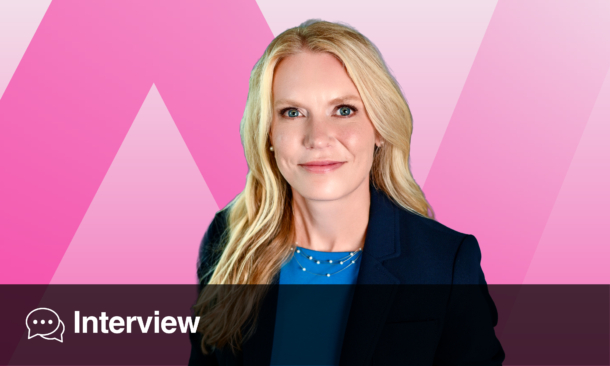
Wendy S. Armstrong | President-Elect, Infectious Diseases Society of America (IDSA), Arlington, Virginia, USA; Division Head, Infectious Diseases, University of Colorado Anschutz, Aurora, USA
Citation: Microbiol Infect Dis AMJ. 2026; https://doi.org/10.33590/microbiolinfectdisamj/D16C3EC1

Your career has spanned frontline HIV care, medical education, and health-system leadership. Which experiences have most shaped your approach to leadership and patient care?
It has been my engagement in patient care for patients with HIV, beginning with my very first clinical rotation in medical school. What was immediately clear was that people have their own stories and experiences, and being a better doctor or a leader means taking the time to listen to them and view individual challenges through their own life lens and not my own. Secondly, teams work better than individuals: every member of an HIV care team is critical and sometimes the key barriers are addressed by someone who is not the lead doctor in the room. And finally, but equally as important, the way it’s always been done is not always adequate, and it’s important to color outside the box to get to the solution that works.
In a few words, patient care and leadership require compassion, listening carefully, being humble, being part of a team, and being innovative.
As President-Elect of the Infectious Diseases Society of America (IDSA), what do you see as the society’s most urgent priorities, and what tangible difference would you like clinicians and patients to see during your presidency?
In the last several years, our priorities have been required to multiply. We are now required to focus much more heavily on advocacy, which we believe is important to support the public from infectious disease threats, and need to work harder on being a trusted messenger, not just a messenger. The infectious disease (ID) and HIV workforce is threatened and we must develop a strategy to address this, which requires us to better communicate about our specialty. Those are at the forefront.
I’d also like to see us become a bigger tent, a home for all those who work on infectious disease in the US and beyond; in other words, a home for ID doctors and other types of doctors who work primarily in the ID space (like HIV experts), Doctors of Pharmacy, advanced practice providers, PhD scientists, public health officials, and many others. I’d also like to see us be a homebase for ID critical care doctors, transplant ID doctors, HIV practitioners, musculoskeletal ID doctors, and so on.
Finally, I’d like to see us ahead of the curve when it comes to innovations, including thinking about the use of AI and clinical guideline development. It is an exciting time because there is a real appetite to think about how we can raise the bar and do things differently.
IDSA has taken a position in defense of evidence-based vaccine policy. How can patient-facing physicians maintain trust and support informed decision-making when patients encounter conflicting messages about vaccination?
As scientists, we know the evidence is clear that vaccines save lives. There are decades of studies, hard evidence, and real-world experiences that bear that out.
But as physicians, we assess evidence as well as the person who is sitting in our office asking questions. To me, that means listening very, very carefully to their questions and answering them with a spirit of respect and understanding. We must go into these conversations recognizing, and fully believing, that everyone is trying to do the right thing for themselves and the people they love. No one wants to see harm befall their loved ones. Those who don’t want to get vaccinated have heard messages that vaccines do harm. If we are not attentive to this perspective, we can never help people move into a space where they feel comfortable with vaccines. Physicians must let patients ask their questions without judgment, and we must recognize that this may be the beginning of a longer conversation that may take many visits. You cannot allay months or years of fear in one 15-minute conversation, especially if we lecture our patients or ignore their fear. We must play the long game and develop a relationship of trust and respect first.
Antimicrobial resistance can appear to be a system-level problem. What practical changes in prescribing, diagnostic stewardship, and patient communication would you most like every frontline clinician to adopt?
Frontline clinicians feel the pressure to be sure that every patient has every base covered, which leads to excess diagnostic tests, excess antibiotic prescribing, and the use of overly broad antibiotics. We get it: all of us want to do best by the patient in front of us. I’d like these clinicians, at a minimum, to re-evaluate these decisions after a few days for hospitalized patients. I’d like them to readily follow protocols established with contributions from ID physicians, and I’d like them to call ID doctors for advice. Ultimately, this requires developing relationships between antimicrobial stewardship programs and the end users. In addition, physicians must understand that antibiotics are not without risk. Withholding antibiotics or prescribing a less broad antibiotic can be safer for the patient. Patients don’t always understand that in the office. Physicians need to take the time to help them understand, which is hard given the pressures for throughput and short appointment times. None of this is easy, but we need to work on it, since we are seeing more and more trouble with highly resistant organisms.
Despite major advances in HIV prevention and treatment, significant gaps remain in diagnosis, engagement, and long-term viral suppression. Which innovations or models of care offer the greatest potential to close these gaps, particularly for underserved patients?
We have made incredible advances in biomedical prevention and treatment. What we still struggle with is equitable health outcomes. People do well when they have access to medications and care, are not struggling with basic life needs, do not suffer from profound stigma, and have support. Unfortunately, a very important subset of people cannot check all those boxes. We have also slid backwards in access to medications and supportive care for many populations, including those who are part of the LGBTQ community and immigrants.
We must grapple with how we develop models of care that support all, including mobile care, low barrier clinics, street medicine, and other ways we can meet people where they are. We must develop mechanisms to allow all patients access to long term injectable prevention and care options. We must work toward diminishing stigma. We must not have immigrants or trans patients be afraid to come to the clinical setting. We must move toward a healthcare system that supports quality outcomes and not just fee for service payments. We have a long way to go and many of these advances will help people suffering from a huge variety of health issues, including heart disease and cancer. HIV is leading the way, challenging us to think differently.
Pandemic preparedness is one of your stated priorities. Which lessons from COVID-19 have yet to be fully embedded in routine clinical practice and public health?
The COVID-19 pandemic, in my mind, has two tragedies associated with it. One is, of course, the massive loss of life and all the other downstream effects. The second is that not only have we not learned how to prepare to meet the next moment, but we have slid backwards, with a weaker public health infrastructure, a generation lost in the public health workforce, less robust vaccine development, less global cooperation, and less trust. It is heart-breaking. We have a lot of work to do as a country to get to where we need to be if a new global pandemic happens. And beyond investment, having a workforce that is trained to detect and treat infectious diseases does not happen overnight. We need policies that encourage people to specialize in infectious diseases. What we learned from the COVID-19 pandemic and was underscored by the hantavirus and Ebola outbreaks earlier this year is that we are part of one world. Viruses do not recognize borders or governments. Having a strong domestic preparedness infrastructure requires being an active part of global health decision-making.
Which scientific or clinical developments should IDWeek 2026 attendees follow most closely, and what do you hope attendees will take back to their daily practice?
This is difficult, because there are more than 200 noteworthy clinical presentations and talks across all areas of ID: antimicrobial stewardship, HIV care, vaccine efficacy, transplant ID, emerging outbreaks, and that’s just to name a few. This reinforces what is so exciting about our field. There are so many areas which are undergoing tremendous advances. There are new outbreaks. ID issues are constantly in the news. It changes every year. We reserve slots at the meeting for last minute new developments. ID is really a fascinating field. There’s also a lot going out outside of the sessions. For most of us, the opportunity to come together as a community and enjoy each other’s company is a particularly special part of IDWeek.