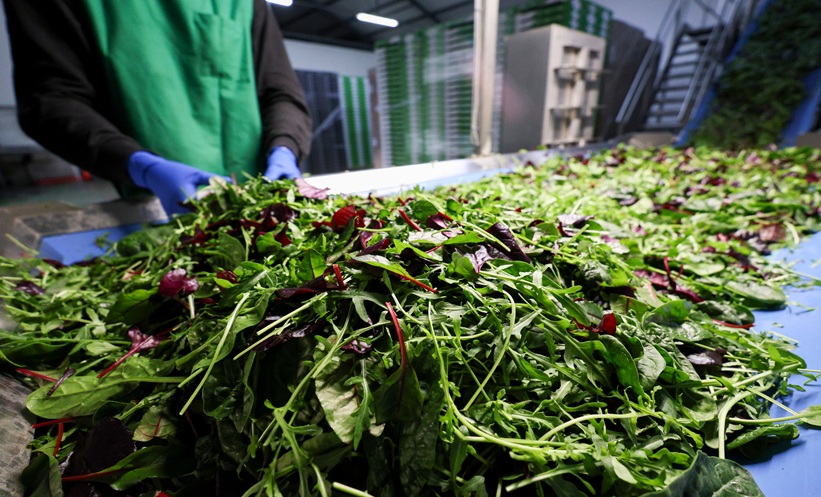
Environmental Escherichia coli isolated from lettuce, irrigation water, and agricultural soil can possess multiple survival mechanisms that may help the bacterium persist throughout the food production chain, according to new research published in BMC Microbiology. The findings suggest that preventing contamination before harvest may be more effective than relying solely on post-harvest washing and decontamination.
While antibiotic resistance has long been a focus of foodborne pathogen surveillance, the researchers found that other stress-adaptation traits—including biofilm formation and acid tolerance—may play an equally important role in enabling environmental E. coli to survive from farm to consumer.
Investigating Environmental Persistence
The study characterised 18 E. coli isolates collected from irrigation water, soil, and lettuce using laboratory phenotypic testing alongside whole-genome analyses.
Researchers evaluated each isolate for antibiotic susceptibility, ability to form biofilms, tolerance to acidic conditions, and the presence of genes linked to virulence, adhesion, iron acquisition, biofilm formation, and antimicrobial resistance.
The aim was to determine whether these survival traits commonly occur together and could contribute to bacterial persistence in agricultural environments.
Biofilm Formation Was Widespread
Although most isolates remained susceptible to the antibiotics tested, moderate-to-strong biofilm formation was observed in 83.3% of isolates. Only 11.1% of isolates met the definition of multidrug resistant.
Several isolates also demonstrated reduced susceptibility to acetic acid at concentrations similar to those commonly used for household vegetable washing, suggesting that some bacteria may survive routine decontamination practices.
Genomic analysis further revealed substantial diversity among isolates, including numerous genes involved in bacterial adhesion, iron acquisition, biofilm formation, and plasmid-associated antimicrobial resistance.
Stress-Adaptation Traits Often Occurred Together
The researchers identified significant positive associations between biofilm formation, acid tolerance, and antibiotic resistance phenotypes.
Rather than indicating that one trait directly caused another, the findings suggest these stress-adaptation mechanisms frequently coexist, potentially increasing bacterial resilience under environmental pressures encountered during crop production and processing.
Interestingly, while antibiotic resistance phenotypes closely matched the presence of known resistance genes, no single genetic determinant explained differences in biofilm formation or acid tolerance, indicating that these characteristics are likely influenced by multiple biological pathways.
Preventing Contamination May Be Key
The authors conclude that environmental E. coli can combine several mechanisms that support survival even when they are not highly antibiotic resistant. This resilience may allow bacteria to persist in irrigation systems, soils, and fresh produce, potentially reducing the effectiveness of downstream food safety interventions.
The researchers suggest that strengthening preventive measures before harvest—including improved management of irrigation water and environmental contamination—may be more effective than relying solely on post-harvest washing or other decontamination strategies to reduce the risk of foodborne E. coli transmission.
Reference
Karanbash S et al. Co-occurrence of biofilm formation, acid tolerance, and antibiotic resistance in environmental Escherichia coli associated with lettuce. BMC Microbiol. 2026;DOI:10.1186/s12866-026-05311-1.
Featured Image: Vincenzo Rampolla on Adobe Stock.
- Author: