Interview Summary
For this article, EMJ conducted interviews with Maria Isabel Leite, Nuffield Department of Clinical Neurosciences, University of Oxford, UK; Lorenzo Maggi, Fondazione IRCCS Istituto Neurologico Carlo Besta, Milan, Italy; Giuseppe Turchetti, Scuola Superiore Sant’Anna, Pisa, Italy; and Maria Bonaria Uccheddu, European Myasthenia Gravis Association, Brussels, Belgium. The experts provided clinical, patient advocacy, and health economics perspectives on how MG care is evolving and where challenges remain.
The discussion first explored how understanding of MG has broadened beyond motor symptoms to include wider impacts on quality of life, as well as the growing role of patient-reported outcomes. The experts then examined the implications of new therapies, including their potential to improve disease management and reduce treatment-related burden, alongside the challenges of ensuring equitable access across healthcare systems.
The interviewees highlighted persistent unmet needs, including under-recognised symptoms such as fatigue and mental health burden, and the fragmentation of care across specialties. They discussed the importance of coordinated multidisciplinary care and stronger referral pathways to specialist centres, as well as the role of specialist networks in improving diagnosis and management.
Finally, the experts addressed broader system-level challenges, including inequalities in access to innovation, the need to better capture the full socioeconomic burden of MG, and the importance of aligning clinical pathways, specialist networks, and reimbursement frameworks with the evolving therapeutic landscape. Together, their insights position MG as illustrating both the opportunities and systemic barriers facing rare neurological diseases in Europe, and highlight the actions needed to ensure that scientific progress translates into equitable patient benefit.
INTRODUCTION: A FIELD IN TRANSITION
Over the past decade, MG has been moving into the next stage. This transition is visible on three fronts: new therapies are expanding treatment options; new information is reshaping how clinicians and policymakers understand disease burden; and new responsibilities are emerging for general practitioners, general neurologists, reference centres, policymakers, and health systems, from first presentation of symptoms to long-term condition management.
As Turchetti notes: “Overall, there is more awareness and interest in rare diseases, including MG, than there was a decade ago.” Rare diseases have been moving up the European health agenda, driven, to a large extent, by patient associations’ awareness-raising efforts, alongside dedicated policy instruments such as European Reference Networks (ERN) and more recent EU initiatives on Health Technology Assessment (HTA) and health data.1 The fact that MG is increasingly discussed in clinical and policy forums is itself a signal of progress.2
Yet, the transition is not being experienced evenly. Maggi captures this directly: “Sadly, where a patient lives still determines the quality of care across Europe.” In practice, innovation and evidence do not automatically translate into timely diagnosis, appropriate referral, multidisciplinary support, and equitable access.3
This article brings together perspectives from a clinician who leads specialist services (Leite), a neuromuscular expert engaged in clinical research and care innovation (Maggi), a health economist specialising in pathway design and policy levers (Turchetti), and a pharmacist and patient advocate working across European networks (Uccheddu). Together, their contributions highlight how MG care is changing, where it still breaks down, and what a more reliable model might look like.
These themes are examined in greater depth in the 2026 European Brain Council (EBC) advocacy paper, ‘Rethinking Myasthenia Gravis Care Through a Brain Health Lens: Adaptive Pathways and Patient-Centred Insights’.2 This paper, which was developed via a multi-stakeholder project conducting a structured review of peer-reviewed and grey literature alongside 19 stakeholder interviews across France, Germany, Italy, and Poland, positions MG as a test case for brain health-oriented rare disease care in Europe. Maggi, Uccheddu, and Turchetti were contributors to the project.
As Maggi noted in his interview contribution: “Scientific progress in MG is undeniable. The real challenge now is ensuring that systems are structured to deliver these advances equitably and early enough to preserve function and quality of life.” For clinicians, this reframes MG not simply as a neuromuscular disorder to be stabilised, but as a condition requiring coordinated, data-informed, brain health-oriented care pathways.
NEW INFORMATION: LOOKING BEYOND MOTOR CONTROL TO PATIENT IMPACT
Historically, MG was often framed through a narrow clinical lens: neuromuscular weakness and its measurable manifestations. Maggi reflects: “In the past, we were mostly focused on motor symptoms without fully understanding the overall disease burden.” In contemporary care, clinicians increasingly recognise that symptom control does not automatically translate into restored function or wellbeing. “Even patients with relatively good motor control may still experience a very high impact on their lives,” Maggi adds, pointing to the gap between clinically perceived stability and lived reality.
Leite, speaking from long-standing clinical experience, offers a useful reframing of what has changed. In her view, clinicians have not suddenly discovered the patient impact of MG; the limitation for many years was having few practical options to offer patients. The profession has long understood the trade-offs of legacy treatments, particularly chronic steroid exposure: often effective for controlling MG, but costly in side effects impacting patients’ day-to-day quality of life. For Leite, the shift has been from recognising this problem to developing innovative treatments to lessen the impact of MG: “We are far away from problem solved, but, yes, we are aware, and also we have more tools to improvepatients’ care.”
Uccheddu describes a parallel transition from the patient’s perspective: data and evidence are accumulating, and even experienced clinicians are sometimes surprised by what emerges. She notes it is “not rare to hear neurologists at conferences admitting that sometimes they were surprised by the findings on the impact of MG in our life.” At the same time, Uccheddu cautions that this understanding sits within “a bubble of the people that are super experienced,” and dissemination to wider clinical and policy audiences remains incomplete.
For Maggi, the implications of reframing MG are practical: innovation has helped move the field beyond a narrow focus on relapse or motor control towards “good quality of life, a more patient-centred approach.”
NEW THERAPIES: EXPANDING OPTIONS AND RAISING EXPECTATIONS
The shift in understanding of the impact of MG is occurring alongside a changing therapeutic landscape. Leite notes that progress has been supported not only by patient advocacy and scientific advances, but also by “the pharma companies being involved in the development of new treatments.” In her view, this has created “new avenues and new paths” for care: clinicians have more options to reduce the impacts of both MG and legacy treatments. New interventions can be evaluated in clinical trials and, where appropriate, integrated into practice.
For Maggi, the implications are equally concrete: “The introduction of innovative therapies now provides alternative options that allow for better management of side effects.” As therapeutic options expand, so too does the need to measure what matters to patients. This will identify where burden persists even when clinical metrics appear stable.4
UNDER-RECOGNISED SYMPTOMS AND UNMET NEEDS: FALLING BETWEEN SPECIALTIES
An expanded understanding of MG inevitably raises a practical question: what remains under-recognised, under-assessed, or insufficiently addressed in routine care?
Maggi points to symptom domains that clinicians may not systematically explore. Fatigue is one example, but he distinguishes between fatigability linked to muscle weakness and “central fatigue, the feeling of being tired without energy, even mentally, is frequently neglected.” He also highlights mental health burden, noting that “around one-third of patients with MG have anxiety or depression […] yet these symptoms are often poorly assessed.”5,6 Beyond that, he points to “emerging evidence” that sexual dysfunction and urinary symptoms deserve attention, as these have historically been underestimated.7
Uccheddu outlines that patients may experience burdens that do not map neatly onto traditional MG assessments, and symptoms can be dismissed when they do not fit expectations. Her emphasis is on the pattern: when patients report a symptom or deterioration causing them distress and no clear clinical action is triggered, trust erodes and care fragments.
These gaps are directly relevant to multidisciplinary care. Neurologists cannot realistically manage every aspect alone, particularly as comorbidities and overlapping symptoms complicate interpretation. Uccheddu describes a recurring consequence: patients can end up in a “ping-pong” situation between clinicians, becoming the coordinators of their own care. This problem is not confined to resource-limited settings; she notes that it “happens everywhere.”8
Leite flags a workforce dimension that can support multidisciplinary delivery: specialist nurses. She describes MG specialist nursing as scarce but essential, stressing that good care is delivered when nurses are tightly integrated into the multidisciplinary team (MDT): “If each individual in [an] MDT works independently, it’s not [an] MDT anymore.”9
WHERE PATHWAYS WORK AND BREAK: NAVIGATING THE REFERRAL GAP
Across perspectives, where MG pathways function well is strikingly consistent: within specialist reference centres. Turchetti observes: “It works better once you reach the reference centres, because you find specialists and a system that is aware of the disease and its specificities.” In these environments, diagnostic technologies, neuromuscular expertise, and multidisciplinary coordination can accelerate decision-making and reduce uncertainty.10
The challenge is getting there. One of the most persistent breakdown points is the referral process itself. Leite describes the first failure as occurring at “that very basic primary site” where MG may not be suspected, particularly given its rarity and variable presentation. She notes inequalities even within well-resourced systems: patients in remote areas may not be diagnosed quickly; those presenting with ocular symptoms may reach diagnosis sooner, but without a prompt referral to a centre of excellence; and those with less common presentations (e.g., limb weakness, especially if presenting alongside comorbidities) may experience longer delays.11
Uccheddu reinforces this from within the patient community: while some individuals experience an ‘ideal’ pathway, “the majority don’t,” and the difference can feel like “luck.” She also highlights a subtle barrier: partial awareness can sometimes create false confidence. Clinicians who “know a little bit about the disease” may feel they have enough expertise, and it becomes “difficult to admit that maybe they should need help from expert centres.”
Leite proposes a pragmatic approach: specialist centres do not need to take on every patient, but they do need a mechanism to identify patients with MG and advise general neurologists when needed, particularly as ‘simple’ MG cases may later become complex. Her recommendation is to ensure patients in England are flagged to specialist services via regional MDT discussions, shared care plans, or a single specialist assessment followed by return to local care. “If we don’t know about patients, we cannot help them,” she says.
The EBC advocacy paper similarly identifies reduction of diagnostic delay as the first priority action, recommending strengthened referral pathways from primary care and general neurology to MG centres, and access to validated cell-based assays where appropriate.
Importantly, it emphasises that diagnostic delay is not merely a timing issue: it can translate into avoidable crises, unnecessary corticosteroid exposure, and poorer patient-reported outcomes and quality of life.
For practising clinicians, this translates into two immediate implications: maintaining a high index of suspicion in fluctuating presentations and ensuring early engagement with specialist centres (Figure 1).
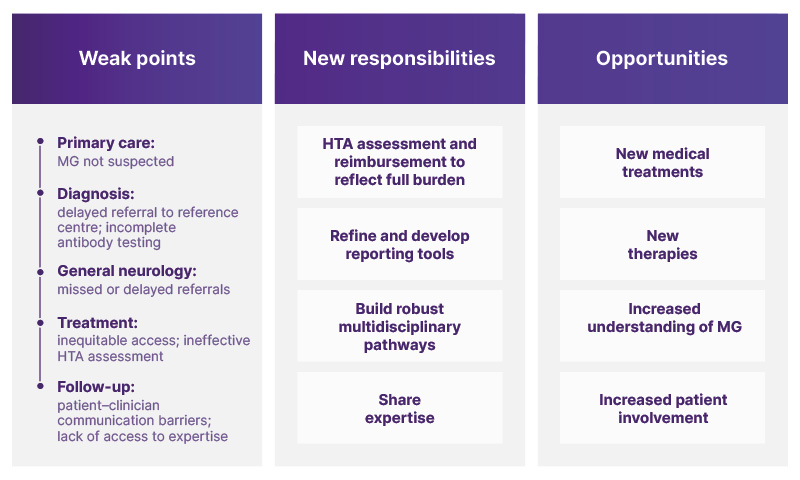
Figure 1: Weak points,10,12-17 new responsibilities,18,19 and opportunities for MG care pathways.1,20-23
HTA: Health Technology Assessment; MG: myasthenia gravis.
INEQUITY IN ACCESS: EXISTING INNOVATION, UNEVEN DISTRIBUTION
However, the benefits of innovation are not automatically realised. Turchetti emphasises that access depends on how quickly therapies are transferred into clinical practice and reimbursed: “Approval alone is not enough, reimbursement mechanisms strongly influence whether patients can actually access these treatments.”
Inequity limits access at multiple stages: diagnosis, referral, testing, and treatment. Maggi highlights antibody testing as a practical gatekeeper: if it is incomplete, patients may be misclassified as seronegative, which can “directly affect access to treatment.” In a rapidly evolving therapeutic landscape, eligibility criteria can hinge on biomarkers and subtypes, making diagnostic precision central to equity.
Turchetti widens the lens: even when therapies exist, patients face unequal access across countries and regions due to authorisation timelines and reimbursement mechanisms. “The timing is different, really different,” he emphasises. In practice, this means patients can experience starkly different realities based on location, sometimes even within the same country.
Importantly, Uccheddu challenges a common assumption that wealthier health systems necessarily deliver better access. She notes that significant issues appear in Nordic countries and the UK as well as in low- and middle-income countries. For her, the critical determinant is decision-making: when “cost and benefit are put in balance without the right knowledge about the impact of the disease, MG can remain under-prioritised, even in high-capacity environments.”
This is where Turchetti’s health-economic framing becomes essential. He argues that MG burden has been inaccurately reduced to the direct healthcare costs borne by payers, while other cost dimensions, like those highlighted by Lehnerer et al.,24 are systematically overlooked. These include direct non-healthcare costs borne by families and social systems, and indirect costs related to work capacity for both patients and caregivers. “These typically are costs that are under-recognised, because they do not affect the healthcare budget,” Turchetti explains, yet they are central to understanding the true burden of MG and the real-world value of improving pathways and access (Figure 2). He highlights a practical point for policymakers: “Even when an innovation is approved, if reimbursement is not aligned with the cost, this limits its diffusion into clinical practice.”15
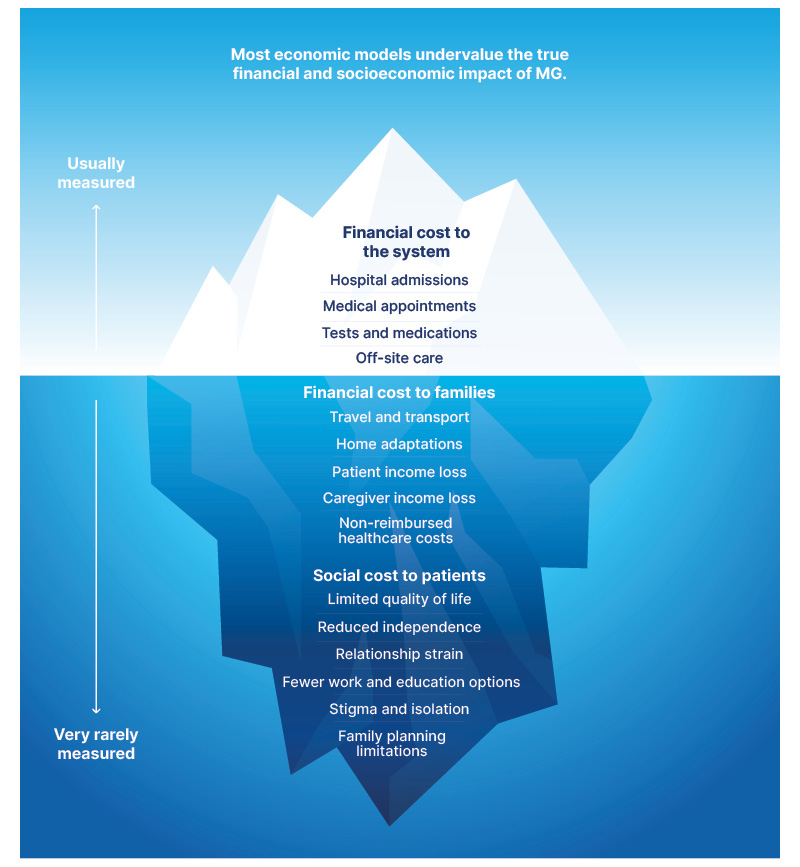
Figure 2: The unmeasured burden of generalised MG.16,24,25
MG: myasthenia gravis.
A central finding of the EBC advocacy paper is that access to innovation extends beyond reimbursement alone, requiring practical pathways for administration, monitoring, education, and follow-up, supported by trained teams and adequate service capacity.
The report also calls for systematic integration of real-world evidence and patient-reported outcomes (including digital patient-reported outcomes) into HTA and pricing decisions for MG treatments.
For clinicians, this underscores the importance of consistent use of validated outcome measures, not only for clinical monitoring, but also for generating the data required to sustain access discussions at a national level.
WHEN SYMPTOMS WORSEN: ENCOUNTERING THE PATIENT–CLINICIAN COMMUNICATION BARRIER
Even after diagnosis and treatment initiation, a major unmet need remains: what happens when a patient with MG deteriorates? Maggi asks a simple but far-reaching question: “When patients do not feel well or are getting worse, how can they contact their referral physician? This is one of the most important unmet needs.”
Patients may report deterioration, but general clinicians may lack the resource or expertise to trigger action. Uccheddu describes the real-life consequence of this gap as a “vicious circle” in which poor communication contributes to poor care, and limited multidisciplinary support makes it hard to distinguish MG symptoms from comorbidities or treatment effects.
Leite describes the practical realities: referral physicians may have more structured support (e.g., secretarial access, ability to arrange rapid video consultations), whereas local neurologists may work across sites and struggle to respond to patients. Her approach prioritises rapid assessment, trust, and escalation when needed: “By default we need to make sure that patient is believed and trusted,” and an appropriate clinician can assess and intervene.
Digital tools may help, but only if embedded within a structured response pathway. Maggi argues that digital platforms and structured patient-reported measures could trigger alerts and escalation rules that clinicians can act on, stressing scalability: “There is a large amount of data to manage. This cannot rely only on nurses or physicians; digital tools could really help.” Leite offers a cautionary addition: unstructured monitoring without context can create noise, and daily metrics may be hard to interpret clinically without clear thresholds and workflows.
Taken together, the message is not ‘digital versus traditional’, but that MG needs a reliable escalation pathway, supported by appropriately designed tools, adequate staffing, and clear lines of communication.
REFERENCE CENTRES, ERNS, AND THE HUB-AND-SPOKE MODEL: DESIGNING FOR RELIABILITY
All contributors recognise the value of specialist reference centres, but they also highlight implementation gaps in how networks function.
Turchetti describes the logic underpinning ERNs: concentrating expertise and diagnostic technologies, coordinating multidisciplinary input, and supporting peripheral clinicians through consultation. He emphasises that optimised rare disease care depends on pathways that are “co-designed with stakeholders” and “codified,” so roles are clear for specialists, local clinicians, nurses, managers, patients, and caregivers. This supports hub-and-spoke models, in which the reference centre coordinates care while local clinicians provide follow-up.
Maggi similarly argues that more formalised referral pathways are needed. Informal connections exist, but “they are not enough,” particularly across countries and regions with uneven infrastructure.
Uccheddu adds a patient-perspective reality check: many patients do not know that ERNs exist, and clinicians may not fully use the network. In her view, the system still requires significant work to become visible and functional for those outside expert circles.
DISTRIBUTED EXPERTISE IN PRACTICE: ESTABLISHING OUTREACH CLINICS
What might a well-connected system look like? Leite proposes a model of MDT outreach clinics, adapted from national service models in related neuroimmunological conditions. In this approach, expert clinicians travel several times per year to partner hospitals in remote areas to run joint clinics with local neurologists and multidisciplinary colleagues. The model enables patients to be assessed closer to home, while local clinicians receive face-to-face support with shared decision-making and optimal use of skills.
Leite describes the benefits for all parties: patients access expert input without extensive travel; local clinicians gain confidence and expertise; and specialist teams learn from diverse patient populations beyond their usual case mix. She notes that regional MDT meetings are valuable, but “seeing the patients goes one step further.”
The outreach model also anticipates future access challenges. As innovative therapies become more prevalent, systems may once again concentrate prescribing in expert centres, creating a new bottleneck. Outreach clinics may help keep distribution accessible and safe.
CULTURE AND TRUST: LISTENING AS A CLINICAL INTERVENTION
A recurring theme across perspectives is that care quality is not only structural, but relational. Leite argues that reference centres must adopt a cooperative stance, welcoming referrals, avoiding blame, and resisting an ‘expert versus non-expert’ narrative that discourages collaboration. “We need to remain open and welcoming, ensuring that general neurologists feel their clinical judgement is valued and that there is opportunity for shared learning,” she says.
Uccheddu’s most direct recommendation is striking in its simplicity: “Truly listen to the patient. It can be enough to make a big change.” She illustrates this with an analogy: a clinician entering an unfamiliar room and insisting they know where the key to a locked door is kept, rather than asking the person who lives there. Her observation is not anti-clinical; rather, she notes that experienced MG clinicians learn, often through hard outcomes, that listening and believing patients is central to safety.
In a system under strain, this emphasis matters. Listening is not a soft skill disconnected from clinical outcomes. It is a way of detecting deterioration, preventing crisis, interpreting ambiguous symptoms, and preserving trust when pathways are complex and responsibilities are distributed.
CONCLUSION: TURNING TRANSITION INTO EQUITABLE REALITY
MG is in transition. New information is broadening how clinicians and policymakers understand patient impacts and cost burdens. New therapies are expanding options and raising expectations for what good outcomes should look like. These developments, in turn, create new responsibilities for earlier diagnosis, reliable referral and escalation pathways, and policy and reimbursement systems that keep pace with innovation and provide equity.
The EBC advocacy paper provides a structured roadmap for operationalising these changes.
Its recommendations, reducing diagnostic delay; embedding multidisciplinary, brain health-oriented care; ensuring equitable access to innovation; addressing socioeconomic burden; and harnessing digital tools, are framed as directly actionable within emerging European policy infrastructures.
For clinicians, the message is pragmatic rather than abstract: using reporting tools, making early referrals to specialist centres, paying attention to symptoms that matter to patients, and participating in registries and real-world data initiatives are not peripheral activities. They are central to sustaining equitable, innovation-ready MG care.
As Maggi concludes: “The main message is that things are changing, and that is a positive message.” The task now is to ensure that change results in reliable, equitable, and accessible care, wherever a patient with MG lives.
GL-DA-2600540 Date of preparation: June 2026