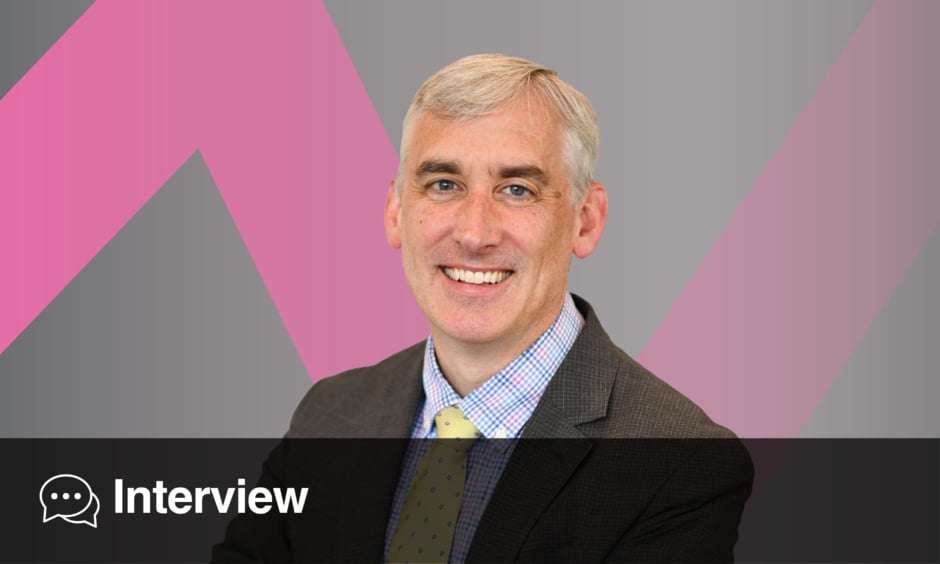
Paul M. George | Chair, Science Committee, American Academy of Neurology (AAN); Associate Professor of Neurology and Neurological Sciences, Stanford University, California, USA
Citation: Neurol AMJ. 2026;3[1]:52-55. https://doi.org/10.33590/neurolamj/06Z856V0

How did the blend of your academic career, from engineering at the Massachusetts Institute of Technology (MIT), Cambridge, through to clinical education at Harvard, Cambridge, Massachusetts, and Stanford, California, USA, influence the way you think about neurological disease, and what drew you specifically to the challenge of stroke recovery and vascular neurology?
I wish I could say I had the foresight and planned it all out from the start. The truth is, during my training I tried to follow the questions that interested me most and be prepared for opportunities that arose. I think having a multidisciplinary background allows someone to approach a problem from a slightly different angle and hopefully learn something new because of this. Throughout my career, the brain and how it functions always fascinated me, and I really enjoy the dynamic decisions associated with vascular neurology. We have made so many advances in stroke prevention and acute stroke care, but as I was going through my training and meeting patients, it was very evident that there is a real need to find options to help with recovery after a stroke. The research in my lab is focused on the challenge of how to encourage neural recovery after an injury, and I think approaching this from various angles is a unique way to advance our understanding.
What advances from your research program, leading a laboratory developing biomaterials and stem-cell transplantation methods, while running a multidisciplinary stroke clinic, have been most promising for improving stroke diagnostics and rehabilitation?
Over the last several years, I think the ability to collect and interpret big datasets from biological systems has really moved diagnostics for neurological disease forward. Advanced sequencing techniques, -omics, and now the use of AI to help with signal detection and interpretation will lead to better diagnostics and prognostication of how someone will recover after a stroke. We have used some of these methods to identify potential biomarkers for transient ischemic attacks, which are like mini strokes, where no permanent damage is left. Currently, transient ischemic attack remains a clinical diagnosis, so having a confirmatory biomarker would help us to know which patients are at higher risk of going on to have a stroke.
On the stroke recovery front, we have been excited to learn how electrical modulation can improve recovery. Our work and others’ have added to awareness that the recovering brain responds to electrical cues and these hold potential for rehabilitation. We have also used our ability to electrically modulate the recovering nervous system to find key recovery pathways that we can use to develop more traditional medical therapies for those recovering from a stroke.
Stroke remains a leading cause of disability. Given that stroke disproportionately affects underserved communities, what changes in health systems or education are needed to ensure that scientific advances translate into equitable outcomes for all patients with stroke?
One of the real strengths of the American Academy of Neurology (AAN) is their dedication to health equity. As you mention, stroke disproportionately affects underserved communities and because this is such a significant problem, it is important to try to address this through as many strategies as possible. One current goal of the AAN is to increase the number of practices preforming clinical trials. If practices in all communities are studying new therapies, the results will be more reflective of all communities and will improve care. Another goal of the AAN is to increase the number of practicing neurologists, including those who are underrepresented currently in neurology. Having more providers in all communities will allow for quicker access, greater trust, and better care for those in underserved communities.
How have your leadership roles within the AAN shaped your understanding of the neurology community and its needs?
It has been such a privilege to serve in various leadership roles in the AAN. Because of the size and the international reach of the AAN, you receive feedback and input from members around the world. Because of this insight into various practice settings, we get to see the impact that treatment advances and technologies such as telemedicine can have in neurologic care and rehabilitation, even in areas that don’t have a nearby neurology clinic for many miles. Because the AAN is able to hear from many members, including neurologists, advanced practice providers, and neuroscientists, I think it can learn the real needs of the community. I believe these factors have led to many of the current aims of the AAN to improve brain health and neurologic care, and have helped guide the program to bring the latest scientific advances to our members to ultimately improve patient care.
You have highlighted brain health equity, diversity, advocacy, and scientific advancement as core priorities. What steps should professional societies take to ensure that innovations reach diverse patient populations?
This is a complex problem. The AAN is currently working to increase the number of neurologists so that more communities have a neurologist present to provide outstanding care. The AAN is also working to make clinical trials available across more communities by increasing the number of practices participating in these trials. This is critical so that all communities are represented in the results of these trials. I think organizations such as the AAN play an important role in community education as well, so that diverse patient populations are familiar with how innovations can improve their health.
As Chair of the AAN Science Committee, you helped shape the scientific program for the AAN Annual Meeting this year. What themes do you expect will have had the greatest impact on practicing neurologists and researchers?
I think one of the main themes we saw was the role that the immune response has on neurologic disease. There were several exciting clinical trials across the field of neurology such as one for stiff person syndrome or another focused on myelin oligodendrocyte glycoprotein antibody-associated disease, where modifying the immune system improved the disease dramatically. Whether it was using cell-based therapies like CAR-T cell therapy to modify the immune response or medications to dampen the immune system, I think this area will continue to expand going forward. Of course, the other area was AI and its impact on our field. As we begin to understand the areas that AI can be effective or less effective, I think we can more rapidly design for integration of AI into the field of neurology.
How do you create a balance between innovative discoveries with content containing immediate clinical relevance in the program?
It is really fun to contribute to the Science Committee and work to bring the latest advances in our field together. One of the great things about the AAN, which is also a challenge, is that the AAN covers all of neurology. Because of this, we work to bring the top science that has occurred across the field from all specialties to the Meeting. One way in which we try to balance innovative discoveries that may take a few years until they impact our patients and those with immediate clinical relevance is the variety of themes of our plenary sessions. Our Frontiers Plenary is an example of a session that highlights some of the latest innovations impacting our field that may not be in the clinics right away. This plenary usually contains some of the sessions where I am just amazed at the new discoveries science is enabling. On the other side of the spectrum, the Clinical Trial Plenary discusses the biggest trials from across the field that can have an immediate clinical impact. We also have the “Neuroscience in the Clinic” sessions where we try to bring it all together. These sessions typically start with a clinical case and present the science behind the current treatments being used in the clinic and the steps to reach current clinical practice.
How can attendees optimize their learning and networking with the AAN, where “the best education, innovative science, and your global neurology community come together”?
The AAN Annual Meeting is such a wonderful gathering of neuroscience and neurology professionals. Every year I am energized by attending. There are so many things happening that it is great if attendees can utilize the app to determine what the key sessions are that day. There are also helpful tracks for various interests that can provide suggestions for what is happening in these areas. The other great way to make the most of the Meeting is to look at activities in the various hubs, which offer a smaller venue around themes, such as the Research or the Trainee hubs. The Meeting also includes dynamic networking events, such as the Opening Party, as well as dedicated programs throughout at locations such as the Wellness Hub.