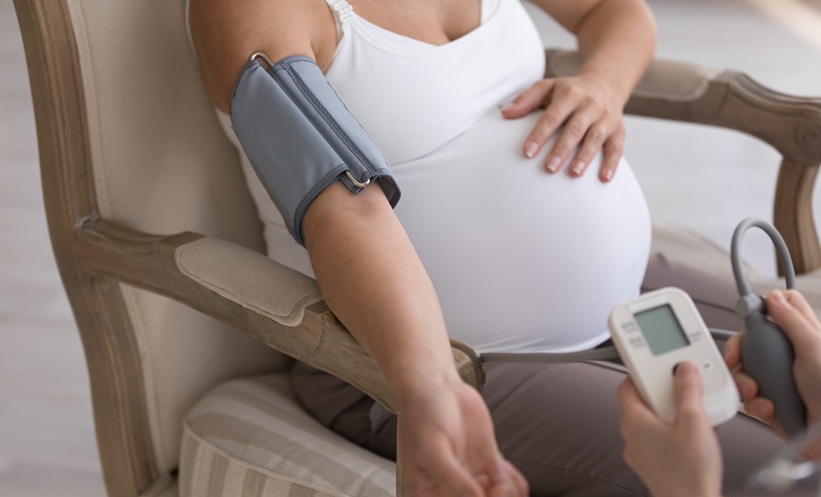
HYPERTENSIVE disorders of pregnancy (HDPs) have been linked to a higher risk of dementia decades later, according to a nationwide Korean cohort study of more than 1.37 million females, although the association is attenuated once later vascular and metabolic conditions are considered.
Hypertensive Disorders and Dementia Risk
HDPs are established markers of later-life cardiovascular disease, but their association with dementia has remained uncertain. Additionally, most previous studies focused primarily on preeclampsia rather than the full clinical spectrum of HDPs. Researchers therefore examined whether HDPs are associated with incident dementia over more than two decades of follow-up.
Study Results
This retrospective cohort study used the Korean National Health Insurance Service database to identify 1,370,485 females (mean age: 29.2 years) who delivered a baby between 1 January 2002 and 31 December 2005, with follow-up through 31 December 2024. Of these, 28,747 (2.1%) experienced HDPs, defined as gestational hypertension, preeclampsia, HELLP syndrome, or eclampsia.
The analysis revealed that cumulative incidence of dementia was higher among females with HDPs than those without HDPs (7.2 vs 2.8 per 10,000 females; P<0.001), as was the incidence density (3.00 vs 1.05 per 100,000 person-years; P<0.001).
Model 1, which adjusted for maternal age at delivery, socioeconomic status, multifetal pregnancy, pregestational diabetes, gestational diabetes, preterm birth, caesarean delivery and postpartum haemorrhage, showed that HDPs were associated with an increased risk of incident dementia (adjusted HR [aHR] 1.96).
Model 2 additionally adjusted for postdelivery hypertension, diabetes, myocardial infarction and stroke, which occurred after the index pregnancy and were treated as potential intermediate variables rather than baseline confounders. In this model, the association was attenuated and no longer statistically significant (aHR 1.15).
Implications for Care and Future Research
These findings suggest that HDPs may serve as an early-life marker of long-term neurovascular vulnerability, consistent with the hypothesis that postpregnancy vascular and metabolic morbidity may contribute to the link between HDPs and later-life dementia. Given the small number of dementia events among females with HDPs, the results should be interpreted cautiously, and subtype-specific comparisons remain exploratory.
Reference
Seong JS et al. Hypertensive disorders of pregnancy and incident dementia. JAMA Netw Open. 2026;9(9):e2635819.