Authors: Katie Wright, EMJ, London, UK
Citation: EMJ Oncol. 2025;13[1]:31-35. https://doi.org/10.33590/emjoncol/DZRT1764

LUNG CANCER
Translating Screening Evidence into Public Health
To begin the session, de Koning took the stage to explore the transformative role of low-dose CT in shifting lung cancer diagnosis towards earlier, more treatable stages. Drawing on comparative registry data from the Netherlands, he demonstrated the dramatic redistribution of stage at diagnosis that accompanies the implementation of structured CT screening. In the general population, approximately 50% of lung cancers are detected at Stage IV and only 7% at Stage IA. Under CT screening conditions, this profile reverses, with 50% detected at Stage IA and only 10% at Stage IV. This “stage shift,” de Koning explained, represents the fundamental advantage of CT-based detection over symptom-driven diagnosis or older imaging methods such as chest radiography.
He highlighted key clinical evidence establishing this principle: the National Lung Screening Trial (NLST)2 in the USA and the European NELSON trial.3 Both large-scale RCTs demonstrated a significant reduction in lung cancer-specific mortality with low-dose CT screening compared to chest X-ray or no screening. Importantly, the NELSON trial achieved even greater mortality reduction, with hazard ratios of 0.76 in males and 0.41 in females after 8 years.
Refining Eligibility and Outcomes
de Koning then presented recently published analyses exploring why NELSON achieved superior outcomes compared to NLST.4 The findings indicate that histology-specific mortality reductions were a key differentiator: in the NELSON cohort, CT screening significantly reduced mortality from squamous cell carcinoma, a benefit not observed in the NLST trial. This histological insight may explain the European advantage, though de Koning cautioned that further validation is needed.
The same study also examined risk stratification by smoking intensity and cessation status. Contrary to traditional assumptions, individuals with lower cumulative tobacco exposure (<30 pack-years) and former smokers (those who quit ≥5 years prior) appeared to benefit equally or even more from screening compared with heavy current smokers. This suggests a broader potential eligibility range for national screening programmes beyond only high-intensity smokers.
Focusing on national projections, de Koning discussed modelling from the Netherlands, estimating the impact of biannual CT screening in high-risk groups.5 Simulations indicate that introducing screening in 2022 could yield an 18% reduction in national lung cancer mortality, representing thousands of prevented deaths over time.
Further analyses demonstrated that early detection directly translates to a survival advantage. In a stage-specific comparison of mortality prevention probabilities,6 early-stage detection (IA–IB) corresponded to an 80% reduction in disease-specific mortality. However, de Koning acknowledged the inevitable trade-off between lives saved and overdiagnosis: based on earlier modelling,7 approximately 500 deaths are prevented per 100,000 screened individuals, alongside 200 cases of overdiagnosis and overtreatment, a balance considered acceptable given the magnitude of benefit.
From Evidence to Implementation
Turning to implementation, de Koning reviewed the European Council’s 2022 recommendations expanding cancer screening programmes to include lung, prostate, and gastric cancers. Several countries, including Croatia, Czechia, Poland, Italy, Hungary, and the Netherlands, have now initiated pilots or national programmes. The UK, he noted, is a frontrunner with its large-scale Targeted Lung Health Check initiative, having issued 1.8 million invitations and conducted 360,000 scans to date, yielding a 1.3% cancer detection rate with 62% of cases found at Stage I. Encouragingly, preliminary analyses show a 22% reduction in late-stage disease, with evidence that screening may narrow socioeconomic disparities, as early-stage detection rates are now higher among the most deprived populations.
Finally, de Koning introduced ongoing and future studies designed to refine screening intervals and population selection, including the 4-IN-THE-LUNG-RUN trial, the SOLACE project (focusing on women and underserved groups), and LAPIN, which aims to evaluate both tobacco and non-tobacco risk factors such as radon exposure. He concluded by emphasising the synergistic role of improved treatment and screening in enhancing survival, referencing recent Dutch data showing marked mortality improvements linked to modern therapies.8
BREAST CANCER
Limitations of Standard Screening
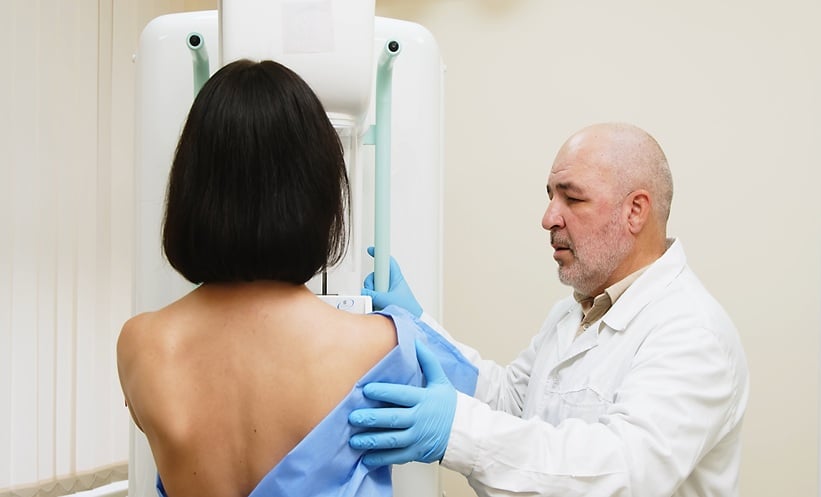
Delaloge began her presentation by outlining the rationale and emerging direction for personalised prevention in breast cancer, emphasising that rising incidence, widening health inequalities, and the limitations of standard screening programmes necessitate a shift in strategy. She noted that global breast cancer incidence has doubled over the last 30 years, with French epidemiological analyses showing that, while demographic changes account for part of this increase, approximately 50% is attributable to modifiable risk factors linked to lifestyle and environmental exposures. As a result, prevention and screening approaches developed in the 1990s are no longer sufficient, especially given the substantial financial and treatment burden associated with later-stage diagnoses.
Delaloge illustrated the treatment implications of stage at diagnosis, showing that women diagnosed at Stage I require significantly less systemic therapy compared with those at Stages II or III, where extended endocrine therapy, immunotherapies, and targeted agents are increasingly used. The clinical and economic burden of treating later-stage disease, therefore, reinforces the importance of early detection. She highlighted data from France demonstrating that participation in organised screening programmes is associated with lower excess mortality, and importantly, that organised screening reduces the impact of social deprivation on outcomes.9 However, participation in standard mammography screening programmes is declining, particularly among younger women and socioeconomically disadvantaged groups, presenting a pressing public health challenge.
The Multi-Factorial Framework of Risk Assessment
To address these limitations, Delaloge presented the emerging framework of personalised or ‘interception’ prevention, which combines risk assessment, risk reduction, and tailored early detection.
Germline genetics remains a cornerstone of identifying high-risk groups. Evidence-based strategies for carriers of BRCA1/2 and other high-penetrance genes include MRI from the age of 30 years and, where appropriate, risk-reducing interventions.10,11 However, Delaloge emphasised growing attention to polygenic risk scores (PRS), where the cumulative effects of single-nucleotide polymorphisms can markedly refine risk stratification.
Two validated approaches for risk assessment in the general population were highlighted: the integration of PRS with clinical and hormonal risk factors, and AI-based image-derived risk modelling, the latter now being evaluated prospectively in the SMART trial.12,13
Tailored Strategies: Trials and Interventions
The implementation of risk-based screening is currently being tested in major randomised trials. Delaloge highlighted the MyPeBS trial in Europe, which she leads, and the WISDOM trial in the USA.14,15 These studies compare standard age-based screening to risk-adjusted intervals informed by PRS, breast density, and clinical factors. Results, expected in 2027, will determine whether personalised screening reduces rates of Stage II+ disease, while maintaining safety, feasibility, and acceptability.
Delaloge then reviewed risk-reduction strategies, including risk-reducing mastectomy, which may be cost-effective for women aged 30–55 years with a ≥35% lifetime risk;16 endocrine prevention using tamoxifen or aromatase inhibitors; and lifestyle interventions, noting evidence that lifestyle modification can produce mortality reductions comparable to some pharmacological approaches.17
She concluded by emphasising the need to integrate prevention and screening, address social inequities, and establish sustainable care pathways to support long-term implementation. Personalised prevention, Delaloge argued, represents not only a scientific evolution but a necessary public health transition.
COLORECTAL CANCER
Aspirin Chemoprevention
Andrew Chen, Massachusetts General Hospital, Boston, USA, presented on the emerging strategies for personalised prevention of gastrointestinal and colorectal cancer. He began by emphasising the critical role of colorectal cancer (CRC) screening while advocating for more individualised approaches to primary prevention, particularly through the use of aspirin.
Chen outlined two main areas: precision prevention using age-based screening and molecularly guided aspirin therapy for localised CRC. Multiple case-control and cohort studies demonstrate consistent reductions in CRC incidence among aspirin users across diverse populations, supported by five RCTs showing lower recurrence of adenomas or CRC in high-risk individuals. Furthermore, over 50 cardiovascular prevention trials with linked CRC outcomes consistently showed reduced CRC incidence and mortality in aspirin users.18
The CAPP2 trial in patients with Lynch syndrome demonstrated a long-term reduction in CRC risk with aspirin.19 These findings informed the 2016 US Preventive Services Task Force (USPSTF) recommendation supporting low-dose aspirin in adults aged 50–59 years with ≥10% 10-year cardiovascular risk, marking a milestone in cancer prevention via medication.20 However, in 2022, the USPSTF reversed this recommendation, citing insufficient evidence for CRC prevention, largely due to the ASPREE trial, which randomised 19,114 adults aged ≥70 years (or ≥65 for USA minorities) to 100 mg aspirin versus placebo over 4.7 years. ASPREE found increased cancer mortality (hazard ratio: 1.31) in the aspirin arm, without differences in overall cancer incidence.21 Further analysis revealed that the excess mortality was driven by higher incidence of Stage IV cancers.22
These findings contrast with prior trials, highlighting the importance of age and duration in aspirin prevention. Epidemiologic studies, including the Nurses’ Health Study and Health Professionals Follow-Up Study, indicate that initiating aspirin before the age of 70 years, particularly between 15–69 years, reduces CRC incidence by approximately 25%, whereas starting after 70 years of age offers no benefit.23 Similarly, the Japan Prevention of Atherosclerosis in Diabetes trial confirmed that aspirin’s protective effect is limited in older adults.24 Lifestyle factors also influence benefit: a CRC risk score based on five lifestyle factors predicts that individuals with poorer lifestyles experience the greatest absolute benefit from aspirin.25,26
Molecular-Guided Therapy
Molecularly-guided aspirin therapy is an exciting precision prevention approach. Chen’s group showed that adjuvant aspirin reduced CRC-specific mortality in patients with activating PIK3CA mutations, whereas wild-type tumours did not benefit.27 These findings were validated in the ALASCCA trial26 and supported by the SAC study in Switzerland, which, despite limited enrolment, suggested similar trends in PI3K pathway-altered cancers.28,29 Mechanistically, aspirin may enhance antitumour immunity by blocking thromboxane A2 and prostaglandin signalling, rejuvenating exhausted T cells to eradicate PI3K-mutant tumour cells.30
While aspirin use represents a model for personalised CRC prevention, age of initiation, lifestyle, and tumour molecular profile (especially PIK3CA mutations) are critical determinants of possible benefit. Routine aspirin use is justified for patients with Lynch syndrome, with emerging evidence supporting its use in adjuvant therapy for localised CRC with PI3K alterations. These findings highlight a paradigm shift toward inexpensive, low-cost, and personalised strategies to prevent and treat one of the most significant global cancers.