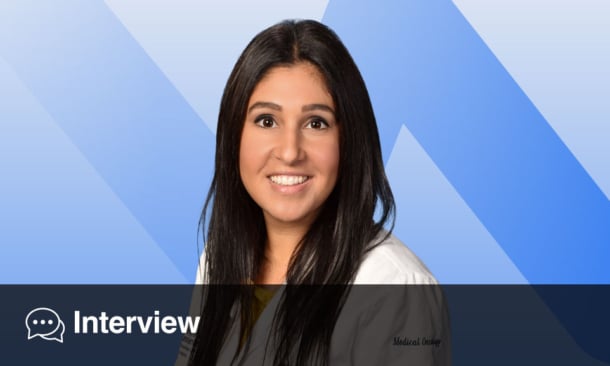
As Scientific Co-Chair of European Society of Medical Oncology (ESMO) Congress 2026, what have been the key priorities in shaping this year’s scientific programme, and what would you say distinguishes this Congress from previous years?
The key priorities were to bring important, practice-changing studies that will shape the field. We’re bringing in transformative research on cancer treatment, new diagnostic tools, and frameworks for understanding AI. AI is such a buzzword and everyone’s using it, but how can oncologists understand and use it in practice?
Nikolaus Schultz, Memorial Sloan Kettering Cancer Center, New York City, New York, USA, presented on how virtual patients, or avatars, could help us interpret clinical trial findings alongside real-world data. We have keynote speakers looking at ageing and what we can learn about the ageing process and cancer. Other important topics include central nervous system disease, theranostics, and radiopharmaceuticals. In selected cancers, radiopharmaceuticals can offer important treatment options, including after resistance to other therapies.
That’s why it’s such a great meeting. You can be a translational scientist and find something interesting, but also early or late drug development, prevention, and early detection are all very important parts of this meeting. Also, how do we perhaps learn how to de-escalate some of the treatments like chemotherapy and surgical approaches to allow for more organ preservation, while also improving patients’ quality of life in the long term?
From your perspective, how do you feel this year’s Congress has changed from last year’s?
Every year ESMO is getting bigger and bigger. We have outgrown many convention centres, and relatively few venues can now accommodate the meeting. Every year it’s an amazing meeting, and its global reach is a real strength. There are clinicians from China, Africa, all over Europe, and regions where access to specialist cancer care has historically been limited. So, to have those clinicians here is critical, because they can take what they learn immediately to their practice after we’re done.
To me personally, that aspect of global community is what ESMO does best.
With oncology advancing at an extraordinary pace, how did the Scientific Committee approach balancing established standards of care with emerging and potentially practice-changing research when developing the programme?
We need practice-changing studies supported by rigorous evidence. Early findings are important, but we must distinguish promising research from evidence that is ready to change clinical practice. ESMO is very rigorous with the process; we review all of the data carefully, especially if it’s presented here and being published.
The scientific review process critically evaluates study design, methodology, and interpretation. Being a discussant is a tough job, because you must be balanced and synthesise somebody else’s presented work.
So, having these experts here helping us digest and understand the data is what breaks down silos and forms new synapses, so that the next phase of studies is even better.
What was the vision behind forming the Scientific Committee?
The very first meeting was formed around the need for collaboration across industry, clinicians, scientists, and media.
What makes ESMO so great is that they bring in media outlets so that the public is educated. Having media here has been great, because it really disseminates the information. That’s how you make an impact: you need people to understand what’s happening in the world.
Multidisciplinary and international collaboration is important in accelerating progress in cancer care. How is this highlighted in the ESMO programme, and what are some key highlights for you?
A growing proportion of important oncology research is coming from countries outside Europe and North America. International collaboration is essential to understanding how these findings apply across healthcare settings and patient populations. We need to assess the strength and applicability of the evidence and identify when additional studies are needed.
We need to consider data quality, study design, and how the control arm compares with standard care in Europe or the USA. How do the patient populations differ? Could differences in comorbidities, nutritional status, or other factors affect efficacy or toxicity? Those are critical aspects of this meeting that I’m very excited to see.
As Scientific Co-Chair, you have a unique perspective on the breadth of research being presented. From your perspective, what were some of the key trials discussed, and how do you envision them impacting future clinical practice?
The Phase III INTerpath-001 mRNA vaccine study was an important highlight. Adding the individualised mRNA neoantigen therapy intismeran autogene to pembrolizumab improved recurrence-free survival after resection of melanoma. That’s a major milestone and opens the door to the next phase of cancer vaccine research. The DeLLphi-305 results, evaluating the delta-like ligand 3 (DLL3)-directed T-cell engager tarlatamab with durvalumab as maintenance therapy in extensive-stage small-cell lung cancer, were another important highlight.
I’m particularly excited about the gastrointestinal data in the presidential session: CLARITY-Gastric01, evaluating sonesitatug vedotin, a claudin 18.2 (CLDN18.2)-directed antibody–drug conjugate, in previously treated CLDN18.2-positive advanced gastric or gastroesophageal junction cancer; and HARMONi-GI1, evaluating ivonescimab, a PD-1/vascular endothelial growth factor (VEGF) bispecific antibody, with chemotherapy in advanced biliary tract cancer. These studies have the potential to change practice.
The field is increasingly moving towards precision oncology, targeted therapies, immunotherapy, and biomarker-driven treatment. How do you see these developments influencing the discussions and data presented at the ESMO Congress this year?
We are seeing more patients live for years with their cancer, including selected patients with metastatic disease. The number one question I get asked by my patients, by my family, and by my friends who are not physicians, is when are you going to cure cancer? It’s a broad question, but we already cure many cancers. Even in Stage IV disease, some patients achieve durable remissions, and selected patients may be cured. Others live well for many years with their cancer controlled. Our goal is to extend these outcomes to more patients worldwide. Prevention and earlier detection will be essential to achieving this on a larger scale. We need to do more of that.
Beyond the scientific programme itself, what do you hope delegates will take away from ESMO 2026 when they return to their institutions and begin applying what they have learned in clinical practice?
You’re here with 40,000 other oncologists, clinicians, scientists, industry colleagues, and research staff. Talk to people outside of your field, try to understand what their opportunities are for collaboration or working together, and meet at least five new people at a minimum from different parts of the world. Stay in touch with them and work together.
I’ve been coming to these meetings for many, many years. Some of these friendships have been lifelong, and what we do is just so hard. I think if we do it together, it’s much more fun and less taxing on all of us.
What are the biggest unmet challenges in oncology at the moment, and how can ESMO lead in tackling them?
I think what ESMO is focusing on now is bringing in parts of the world that may not have access to this information. Another challenge is training the next generation of researchers, who are the future of this field, and empowering them to do things better and more efficiently, because the next phase of breakthroughs will be even more challenging to achieve. The field is getting more complex, and using all of this data and coming together to do it as a global community will be important.