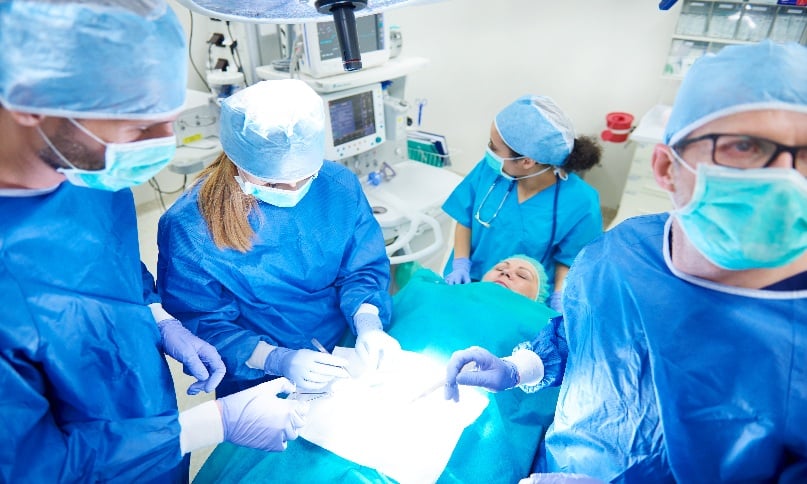
DEEPCOMP could improve preoperative assessment before gastric cancer surgery, according to a multicentre study that found the artificial intelligence model more accurately predicted postoperative complications and overall survival than established clinical risk tools.
Gastric adenocarcinoma is the most common form of gastric cancer. It develops in the stomach lining and is often treated with curative gastrectomy when still operable. However, Clavien-Dindo grade II or higher postoperative complications occur in roughly one in five patients and can reduce overall survival by disrupting delivery of adjuvant treatment. Existing nutritional, inflammatory and surgical risk scores identify only a minority of patients who develop these complications.
AI Improved Risk Prediction Before Gastric Cancer Surgery
Researchers developed DeepComp, a multimodal deep learning framework that combined clinical data with imaging features from the primary tumour, surrounding tissue and body composition measured at the third lumbar vertebra. The model was designed to simultaneously predict Clavien-Dindo grade II or higher complications and overall survival before surgery.
The study analysed data from 5,237 patients with gastric adenocarcinoma treated at 11 centres in China. The model was also validated using prospectively collected data from six registered clinical trials spanning three neoadjuvant treatment settings: chemotherapy, chemoradiation and immunochemotherapy.
DeepComp achieved an area under the curve (AUC) of 0.888 in the merged internal validation set and between 0.824 and 0.869 across nine external validation cohorts. The model consistently surpassed all nine established clinical risk scores, improving discrimination by 15.3 percentage points compared with the strongest clinical baseline (p<0.001).
Potential to Guide Perioperative Decisions
When 10 surgeons used DeepComp to support decision-making, mean sensitivity for identifying patients at risk of complications increased from 47.1% to 87.9% (p<0.001).
Using target trial emulation, DeepComp-guided perioperative strategies were linked to absolute reductions in Clavien-Dindo grade II or higher complication risk of 5.9% with prophylactic intensive care monitoring, 20.6% with preoperative nutritional support combined with delayed surgery, and 11.7% with minimally invasive surgical triage.
Survival Prediction Strengthened Gastric Cancer Surgery Planning
Beyond postoperative complications, DeepComp independently predicted overall survival, with an adjusted hazard ratio of 3.08 per standard deviation and a pooled C-index of 0.766. Estimated five-year survival ranged from 97.5% among patients in the lowest-risk quintile to 2.4% in the highest-risk quintile.
The findings suggested DeepComp consistently identified patients at increased risk of postoperative complications and poorer long-term outcomes across multiple validation cohorts. Although the results supported its role in preoperative risk stratification and personalised perioperative management, further evaluation would be needed to determine how the model performs when implemented in routine clinical practice.
Reference
Ding PA et al. A multimodal deep learning model for preoperative prediction of postoperative complications in gastric cancer. Ann Oncol. 2026;DOI:10.1016/j.annonc.2026.07.004.
Featured image: gpointstudio on Adobe Stock