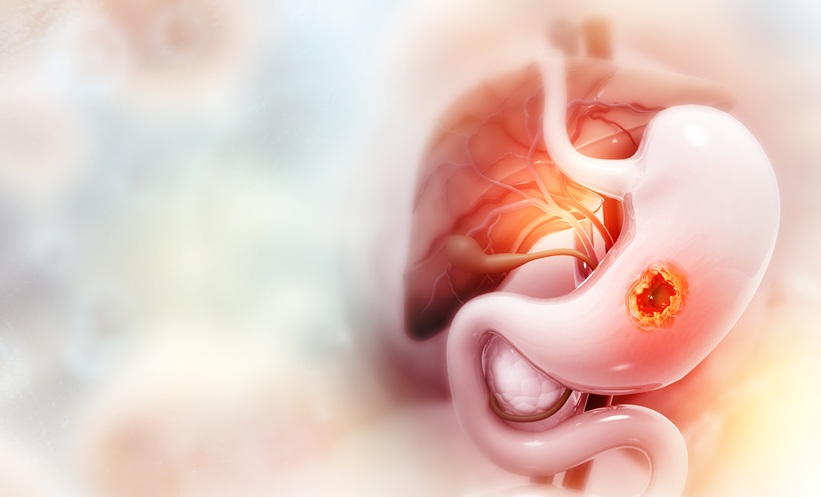
MODIFIED Lichong decoction inhibited proliferation and induced programmed cell death in cultured gastric cancer cells, according to a laboratory study exploring its molecular effects.
The findings implicate several pathways involved in cell survival and metabolism, including PI3K/Akt signalling. However, the experiments were conducted in a human gastric cancer cell line and do not establish whether the preparation is safe or effective for patients.
Testing Effects in Gastric Cancer Cells
Researchers investigated modified Lichong decoction, a preparation based on a traditional Chinese medicinal formula, in AGS gastric cancer cells. The work combined assays of cell growth and death with metabolomics and measurements of gene and protein expression.
Cells were exposed to concentrations of 150, 300 and 600 micrograms/mL. Investigators used a cell viability assay and bromodeoxyuridine staining to examine proliferation, alongside morphological assessment, DNA analysis and cell staining to evaluate apoptosis.
This combination allowed the team to examine both the preparation’s effects on cultured cells and the biological processes potentially involved. Metabolomic analysis was then used to identify changes in pathways that could help explain the observed responses.
Changes in Cell Survival Pathways
Treatment suppressed proliferation and produced features consistent with apoptosis. These findings were accompanied by reduced expression of Bcl-2, a protein involved in cell survival, and increased expression of apoptosis-related markers including Bim, Bax, Fas and FasL.
Metabolomic results pointed towards multiple signalling and metabolic pathways, including PI3K/Akt. To investigate this further, the researchers combined the preparation with LY294002, a pharmacological inhibitor of PI3K.
Modified Lichong decoction reduced phosphorylated Akt and phosphorylated FoxO3a protein levels and increased movement of FoxO3a into the nucleus. The combination with LY294002 produced stronger effects, supporting involvement of this signalling pathway.
The study also identified reductions in gene and protein expression of P53, P21, LKB1 and AMPK. Together, these results suggest a complex response involving several interconnected processes rather than a single confirmed molecular target.
Early Evidence Requires Further Investigation
The authors conclude that the preparation may influence mitochondrial and death receptor pathways of apoptosis, alongside pathways regulating metabolism and cell survival.
However, pathway associations and pharmacological inhibition cannot fully establish which molecular changes are necessary for the effects observed. Further experiments using targeted genetic approaches would help clarify these mechanisms.
The study also focused on proliferation and apoptosis, leaving questions about invasion, migration and autophagy unresolved. Findings in one cultured cancer cell line cannot demonstrate tumour control, tolerability or survival benefits in humans.
The results provide a basis for further preclinical investigation, rather than evidence supporting a change in gastric cancer treatment. Clinical relevance will depend on subsequent studies establishing reproducible effects, appropriate exposure and safety.
Reference
Shi G et al. Effect and mechanism of modified Lichong decoction on inhibiting proliferation and inducing apoptosis in AGS gastric cancer cells. Cancer Rep. 2026;9:e70727. doi:10.1002/cnr2.70727.