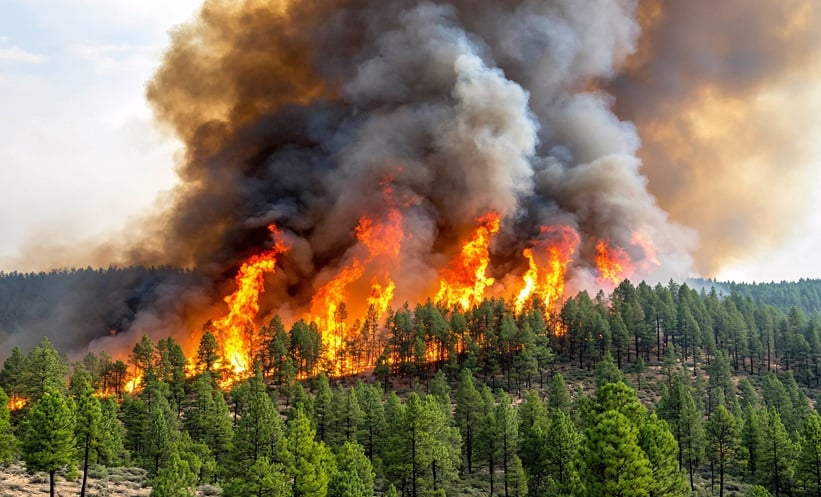
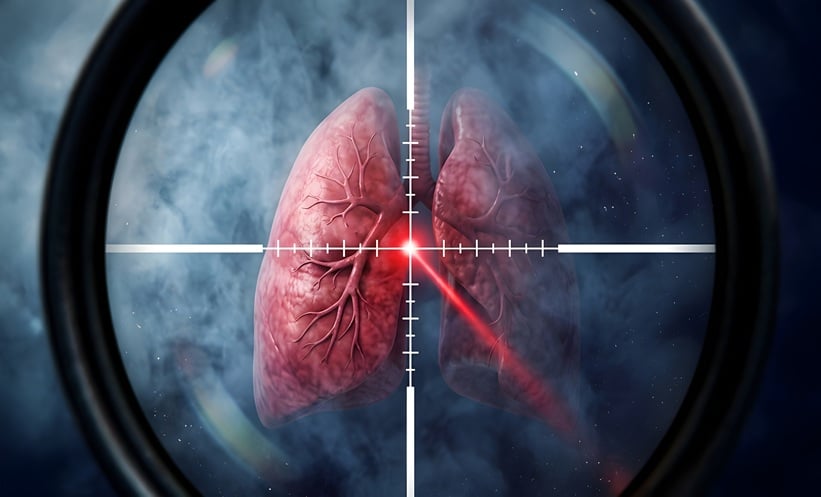
LONG-TERM exposure to wildfire smoke could be associated with poorer survival amongst older patients with lung cancer, according to a large US study.
Research found that fine particulate matter (PM2.5) originating from wildfires was associated with an increased risk of death following lung cancer diagnosis. Per unit of exposure, wildfire-related PM2.5 showed a stronger association with mortality than particulate pollution from other sources.
Tracking Air Pollution and Lung Cancer Survival
Researchers examined data from 414,016 patients aged 65 years and older with histologically confirmed primary lung cancer using the US SEER-Medicare database.
Patients contributed more than 1.2 million person-years of follow-up, with a median follow-up of 2 years. Residential postcode-level estimates were used to determine exposure to wildfire-related and non-wildfire PM2.5, with researchers examining 3-year moving average concentrations.
Median wildfire-related PM2.5 exposure was 0.28 μg/m³, substantially lower than the 8.11 μg/m³ recorded for particulate matter from non-wildfire sources.
Wildfire Pollution Shows Stronger Association
Both forms of PM2.5 were associated with an increased risk of death amongst patients with lung cancer.
For every 1 μg/m³ increase in wildfire-related PM2.5, the risk of death was approximately 7.8% higher. By comparison, each 1 μg/m³ increase in non-wildfire PM2.5 was associated with an approximately 1.7% higher risk.
Researchers estimated that an average of 696 excess deaths annually in the study cohort were attributable to wildfire-related PM2.5, compared with 3,465 associated with non-wildfire particulate pollution.
Although wildfire-related PM2.5 represented only a small proportion of overall particulate exposure, the findings indicate that its effect per unit of exposure could be substantially greater. Researchers also found that more frequent smoky days and longer periods of wildfire smoke exposure were associated with poorer survival.
Implications for Cancer Care
Wildfire smoke contains microscopic particles capable of travelling deep into the lungs and entering the bloodstream. The researchers noted that wildfire-related PM2.5 could differ from other particulate pollution in particle size and chemical composition, potentially contributing to its greater toxicity.
The observational study cannot establish that wildfire smoke directly caused poorer survival. Exposure was also estimated according to residential area rather than individual-level measurements, and the cohort was restricted to patients aged 65 years and older in the USA.
Nevertheless, the findings highlight environmental exposure as a potentially important consideration for people living with lung cancer, particularly as wildfire smoke contributes increasingly to ambient air pollution.
The researchers called for updated strategies to manage wildfires and mitigate exposure, alongside further research to determine which components of wildfire smoke may be responsible for its apparent toxicity.
Reference
Zhang M et al. Long-term exposure to wildfire-related PM2.5 and overall survival of older patients with lung cancer: a retrospective, registry-based cohort study. Lancet Oncol. 2026.
Featured image: Tam on AdobeStock