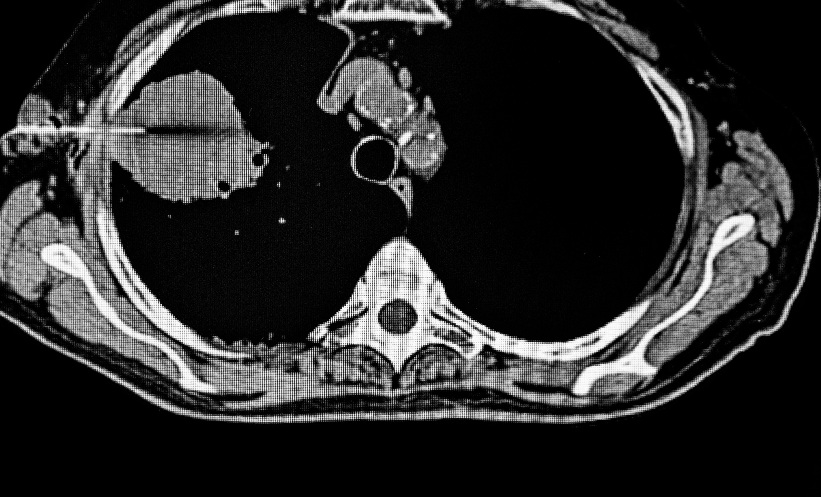
About 40% of percutaneous transthoracic needle biopsies (PTNBs) of peripheral lung lesions produced non-diagnostic results in a retrospective study, with malignancy risk varying substantially by pathological category.
Contrast-enhanced ultrasound (CEUS) guidance also improved diagnostic performance, particularly in lesions measuring 3.1-5.0cm.
Peripheral lung lesions are abnormal areas located towards the outer regions of the lungs, often identified on imaging and requiring tissue sampling to determine whether they are benign or malignant.
CEUS Improved Sampling in Key Lesion Size Range
The study included 1,591 peripheral lung lesions from 1,558 patients treated at three institutions between October 2018 and March 2023. Patients had a median age of 63 years, with 1,072 men and 486 women.
Researchers classified PTNB findings as diagnostic when they showed malignancy or specific benignity. Non-diagnostic results included nonspecific benignity, atypical epithelia, insufficient samples and sampling failure.
Malignancy risk significantly increased as lesion size increased (p<0.001). Granulomatous inflammation or organising pneumonia was linked to a lower malignancy risk. Atypical cells suspicious of malignancy carried a higher risk than atypical cells of undetermined significance (p<0.001), while malignancy rates did not differ significantly between insufficient samples and sampling failures (p>0.05).
Compared with non-CEUS guidance, CEUS-guided PTNB achieved significantly higher sampling success, diagnostic accuracy and sensitivity, with the strongest findings for 3.1-5.0cm lesions.
CEUS Could Refine Management After Non-Diagnostic PTNB
The findings suggested that a non-diagnostic PTNB should not be considered a uniform outcome, as malignancy risk differed according to the pathological finding. Atypical epithelia, particularly cells suspicious of malignancy, warranted greater concern, while nonspecific benign findings carried the lowest malignancy risk.
The results also supported a potential role for CEUS in improving tissue sampling. Its higher sampling success, diagnostic accuracy and sensitivity were particularly evident in lesions measuring 3.1-5.0 cm, suggesting that lesion size could help inform the choice of imaging guidance for PTNB.
For clinicians, combining pathological risk categories with lesion characteristics may help prioritise further investigation after an inconclusive biopsy. CEUS-guided PTNB could improve the likelihood of obtaining a diagnostic sample and potentially reduce the need for repeated procedures. However, the retrospective study design means these findings should be interpreted as evidence of diagnostic performance rather than evidence that CEUS reduces repeat biopsies or improves patient outcomes.
Reference
Li Q et al. Malignancy risk and contrast-enhanced ultrasound guidance in non-diagnostic biopsies of peripheral lung lesions: a multicenter study. Eur Radiol. 2026;DOI:10.1007/s00330-026-12763-6.
Featured image: DOUGLAS on Adobe Stock