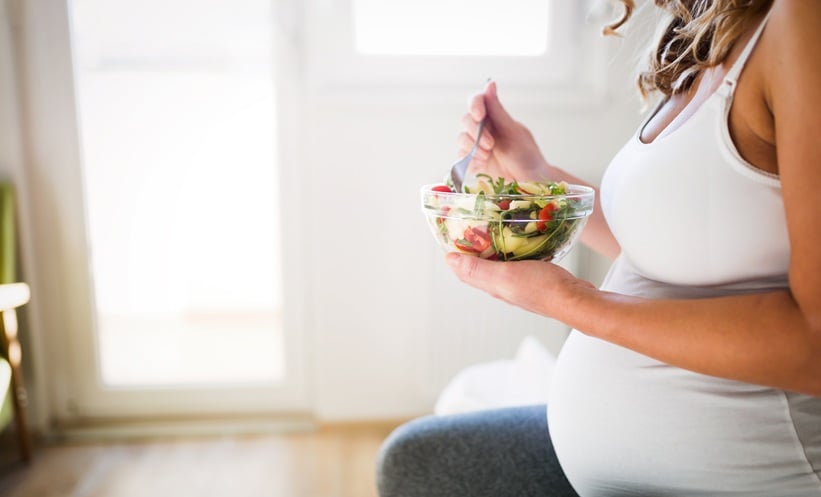
WOMEN are experiencing substantial impacts from food insecurity during pregnancy across high-income countries (HIC), a new meta-synthesis of qualitative studies has found.1
Food Insecurity
Food insecurity is defined as “the limited or uncertain availability of nutritionally adequate and safe foods, acquired in socially acceptable ways,”2 and has rapidly increased in HICs since the 2008 global financial crisis, researchers reported.
Emerging Themes in HICs
They included 32 studies in the first qualitative systematic review to summarise the experiences of pregnant women who are food insecure in HICs: 20 from North America, 10 from Europe, and two from Australia.
Three overarching themes were identified: economic, physical, and environmental barriers in access to food, the resulting impact on maternal physical and mental health, and the need to establish coping mechanisms.
Access to fresh fruit and vegetables was frequently reported by women, who, as a result, had poorer quality diets. Pregnancy carried with it additional concerns over finances and nutritional needs and, to mitigate the impact of food insecurity, reliance on others was found to be a recurrent coping mechanism.
Impact of Food Insecurity on Maternal and Neonatal Health
Researchers stressed the importance of diet quality in supporting favourable maternal and child health outcomes.
High-quality diets during pregnancy are associated with improved maternal health, optimal gestational weight gain, and a reduced risk of pregnancy complications.3, 4, 5
Specifically, a sufficiently high intake of fruit and vegetables during pregnancy, as well as whole grains, benefits gut microbiome diversity, maternal glucose tolerance, and healthy gestational weight gain.6
Clinical Takeaways
Researchers called for co-ordinated screening and interventions designed to support women and mitigate the impact of food insecurity during pregnancy, with a view to improving postpartum health.
They encouraged clinicians to routinely assess the food security status of their patients to ensure that women are supported during a critical life period.
References
1 Scott S et al. Experiences of food insecurity during pregnancy in high-income countries: a meta-synthesis of qualitative studies. J Hum Nutr Diet. 2026;DOI:10.1111/jhn.70244.
2 Anderson SA. Core indicators of nutritional state for difficult-to-sample populations. J Nutr. 1990;120:1555-1598.
3 van der Pligt PF et al. Maternal diet quality and associations with plasma lipid profiles and pregnancy-related cardiometabolic health. Eur J Nutr. 2023;62(8):3369-3381.
4 Li M et al. Healthy dietary patterns and common pregnancy complications: a prospective and longitudinal study. Am J Clin Nutr. 2021;114(3):1229-1237.
5 Yu Y et al. Association between diet quality during preconception or pregnancy and adverse perinatal outcomes: a systematic review and meta-analysis. Authorea. 2021;DOI:10.22541/au.163251147.74307797/v1.
6 Pretorius R, Palmer D. High-Fiber diet during pregnancy characterized by more fruit and vegetable consumption. Nutrients. 2020;13(1):35.
Featured image: NDABCREATIVITY on Adobe Stock
- Author: