BACKGROUND AND AIMS
Fungal infections remain a major cause of morbidity and mortality post-lung transplant due to the unique exposure of the allograft to the external environment and the intensity of immunosuppression. Single-center studies have described variable rates of fungal infections.1 Contemporary population-level data with temporal trends, pathogen distribution, and associated outcomes are limited. Leveraging a large multicenter real-world dataset, the authors aimed to characterize incidence, prevalence, and clinical outcomes of fungal infections among adult lung-transplant recipients.2
MATERIALS AND METHODS
Data were obtained from the TriNetX™ (TriNetX, LLC, Cambridge, Massachusetts, USA) Global Collaborative Network (160 healthcare organizations). Adult lung-transplant recipients (≥18 years) were identified between 2005–2024, using International Classification of Diseases (ICD) and Current Procedural Terminology (CPT) procedure codes. Patients with solid organ transplants other than lung, combined-organ transplants, or stem-cell transplants, and patients with HIV were excluded. Patients with pre-transplant fungal infections were also excluded. Pre-transplant characteristics included demographics, comorbidities within a year, laboratory values within 7 days, and medication within 90 days before transplantation. Post-transplant fungal infections were identified using ICD-10 codes for Aspergillus, Candida, Cryptococcus, Mucorales, Histoplasma, Blastomyces, Coccidioides, and Pneumocystis. TriNetX platform was utilized for statistical analysis. Incidence and prevalence of infections, all-cause mortality, and transplant rejection were analyzed.
RESULTS
A total of 12,857 adult lung-transplant recipients were identified. The mean age at transplantation was 57.6±13.4 years, with a male predominance of 57%, and majority were White (65%). Average BMI was 26.8±5.7 kg/m². The most common pulmonary conditions were COPD (15%), pulmonary fibrosis (17%), pulmonary hypertension (9%), bronchiectasis (3%), and cystic fibrosis (3%). Pre-transplant fungal and viral screening assays were rarely available (<1%). Medication exposure within 90 days prior to transplant demonstrated prednisone prescription (17%), methylprednisolone (7%), tacrolimus (6%), and mycophenolate mofetil (7%). Azathioprine and basiliximab were used in 2% each. Systemic antifungals (voriconazole, posaconazole, or fluconazole) in approximately 1% each.
The overall incidence of post-transplant fungal infection was 3% across the full study period, rising to 7% in the modern era (2015–2024). Most frequently identified pathogens were Candida spp. (4.8%) and Aspergillus spp. (2.9%), followed by Pneumocystis Jirovecii (0.5%). Infection rates increased from 22 per 1,000 (2005–2014) to 75 per 1,000 (2015–2024; Table 1).
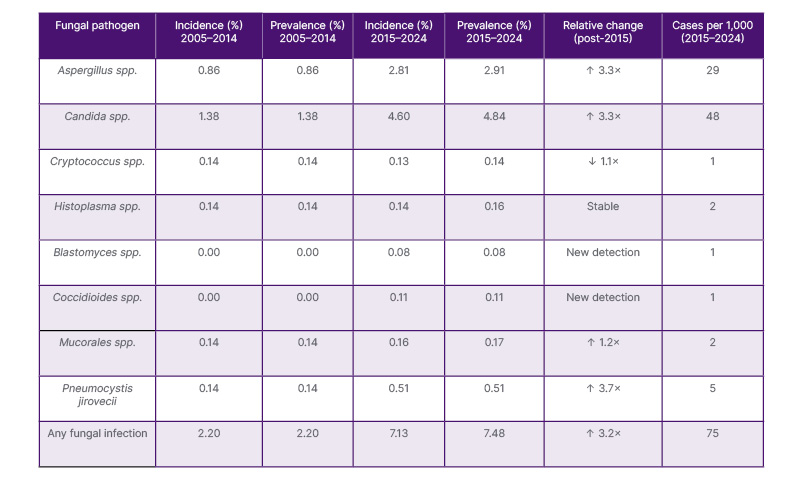
Table 1: Incidence and prevalence of fungal infections in lung transplant recipients.
Because infections were assessed only during the post-transplant period and typically represented single discrete events, reported incidence and prevalence values are nearly identical within each era. In TriNetX™ (TriNetX, LLC, Cambridge, Massachusetts, USA), prevalence is cumulative within the same observation window, which overlaps with incidence when events occur acutely.
CONCLUSION
In this large multicenter cohort of adult lung-transplant recipients, the incidence of post-transplant fungal infections increased substantially in the modern transplant era. The rise from 22 per 1,000 recipients in 2005–2014 to 75 per 1,000 recipients in 2015–2024 likely reflects a combination of improved fungal diagnostics, more systematic post-transplant surveillance, better electronic health record capture, and longer survival after transplantation, allowing more time for opportunistic infections to emerge.3,4 Candida and Aspergillus were the most identified fungal pathogens, consistent with the high susceptibility of lung-transplant recipients to airway colonization, invasive mold infection, and opportunistic infections related to intense immunosuppression.
The authors’ study highlights a rising burden of fungal infections among lung-transplant recipients with potential implications for early post-transplant surveillance and antifungal prophylaxis strategies.