BACKGROUND AND AIMS
Self-management refers to the ability of people living with chronic conditions to manage symptoms, treatment, and the physical, psychological, and lifestyle impacts of their disease.1,2 It aims to promote patient independence and is ideally supported by others, such as healthcare professionals, patient organisations, and family members.3 For people living with rheumatic and musculoskeletal diseases (RMD), lifestyle changes alongside medical treatment can meaningfully improve wellbeing and may help reduce the risk of comorbidities.4 Accessible and motivating resources are needed to strengthen everyday self-management.
The aim of this study was to develop a functional and useful self-management website in collaboration with the target groups: people living with RMDs, carers of people living with RMDs (friends and family members), and healthcare professionals. The objective of the website was to increase awareness of self-management methods and help people living with RMDs find ways to promote their own wellbeing. The website was developed as part of the Omahoitopolku project of the Finnish Rheumatism Association in 2023–2025.
MATERIALS AND METHODS
The website was developed using service design methods in close collaboration with the target groups. The needs of people living with RMDs and carers were explored through an online survey (N=74) and a design group (N=9), which participated in four workshops. Perspectives of rheumatology nurses were collected through surveys and discussions. The website’s contents were created in collaboration with a wide range of experts, including rheumatologists, nurses, nutritionists, psychologists, physiotherapists, and specialists in exercise psychology and preventive substance abuse work. The website was published in Finnish language on the Finnish Rheumatism Association’s website in November 2024. Feedback has been collected via an online survey.
RESULTS
Based on the website design process, the key information needs of people living with RMDs and carers included pain management, nutrition, mental wellbeing, sleep and recovery, and physical activity. There was a preference for video and audio formats, along with a need for both evidence and experience-based content, and for self-management monitoring tools. Furthermore, 79% of online survey respondents wished for peer support to help them improve their wellbeing. Healthcare professionals emphasised motivation for self-care and medication adherence. The final website included lecture videos, practical exercises, and a seven-episode podcast combining peer-support and professional guidance. The contents were developed especially for people with inflammatory rheumatic diseases, but can be beneficial to anyone despite diagnosis. Between 11th November 2024–11th January 2026, the website received 9,241 visitors. The website feedback survey received 154 responses. Respondents included 124 people living with RMDs, 19 carers, five healthcare professionals, and 19 others, with some respondents belonging to more than one category. Most respondents found the website beneficial: 83% reported gaining knowledge on self-management, 77% identified ways to support their wellbeing, and 84% considered the website useful. The content areas rated as most useful were ‘pain self-management’, ‘sleep and recovery’, and ‘physical activity’ (Table 1). Qualitative feedback highlighted usability and the value of targeted, evidence-based content.
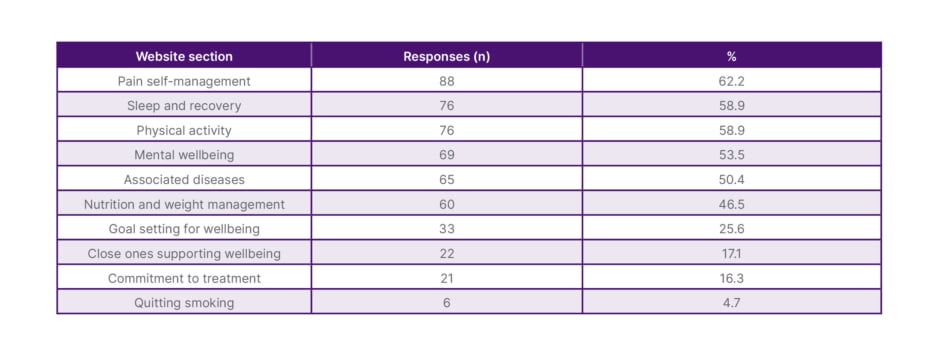
Table 1: Website sections rated as most useful in the feedback survey.
Respondents could select multiple options (129 respondents; 516 total responses).
CONCLUSION
A functional and coherent website was developed to support the overall wellbeing of people living with RMDs. Early usage data and feedback suggest that the materials are feasible, well received, and useful for the target groups. Dissemination of the materials will continue to ensure that more people living with RMDs receive reliable information and support for self-management.