BACKGROUND AND AIMS
NEW Clinical Endpoints in primary Sjögren’s Syndrome: an Interventional Trial based on stratifiYing patients (NECESSITY)1 is a public–private research consortium involving 25 partners: 20 academics, four pharma companies, and one patient association. Seven patient research partners (PRP) have collaborated since the beginning of the project, which ended
in December 2025.
The aim was to draw up an unfiltered assessment of patient partnership, identify the strengths and weaknesses of such collaboration, and raise points to consider to improve future collaborative projects.
MATERIALS AND METHODS
The questionnaire assessing patient partner involvement was designed using four engagement frameworks: PPEET (main structure, domains, response scales), GRIPP2 (quality and impact of engagement), PCORI Engagement Rubric (training and logistical support), and CIHR Patient Engagement Framework (mutual respect and inclusiveness). Items were adapted and merged for the NECESSITY project context, producing a brief survey with structured and open-ended questions. The six sections covered background, role clarity, collaboration, impact, practical support, and final reflections. All the PRPs received the anonymous survey link.
RESULTS
The seven PRPs responded to the survey, six totally and one partially, due to her recent arrival on the project (Table 1).
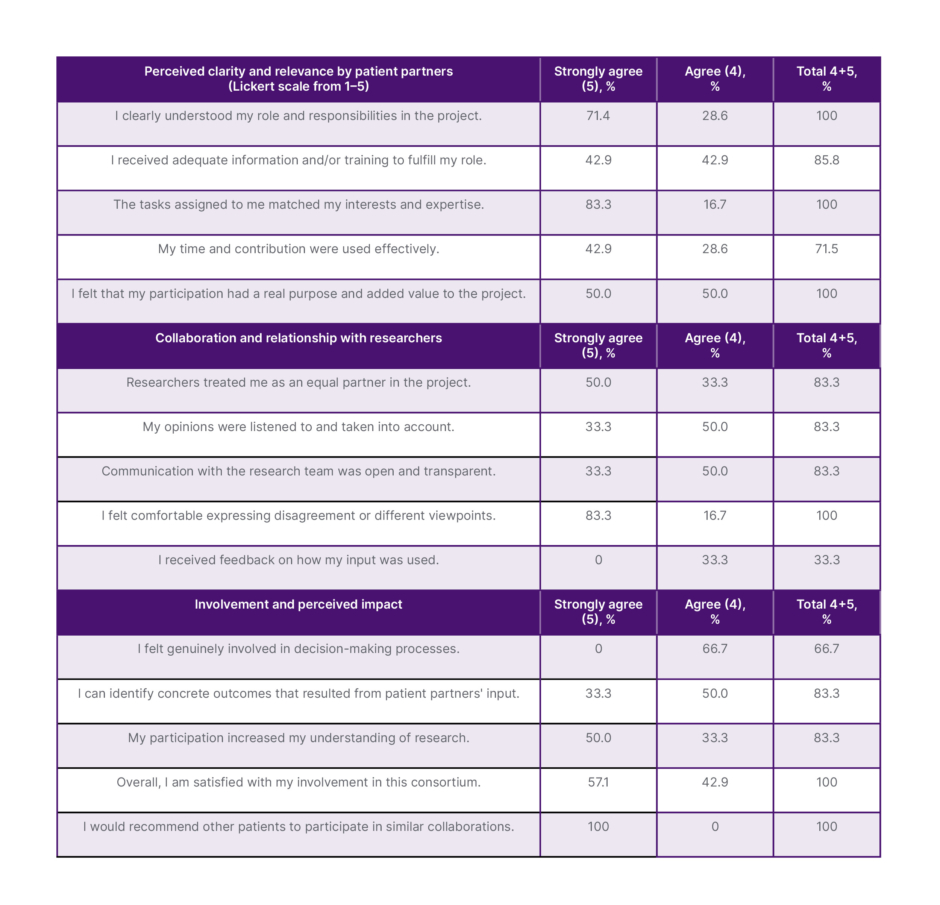
Table 1: Patient partners’ perceptions of engagement, collaboration, and research impact.
Most respondents reported clear role understanding (100%), alignment between tasks and expertise (100%), and perceived added value of their involvement (100%). Collaboration indicators were high (83.3% felt treated as equal partners), and all felt comfortable expressing disagreement (100%). However, fewer respondents reported receiving adequate training (85.8%), effective use of their time (71.5%), and feedback on how their input was used (33.3%).
Regarding perceived impact, most respondents reported being able to identify concrete outcomes resulting from patient partners’ input (83.3%) and reported increased understanding of research (83.3%). Overall satisfaction with involvement was very high (100%), and all respondents would recommend similar collaborations to other patients (100%). However, only 66.7% felt genuinely involved in decision-making processes, with no respondents strongly agreeing, suggesting room for improvement in shared decision-making.
CONCLUSION
PRPs generally reported positive experiences in terms of understanding their roles, collaborating with research teams, and recognising the impact of their involvement. Despite these strengths, there remain important areas for improvement to ensure meaningful patient partnership in research for effective collaboration. Specifically, the findings indicate that limited involvement in decision-making, inadequate feedback mechanisms, and underutilisation of PRP contributions are actionable targets that should be addressed.
The results of this survey also underscore the importance of designating a PRP coordinator within such projects. The coordinator would play a crucial role in liaising on behalf of all PRPs involved with different research teams and thus ensuring that all PRPs are fully satisfied with their participation, Underlining the importance of consistent communication between PRPs and the research team, ensuring to deliver necessary training, provide updates on key project milestones, offer timely feedback, and promote overall cohesion within the group.2