BACKGROUND AND AIMS
Data from a 15-year follow-up of the ProtecT trial, which randomised men to radical prostatectomy (RP), radiotherapy (RT), or active monitoring between 1999–2009, showed comparable prostate cancer (PCa)-specific survival (PCSS) for men treated with RP or RT (>97%).1 The ERSPC Rotterdam study was initiated in 1993 and covers a period over 20 years.2 The authors compared the restricted mean survival time (RMST) of patients with PCa treated with RP or external beam (EB)RT.3
MATERIALS AND METHODS
Men in ERSPC Rotterdam were randomised between 1993–1999 to a screening arm (50%; prostate-specific antigen [PSA]-based screening every 4 years) or a control arm (50%). Mortality data of men diagnosed with PCa were collected through regular linkages with Statistics Netherlands, and the cause of death was determined by a dedicated committee. Treatment was offered according to contemporary guidelines and shared decision-making. The authors identified patients with PCa treated with RP or EBRT with curative intent within 6 months of diagnosis. The authors used inverse probability of treatment weighting to adjust for imbalance based on the age at treatment, year of treatment, the presence of any comorbidity at diagnosis (i.e., asthma, heart disease, high blood pressure, cardiovascular event, diabetes, malignancy, rheumatism, or depression), PSA at diagnosis, grade group, and cT-stage. The authors used this weight to calculate the RMST. CIs for the difference in RMST were calculated with 2,000 bootstrapped samples. Missing variables were imputed based on PSA, cT-stage, and grade group, and the authors tested for non-linear effects.
RESULTS
The authors identified 1,072 men treated with RP and 1,212 treated with EBRT (Table 1). Men treated with RP lived on average 1.41 years (95% CI: 0.31–2.50) longer than men treated with EBRT. The estimated 20-year PCSS was 95% (95% CI: 91–97) for RP and 91% (95% CI: 88–92) for EBRT. Using a time horizon of 15 years, the difference was 0.79 years (95% CI: 0.02–1.54) in favour of RP. The estimated 15-year PCSS was 95% (95% CI: 91–97) for RP and 92% (95% CI: 91–94) for EBRT.
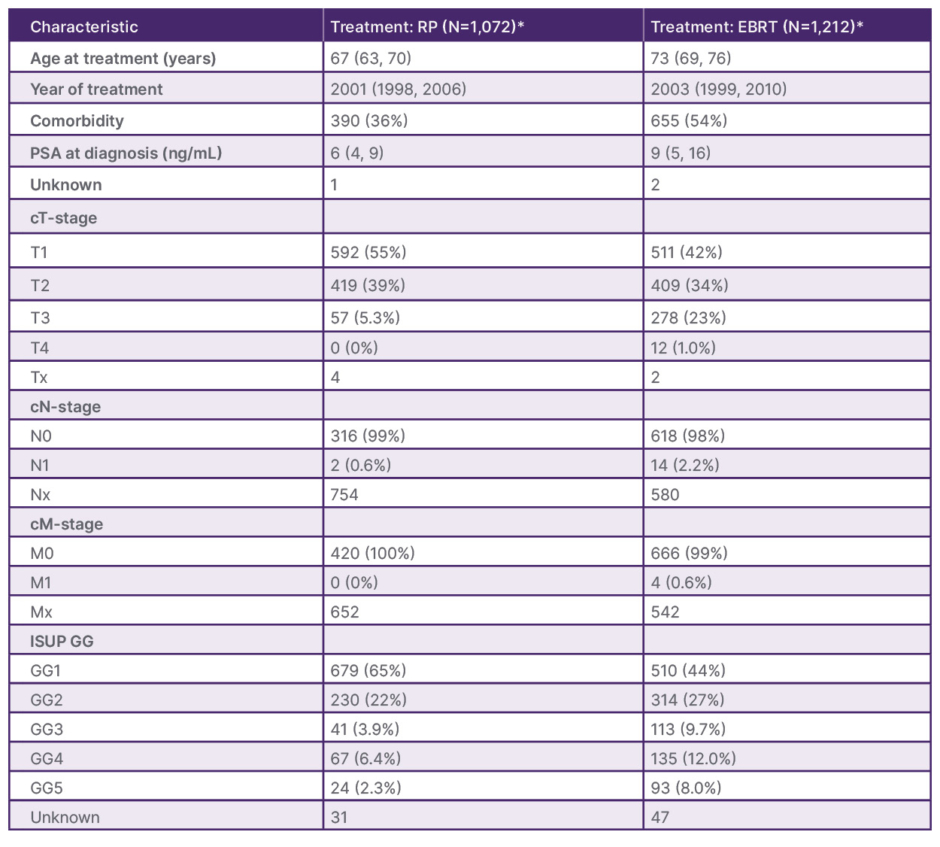
Table 1: Patient and tumour characteristics. *Median (Q1, Q3); n (%).
EBRT: external beam radiotherapy; ISUP GG: International Society of Urological Pathology Grade Group; PSA: prostate-specific antigen; RP: radical prostatectomy.
CONCLUSION
In this study, the authors show that men who opted for RP have a longer RMST after propensity score weighting. However, the difference between treatments is small and the PCSS is lower than reported in the ProtecT trial. The treatments applied cover a long follow-up period in which knowledge and skills have improved, but the authors show a comparable effectiveness of both treatments on PCSS.