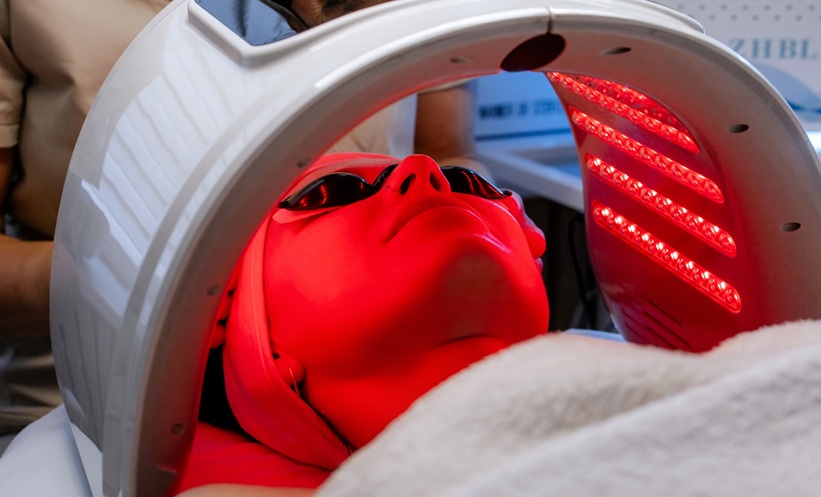
NARROWBAND and broadband ultraviolet B phototherapy offer similar efficacy in treating atopic dermatitis, though narrowband UVB may be better tolerated, according to a randomised controlled trial.
Ultraviolet B (UVB) phototherapy is widely recommended in clinical guidelines for patients with moderate-to-severe atopic dermatitis who do not respond adequately to topical therapies such as corticosteroids. However, uncertainty has persisted over whether narrowband or broadband UVB provides superior outcomes. To address this, researchers conducted a parallel-group randomised trial comparing the two approaches in adults with treatment-refractory disease.
The study enrolled 69 participants aged 18 years and older with moderate-to-severe atopic dermatitis. Patients were randomly assigned to receive either full-body broadband UVB or narrowband UVB phototherapy alongside ongoing topical treatments. While participants were blinded to treatment allocation, clinicians were not. Efficacy was assessed over 12 weeks, with the primary endpoint being change in the Eczema Area and Severity Index (EASI).
Similar Efficacy Seen Across UVB Therapies
Results showed that both treatment groups experienced meaningful improvements in disease severity. The mean reduction in EASI score was −8.1 in the broadband UVB group and −8.9 in the narrowband UVB group. After adjustment, the difference between treatments was minimal and not statistically significant, indicating comparable efficacy.
Secondary outcomes further supported these findings. Measures including the validated Investigator Global Assessment (vIGA), Patient-Oriented Eczema Measure (POEM), Peak Pruritus Numeric Rating Scale (PP-NRS), Dermatology Life Quality Index (DLQI), and Recap of Atopic Eczema (RECAP) all showed no significant differences between the two groups. This suggests that both phototherapy modalities provide similar benefits across clinician-reported and patient-reported outcomes.
Narrowband UVB Shows Better Tolerability
Notably, tolerability differed between treatments. Four participants in the broadband UVB group discontinued therapy due to adverse events, whereas no withdrawals were reported in the narrowband UVB group. This finding indicates a potential safety advantage for narrowband UVB, which may influence treatment selection in clinical practice.
The authors conclude that while both broadband and narrowband UVB are effective options for moderate-to-severe atopic dermatitis, narrowband UVB may be preferable due to its better tolerability profile. These results provide important evidence to guide clinicians in optimising phototherapy strategies for patients with challenging disease.
Reference
Drucker AM et al. Narrowband vs broadband ultraviolet B phototherapy for adults with moderate-to-severe atopic dermatitis: a randomized controlled trial. Br J Dermatol. 2026;DOI: 10.1093/bjd/ljag161.
Featured image: MarijaBazarova on Adobe Stock
- Author: