Meeting Summary
Outdoor athletes and active individuals have frequent and prolonged UV exposure and are at increased risk of skin cancer. Although athletes are generally aware of the risks of UV exposure, they often practice suboptimal sun-protection behaviors. Common barriers to sunscreen use include perceived impact on performance, uncomfortable sensory feel, sticky hands, and eye irritation. Understanding and addressing these barriers is essential to improving sun-protection behaviors and promoting sunscreen use in this population. This article summarizes a poster, ‘Evaluation of a Sunscreen Formulation by Athletes and Active Individuals’, presented as part of the American Academy of Dermatology (AAD) Annual Meeting in Denver, Colorado, USA, from March 27th–31st, 2026. An exploratory, 2-week, home-use study evaluated perceptions of sunscreen attributes and usage over time in 180 athletes and active individuals. Participants were aged 18–65 years and were from diverse racial/ethnic populations (skin phototypes Fitzpatrick I–VI). They were instructed to apply an organic, waterproof, broad-spectrum sunscreen (sun protection factor [SPF] 50) at least five times per week, and to reapply after sweating and after 2 hours of sun exposure. Participants completed self-assessment questionnaires immediately after each application, and after 1 and 2 weeks of use. After application, most participants reported that the sunscreen dried quickly, their hands did not feel sticky, and the product was invisible on their skin. After 2 weeks of use, nearly all participants noted that the sunscreen did not run into their eyes while sweating, was not visible after sweating, and was suitable for their active lifestyle. Participants across skin phototypes were satisfied with the look and feel of the sunscreen. The proportion of highly satisfied participants increased after 2 weeks of use.
ATHLETES, UV RISK, AND SUNSCREEN USE
Outdoor athletes and active individuals have frequent and prolonged UV exposure and are at increased risk of skin cancer.1-3 Athletes are generally aware of the risks of UV exposure, but this does not necessarily translate to adoption of sun-safety behaviors.1-3 A study of 347 golfers showed that 5.8% never, 12.4% rarely, and 22.5% only sometimes (i.e., not often or always) wore sunscreen.2 In a study of 290 collegiate athletes, 96% agreed that sunscreen helps prevent skin cancer, yet over 50% never used sunscreen, and 75% used sunscreen ≤3 days per week.3 Common barriers to sunscreen use in athletes and active individuals include perceived impact on performance, for example, due to slippery hands, uncomfortable sensory feel, sticky hands, and eye irritation.4
METHODS
An exploratory, 2-week, home-use study was conducted in athletes and active individuals from diverse racial/ethnic populations to evaluate their perceptions of sunscreen attributes and usage over time, and to enhance understanding of the barriers to sunscreen use. A total of 180 male and female athletes and active individuals aged 18–65 years who engaged in physical activity leading to sweating at least 5 days per week were included in the study.5 Participants had a diverse range of skin phototypes (Fitzpatrick I–VI).6 There were 60 participants in each of the following three skin phototype subgroups: Fitzpatrick I or II, Fitzpatrick III or IV, and Fitzpatrick V or VI.5 More than half the participants played at least one sport, the most common being tennis/pickleball (34%), soccer (20%), and basketball (13%; Figure 1).5
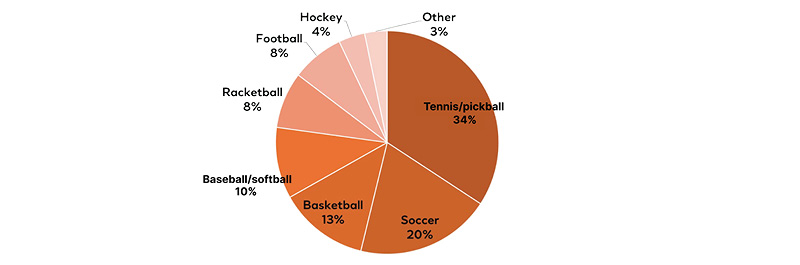
Figure 1: Participants’ sports activities.
A total of 130/180 (72%) athletes and active individuals in the study participated in sports activities. The figure shows the sports activities of this subgroup. Some participants took part in more than one sport.
The test product was an organic, waterproof, broad-spectrum sunscreen with an SPF of 50 (Anthelios UV Pro-Sport Sunscreen SPF 50; La Roche-Posay Laboratoire Dermatologique, L’Oréal USA). Participants were instructed to apply the test product, instead of their current sunscreen, on their face and body. They were asked to maintain their normal skincare routine, without introducing anything new. Application of the test product was required at least five times per week, 15 minutes before sun exposure. Reapplication was required every 80 minutes after sweating and after every 2 hours of sun exposure.5
Participants completed self-assessment questionnaires immediately after applying the test product, and after 1 and 2 weeks of use. Responses were given in the form of a semi-structured 10-point scale, from 0 (the most negative rating)–9 (the most positive rating). The results are presented as the percentage of participants who rated the evaluated attribute with a score from 6–9 (i.e., high positive ratings).5
RESULTS
All participants completed the study. Immediately after application, 93.9% responded that the sunscreen dried quickly, 90.6% reported that their hands did not feel sticky or tacky, and 93.3% noted that the product was invisible on their skin (Figure 2A). After 1 week of test product use, 91.7% noted that sand brushed off their skin easily, 96.1% observed that the sunscreen was not visible after sweating, and 95.0% considered the product to be suitable for their active lifestyle (data not shown). After 2 weeks of use, 92.2% specified that the sunscreen formulation did not run into their eyes while sweating, 97.2% responded that the product was not visible after sweating, and 95.0% found it suitable for their active lifestyle (Figure 2B).5
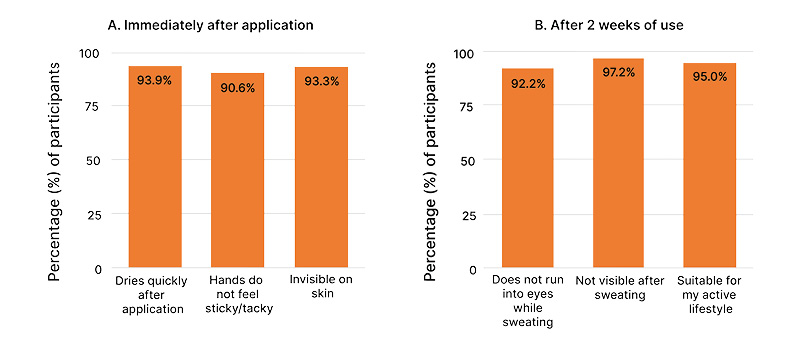
Figure 2: Athletes’ and active individuals’ perceptions of sunscreen formulation over time.
A total of 180 athletes and active individuals completed the questionnaire and rated the attributes on a scale of 0 (the most negative rating) to 9 (the most positive rating). The figure shows the percentage of participants who rated the evaluated attribute with a score from 6–9 (i.e., high positive ratings).
A total of 93.3% of participants were highly satisfied overall with the sunscreen formulation immediately after application. This increased to 94.4% and 97.2% after 1 and 2 weeks of sunscreen use, respectively (data not shown).
Participants were also asked whether they agreed with the following statements about the sunscreen formulation: ‘No chalky/ashy appearance’, ‘No white cast’, and ‘Invisible on skin’. Nearly all participants strongly agreed with these statements, with similar results across the three Fitzpatrick6 skin phototype subgroups (Figure 3).5
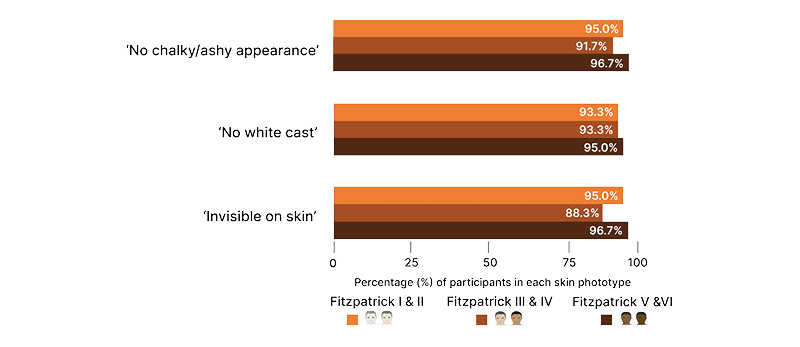
Figure 3: Perceptions of sunscreen formulation appearance immediately after application by Fitzpatrick skin phototype subgroup.
A total of 180 athletes and active individuals (60 per skin phenotype subgroup) completed the questionnaire and rated the attributes on a scale of 0 (the most negative rating) to 9 (the most positive rating). The figure shows the percentage of participants who rated the evaluated attribute with a score from 6–9 (i.e., high positive ratings).
CONCLUSIONS
Understanding the barriers to sunscreen use in outdoor athletes is essential to improve sun-protection behaviors and promote sunscreen use in this population. In this exploratory study, participants from diverse racial/ethnic populations who played a range of sports and/or had active lifestyles were satisfied with the look and feel of the sunscreen test product. Most participants noted that the sunscreen dried quickly, did not leave their hands feeling sticky or tacky, and was invisible on the skin, even after sweating, thus mitigating common barriers to use. The lack of run-off into the eyes while sweating was noted by most participants. This is a key feature to avoid eye irritation and minimize impact on performance during sports and other activities. The sunscreen formulation was considered suitable for an active lifestyle.5
The study results indicate this formulation may successfully address key barriers to sunscreen use, such as perceived impact on performance, uncomfortable sensory feel, sticky hands, and eye irritation. The increase in the proportion of participants in the study who were highly satisfied overall with the sunscreen formulation after 2 weeks of use was a positive outcome, particularly for a population known to practice suboptimal sun-protection behaviors, and may encourage more compliant sunscreen use.