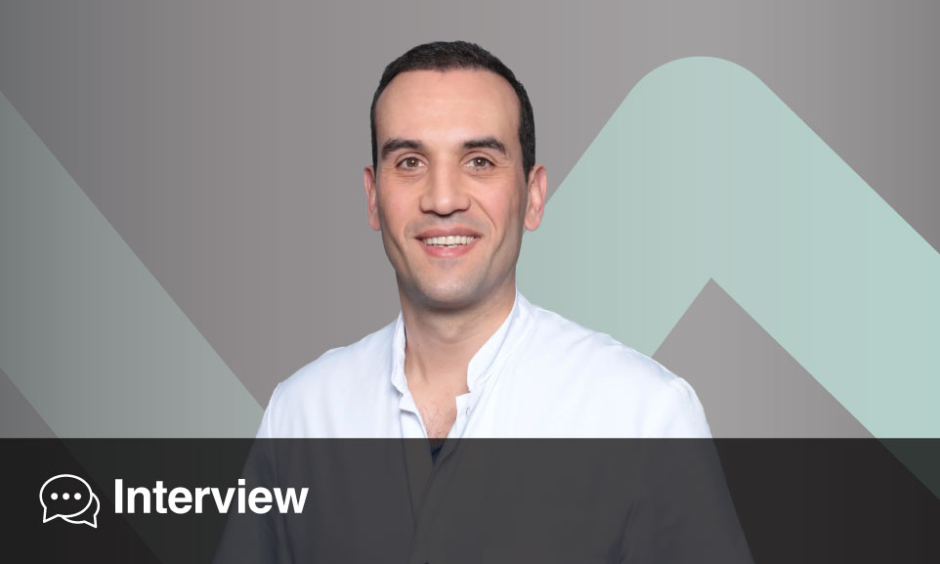
Nicolas Dumonteil | Clinique Pasteur, Toulouse, France
Citation: EMJ Int Cardiol. 2026;14[1]:45-48. https://doi.org/10.33590/emjintcardiol/479T91H3

As the EuroPCR Course Director, how are you shaping the 2026 programme to better support clinicians managing increasingly complex structural heart patients?
Each year, we begin building the next edition of EuroPCR around September, always starting from the needs of the community. We gather insights through a large international survey distributed across our companion database, which includes more than 20,000 colleagues worldwide.
From this, we try to understand where the field is moving and what clinicians need most. In structural heart disease, it is clear that transcatheter aortic valve implantation (TAVI) has now become mainstream, with the majority of interventional cardiologists practicing it routinely, while mitral and tricuspid interventions are developing extremely quickly.
Our goal is, therefore, to ensure that the EuroPCR programme reflects these changes. We shape the sessions, live cases, and educational tracks around the real-world challenges clinicians are facing as structural interventions become increasingly complex.
What new features or educational highlights can attendees expect at EuroPCR 2026?
Based on the evolution of the field and feedback from the community, we wanted to introduce several new features into this year’s programme.
One major addition is the new Calcium Skills Lab, which will provide a comprehensive overview of calcified coronary artery disease, from diagnosis and pathophysiology through to imaging, treatment strategies, and complication management.
We have also launched a dedicated chronic total occlusions (CTO) programme, delivered in collaboration with experts from the EuroCTO Club. This will include live cases, abstract presentations, and case-based discussions focused on CTO interventions. Importantly, many of the techniques developed in CTO practice can also benefit operators managing other forms of complex percutaneous coronary intervention (PCI).
Another key development is the introduction of an Innovation Track designed to create continuity between Innovators Day and the wider EuroPCR programme. This will cover not only interventional innovation, but also advances in imaging and AI.
For the first time, attendees will also be able to visit a dedicated AI Lab, offering opportunities to better understand how AI may influence the future of cardiovascular intervention.
You have extensive experience as a live case operator across coronary and structural procedures. What makes live case learning such a powerful educational format at EuroPCR?
Interventional cardiology is a discipline built around procedures. Even if you work in a high-volume centre and have many years of experience, you will never encounter every possible anatomy, complication, or clinical scenario during your own career.
That is why live case education is so valuable. It gives colleagues the opportunity to observe another operator treating a patient in real time, which is fundamentally different from watching an edited recording.
During a live case, you see how someone adapts when the initial strategy does not work, how they move from plan A to plan B, and how complications are managed, or, ideally, anticipated and avoided altogether. That is the essence of live case learning.
TAVI is now moving into younger and lower-risk patients. How will EuroPCR 2026 address lifetime management, valve durability, and future coronary access in this population?
This is a crucial and very timely issue. Current guidelines and evidence now allow us to treat younger patients with longer life expectancy using TAVI, which is understandably appealing for many patients. Increasingly, patients come to the clinic asking specifically for a transfemoral valve procedure rather than surgery.
However, if a patient receives a TAVI valve at 70 or 71 years old, there is a strong possibility they will outlive that prosthesis and require another intervention in the future. That means we must think carefully about lifetime management from the very first procedure.
If the initial valve selection or implantation strategy is not optimal, a future redo TAVI can become extremely challenging. We may face issues such as coronary obstruction risk, sizing limitations, or severe prosthesis mismatch.
At EuroPCR, our mission is therefore to educate both ourselves and the wider community on proper patient selection, procedural planning, and device choice. We also need to identify which patients should still be referred for surgery as a first intervention.
This topic is integrated throughout the structural programme, including live cases, case-based discussions, learning sessions, and CT hands-on training.
Your recent work has explored redo TAVI, valve-in-valve procedures, and leaflet modification. What are the biggest technical and clinical challenges in treating patients who return for repeat valve intervention?
One of the major challenges is the risk of coronary occlusion, particularly in patients who received their first TAVI valve at a time when we did not yet fully understand the long-term implications of redo procedures.
In the past, valves were sometimes implanted in small aortic roots or in anatomies with low coronary take-offs, which can create a ‘neo-skirt’ during a redo TAVI and threaten coronary perfusion.
However, an equally important and perhaps under-recognised issue is valve sizing. After the first TAVI implantation, the available internal space for a second valve becomes significantly reduced.
For example, a patient may initially have a 26 mm annulus, but after the first valve implantation, the effective internal diameter available for a second valve may be closer to 21 mm. Even if coronary access remains possible, this may limit the feasibility of multiple future interventions.
This becomes especially important as some centres are now implanting TAVI valves in patients as young as 65 years. In these cases, we may need to think not only about one future reintervention, but potentially two over the patient’s lifetime.
Mitral and tricuspid transcatheter therapies are evolving quickly. What developments in these fields do you expect to generate the most discussion at EuroPCR 2026?
One of the strengths of EuroPCR is that it is not only a course focused on experience and practical learning, but also a forum for discussing the latest scientific evidence.
This year, we have seen a significant amount of late-breaking science submitted around mitral and tricuspid therapies. Much of this work focuses on refining patient selection, understanding clinical benefit, and comparing different treatment approaches.
We are also seeing growing evidence around transcatheter valve replacement technologies in both the mitral and tricuspid spaces, alongside emerging comparisons between repair and replacement strategies.
These discussions will feature prominently throughout the programme, including dedicated case-based sessions and live cases. We will, for example, have a live mitral valve replacement case presented in the main arena.
You are also involved in complex PCI and robotic-assisted PCI. How do you see technology changing the way interventional cardiologists plan and perform increasingly complex procedures?
Technology is clearly transforming the field, but I think the biggest progress is not only about new devices, but also about improving how we understand and plan procedures.
The major advances are happening in imaging. We now have highly sophisticated invasive imaging tools, alongside increasingly powerful non-invasive CT imaging. On top of anatomical assessment, we are also integrating more physiological information into procedural planning.
This allows operators to understand not only the anatomy they will face, but also which lesions are truly responsible for ischaemia and should therefore be treated.
AI is likely to further accelerate this evolution. If AI can help analyse and interpret the large amount of imaging and physiological data now available, it could provide operators with an almost ideal level of preparation before entering the catheterisation lab.
EuroPCR brings together coronary, structural, imaging, and innovation experts. How important is this cross-disciplinary exchange in improving decision-making for complex patients?
I think this multidisciplinary approach is absolutely crucial. In many ways, it emerged naturally alongside the growth of structural heart interventions.
As interventional cardiologists began treating more structural disease, we quickly realised that we needed to work much more closely with imaging specialists, heart failure physicians, electrophysiologists, surgeons, and many others. This led to the development of the modern Heart Team model.
What is interesting is that this collaborative approach is now increasingly influencing the coronary field as well.
By working closely with colleagues from different specialties, we gain access to more information, broader expertise, and a deeper understanding of each patient’s condition. Ultimately, this leads to better planning, better procedural decision-making, and, in most cases, better outcomes for patients.