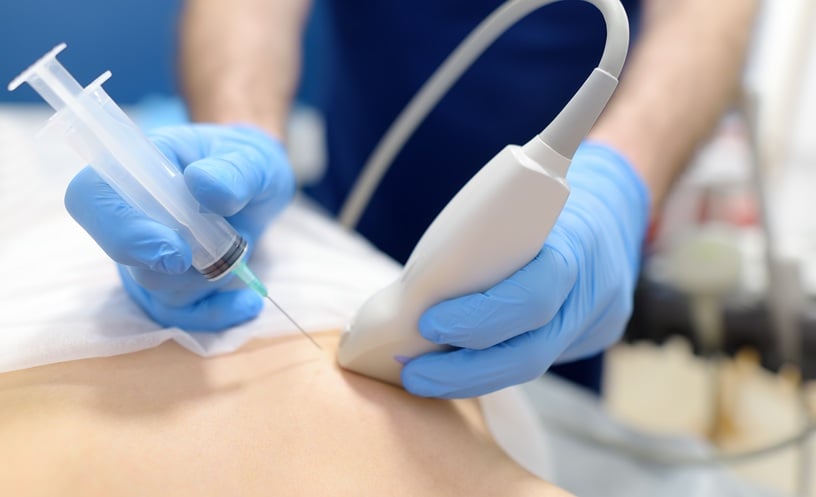
THE US FOOD AND DRUG ADMINISTRATION (FDA) has warned healthcare providers of interruptions to the supply of stereotactic breast biopsy needles, expected to last until March 2027.
The disruption, caused by “recent supplier issues”, will likely impact patient care and require adjustments to the management of patients due to have a breast biopsy.
Supplier Issues
The agency said in the letter that Hologic stated, on 2nd January 2026, that all lots of the Brevera Breast Biopsy System Disposable 9 Gauge Needle were being removed due to a risk of metal and plastic particles being dislodged from the devices when used.
If left behind during a biopsy, such particles could cause a foreign body reaction, hematoma or haemorrhage, or infection.
Further, an additional biopsy may be necessary if they enter a specimen, the FDA said.
Recommendations
It recommends healthcare providers develop strategies with a view to conserving available stereotactic breast biopsy needles for the highest risk patients in the meantime.
The agency also instructed providers to “use their clinical judgement” when implementing new strategies.
The following needle conservation strategies were suggested by the FDA:
- Expand supplier networks with vendor diversification
- Diversify and use all needle gauges and lengths to mitigate any dependence on one “standard” inventory
- Use prior-generation devices where possible and clinically appropriate
- Limit unnecessary opening and wasting of the needles
In terms of clinical care, the agency also recommended that clinicians:
- Communicate the delay to patients in a transparent manner
- Offer alternative biopsy locations where there is availability, if other devices are not suitable
- Maintain focus on minimising the delay for cancer diagnosis and subsequent treatment
Clinician Concerns
In a letter to the FDA in May, Dana Smetherman, CEO, American College of Radiology (ACR), Virginia, USA, said: “According to widespread reports from the breast imaging community, these shortages are creating immediate and substantial challenges for breast imaging practices nationwide, negatively impacting patient access to diagnostic care, and ultimately, to critical therapeutic intervention.”
She added: “The current backlog is not an isolated operational inconvenience, but rather, it represents a broader patient safety and public health concern, particularly in high-volume centres and safety-net institutions where alternatives may be limited or unavailable.”
On behalf of the ACR, she requested the FDA: expedite the review of alternative or equivalent devices, increase communication and coordination with bodies such as the ACR, facilitate streamlined pathways to allow the temporary importation of comparable biopsy devices, engage with manufacturers to encourage the prioritisation of the production of essential biopsy supplies, and coordinate with relevant bodies to evaluate whether guidance can be developed regarding contingency planning or regional reserve approaches.
Featured image: Maria Sbytova on Adobe Stock
- Author: