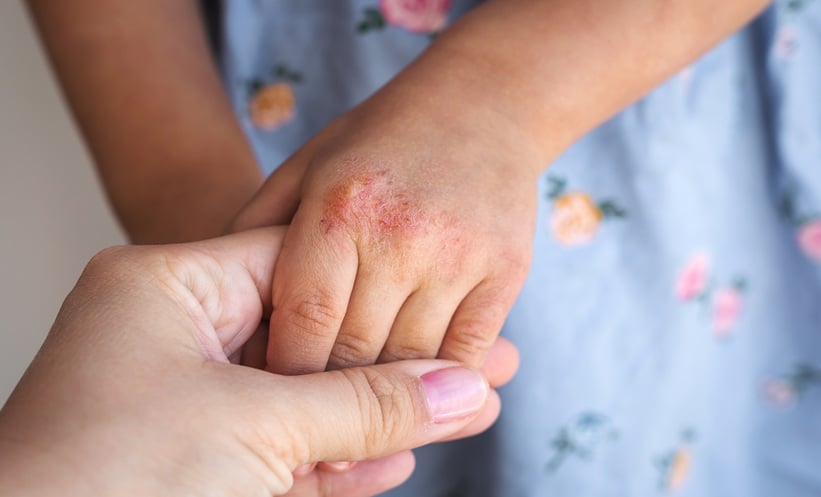
A NEW study showed that machine learning prediction models could identify which children with early-onset eczema were most likely to develop persistent asthma and allergic rhinitis by school age.
Atopic dermatitis, a common form of eczema, has long been recognised as an early step in the “atopic march”, a progression that can lead to asthma and allergic rhinitis.
However, clinicians have historically struggled to determine which young children will go on to develop more severe, long-term respiratory disease. This uncertainty has limited opportunities for early intervention and personalised care.
Machine Learning Asthma Prediction Models Show Strong Accuracy
Researchers conducted a large retrospective birth cohort study using electronic health record data from 10,688 children diagnosed with atopic dermatitis before the age of three.
Two machine learning asthma prediction models were developed: a comprehensive model using detailed clinical variables, and a simplified model based on routinely available clinical data.
Both models demonstrated strong performance in predicting moderate-to-severe persistent asthma between the ages of five and 11.
The comprehensive model achieved an area under the curve (AUC) of 0.893, while the simplified model showed nearly identical discrimination (AUC: 0.892). At 95% specificity, sensitivity reached 40.4% and 36.2%, respectively, with positive predictive values of 39.3% and 33.8%.
Predicting Allergic Rhinitis and Risk Stratification
In addition to asthma, the models were also applied to predict allergic rhinitis.
Performance was more moderate, with AUC values of 0.793 and 0.773. However, positive predictive values were notably high in higher-risk groups, reaching over 70% in the comprehensive model.
Importantly, both the comprehensive and simplified models for asthma and allergic rhinitis showed good calibration, particularly among children classified as highest risk.
This suggests that machine learning prediction tools may be effective for stratifying patients and identifying those who could benefit from closer monitoring or preventive strategies.
Implications for Early, Personalised Care
These findings highlight the potential of machine learning prediction to transform paediatric allergy care. By leveraging early-life clinical data, clinicians may be able to move beyond reactive treatment and instead adopt proactive, individualised approaches.
The study was limited by its retrospective design and reliance on data from a single healthcare system, which may affect generalisability. Future research will be needed to validate these models across diverse populations and assess their impact in real-world clinical settings.
If confirmed, such tools could play a key role in identifying high-risk children earlier, enabling targeted interventions that may alter the trajectory of the atopic march.
Reference
Chen W et al. Machine learning prediction of asthma and allergic rhinitis in children with early-onset atopic dermatitis. J Allergy Clin Immunol. 2026;DOI:10.1016/j.jaci.2026.03.025.
Featured image: Evgeniia Primavera on Adobe Stock
- Author: