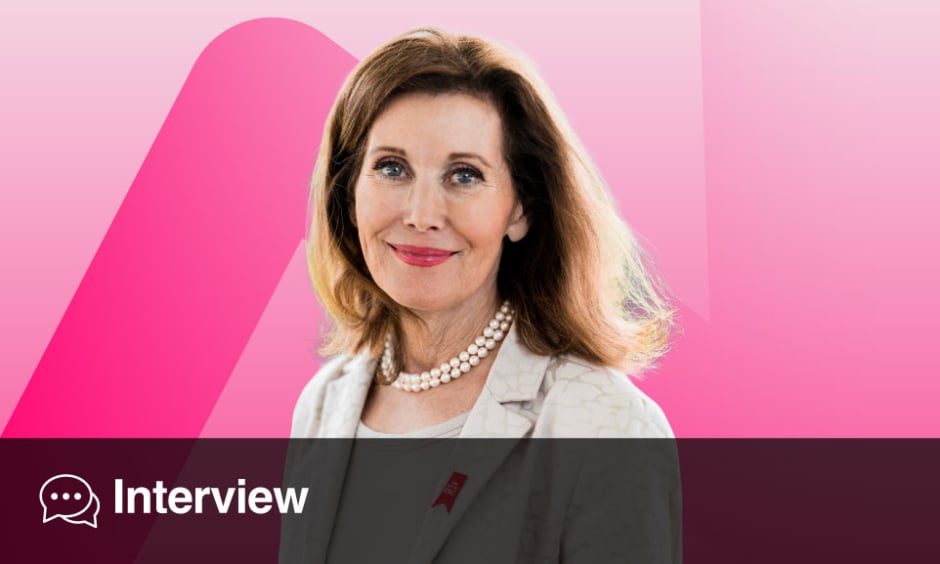
Cecilia Marianne Linde | Professor in Cardiology, Heart and Vascular Theme, Karolinska University Hospital and the Karolinska Institute, Stockholm, Sweden; President (2026–2028), European Society of Cardiology (ESC)
Citation: EMJ Cardiol. 2026;14[1]:62-65. https://doi.org/10.33590/emjcardiol/6TSXUA08

Congratulations on becoming President of the European Society of Cardiology (ESC)! Looking back on your journey from clinician and researcher to ESC President, what moments have been the most formative in shaping your journey to leadership?
The 11 years I spent as Head of the Department of Cardiology at Karolinska University Hospital, Stockholm, Sweden, were particularly formative. We underwent a merger between two university hospitals, and, for me, that meant merging two departments of cardiology with different profiles and cultures. It taught me to listen to and respect people, and to understand what change really means. After a somewhat turbulent start, the merger was very successful, and we now have one Department of Cardiology. We were particularly successful in the invasive specialties such as coronary interventions, electrophysiology, and pacing, with HCPs working across both sites. Research and education were also clearly strengthened by having a different mix of patients across the two hospital areas.
You have held multiple leadership positions in the ESC, before assuming presidency this year. What have you learned during your previous roles that will influence your priorities over the next 2 years?
I served as Councillor, and then as Vice-President for Working Groups, Councils, and Women under the presidency of Barbara Casadei, National Heart and Lung Institute, Imperial College London, UK. During this mandate, I started the Membership Committee and the ESC Board Committee for Young Cardiovascular Professionals. The latter has proven very successful and timely since its initiation.
Between 2022–2024, I was Treasurer and Secretary. During this post-COVID period, we faced economic challenges, which were carefully addressed and brought us back to a balanced financial situation.
The latest mandate has been fantastic. I have really enjoyed working with Thomas Lüscher, Royal Brompton and Harefield NHS Foundation Trust, London, UK, as President-Elect and, together with the Advocacy Committee Chair and ESC staff in Brussels, Belgium, we paved the way for the Safe Hearts Plan in the EU.
The ESC Congress 2026 has just concluded. What do you consider the most important takeaways from this year’s meeting?
The AI transformation is ongoing and very rapid. A lot of new solutions were presented, as well as successful studies demonstrating how AI technologies can enhance cardiovascular care, but there is still a long way to go.
How would you describe the current state of cardiovascular medicine in Europe, and where do you see the greatest opportunities for progress?
The progress of interventional cardiology, not least in the field of interventions for valvular heart disease, has been spectacular. Now, with the Safe Hearts Plan, we also need to address prevention, which until now has received little focus and funding which will now change.
The first guidelines on rehabilitation in cardiovascular disease presented during the ESC Congress in Munich, Germany, just 10 days ago are also fully aligned with the goals of the Safe Hearts Plan, which means rehabilitating patients with cardiovascular disease to their full capacity and enabling them to return to their profession or live an active life in good health. We know that there is a significant gap in the availability of rehabilitation services across Europe, and these guidelines will serve as an important tool to enhance this aspect of care.
As President, what are your main strategic priorities for the ESC during the 2026–2028 term?
My main priorities are: the implementation of the Safe Hearts Plan across the 27 EU countries and throughout all ESC member countries; support for the implementation of national cardiovascular health plans and cardiometabolic-renal testing; ensuring that registries and centres of excellence are in place to enable and measure the results of the Safe Hearts Plan; introducing environmental sustainability across all ESC activities and incorporating it into our education and guidelines to ensure the minimal environmental footprint of cardiovascular care; and introducing the ESC AI Gateway, a committee structure designed to enable the ESC to become a leader in AI across cardiovascular disease.
Cardiovascular disease remains the leading cause of mortality worldwide. What role can the ESC play in helping address this ongoing challenge both within Europe and globally?
As mentioned before, we also collaborate across specialties through the European Alliance for Cardiovascular Health (EACH), as well as with patient organisations, the Organisation for Economic Co-operation and Development (OECD), and the WHO, to speak with one voice and thereby exert a stronger influence at both the EU and national levels.
Your own research has focused extensively on heart failure and cardiac devices. What developments in these fields are you most excited about currently?
Cardiac resynchronisation therapy is a disease-modifying and life-saving therapy. Its implementation must be improved, as only 20% of eligible patients currently receive the therapy. Conduction system pacing is being studied in RCTs to determine whether left bundle branch area pacing is associated with a superior response to this therapy.
Cardiac implantable devices have transformed patient care, but implementation remains uneven. What barriers still need to be overcome to ensure equitable access across healthcare systems?
Electronic Health Record decision-making tools, benchmarking, registry participation, and continuous collaboration between electrophysiology and heart failure units are essential. However, we also need to include geriatricians and primary care physicians so that they have the necessary knowledge and clear referral pathways.
AI was this year’s Congress theme and is increasingly being integrated into cardiovascular practice. Where do you see AI providing the greatest value, and where should clinicians remain cautious?
Imaging is a very promising field, as is ECG interpretation. Interactive tools for drug therapy optimisation are another important area. However, we must also be aware of the risk of using AI tools instead of mastering differential diagnosis early in training. Overreliance on these technologies could lead to insufficient skill development and, if used excessively, the deskilling of cardiologists.
One of the ESC’s strengths is its ability to unite clinicians, researchers, and allied HCPs from diverse backgrounds. How do you plan to further strengthen that collaborative culture?
We work with a particular focus on three geographic areas: Eurasia, North Africa and the Middle East, and Eastern countries. We promote multidisciplinary rounds, where all team members are essential, and the Association of Cardiovascular Nursing & Allied Professions (ACNAP) is an organisation with a special focus on allied professionals.
What challenges do you foresee facing the cardiovascular workforce in the years ahead, and how can professional societies help address them?
Increasing workload pressures and the risk of burnout are challenges that the workforce is facing. We are developing an action plan on mental health and wellbeing through a new task force.
Diversity and inclusion have become increasingly important topics across medicine and leadership. How can the ESC continue to foster greater representation within cardiovascular science and practice?
Gender balance has successfully been achieved in most ESC committees and will now be advanced through a Gender Diversity and Inclusivity Committee. For the current mandate, members from 56 countries were invited to serve on committees to ensure broad representation and balance.
Next year’s ESC Congress will take place in Milan, Italy, with prevention as its theme. As you begin your presidency and look ahead to ESC 2027, what are your hopes for the Congress, and what key themes or priorities would you like to see shaping the conversations in cardiovascular medicine over the coming year?
A strong focus on prevention, early detection across a lifelong perspective, and seamless care pathways between primary and hospital care are key priorities.
More education in adult congenital heart disease and cardiogenetics, both areas where there is currently a lack of widespread knowledge and trained professionals, is another important theme. Prevention skills, broader AI literacy, the creation of centres of excellence, and the expansion of cardiovascular registries will also be important priorities.
What advice would you give to early-career cardiologists and researchers who aspire to become future leaders in cardiovascular medicine?
Aim high. Dare to express your goals, do not be afraid to fail, and develop strong communication skills.
Finally, looking ahead to 2028, what would you like your lasting contribution to the ESC, as President, and the wider cardiovascular community to be?
I would like my lasting contribution to be that I brought the ESC together around our common goal, that all members and member countries matter, and that the success of the ESC is our shared success.