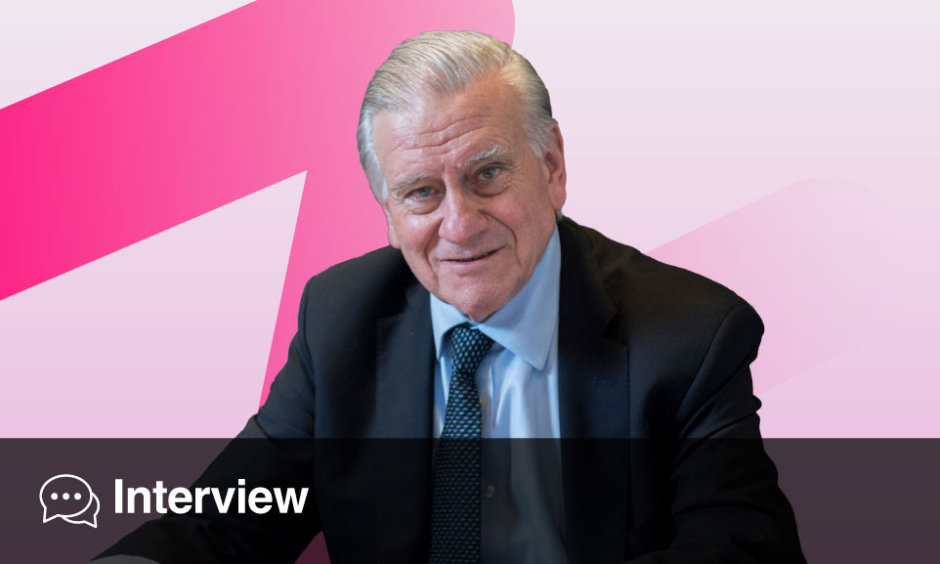
Valentín Fuster | General Director, Centro Nacional de Investigaciones Cardiovasculares Carlos III (CNIC), Madrid, Spain; Physician-in-Chief, Mount Sinai Medical Center, New York, USA
Citation: EMJ Cardiol. 2026;14[1]:104-107. https://doi.org/10.33590/emjcardiol/HW1MHD76

As a long-standing contributor to the global cardiology community, what makes the annual European Society of Cardiology (ESC) Congress such an important platform for advancing cardiovascular science and patient care?
Historically, this Congress has become increasingly better over the years, and attendance has continued to grow, which already tells you it is successful.
At the same time, there is another important aspect: it is the first major meeting of the academic year in Europe. People arrive very motivated and excited, bringing new scientific findings and perspectives. It is a very attractive meeting and has been very successful over the years, improving continuously as time moves forward.
What aspects of the ESC Congress 2026 are you particularly looking forward to, such as scientific sessions, emerging technologies, or broader discussions about healthcare delivery?
At this moment, I am interested in understanding health throughout life. We have been dealing with disease for a long time, and very successfully, but now we need to understand health and how to prevent disease.
To me, this involves the same science that we have applied to disease. It involves genetics, imaging, AI, and molecular biology. Let us understand health so that we can prevent disease. This is my main interest and, if you think about it, it involves the whole cardiovascular field, including education.
Prevention has to be preceded by an understanding of health at the scientific level. It is not just prevention. We need to understand what truly leads to health. My view is that the scientific tools we have used to study disease should now be focused much more on that.
Despite remarkable scientific progress, cardiovascular disease remains the leading cause of death worldwide. What do you see as the biggest barriers preventing us from translating evidence into population-level improvements in health?
Preventing cardiovascular disease is very difficult.
When we ask why cardiovascular disease continues to be the leading cause of death despite all the advances, I think we are dealing with balancing two sides. On one side is the world of consumption, and on the other is the world of personal decision-making.
The problem is that the world of consumption has been winning.
In my view, understanding health better, recognising that quality of life should be a major priority, and educating people from childhood on these issues would serve us much better in addressing cardiovascular disease as the leading cause of death.
We have a problem with the world we live in. The question is whether we can create different priorities within ourselves. That is the key, scientifically, educationally, and otherwise.
The concept of the cardiovascular polypill has been closely associated with your work. Looking at the evidence available today, how do you see its role evolving in routine clinical practice worldwide?
One of today’s major problems is adherence to medication in a world that often pulls people in different directions. The polypill originated around 15 years ago when I began working on trying to simplify treatment, initially for patients who had experienced myocardial infarction and who required multiple medications.
Combining these medications into a single pill has been shown in the SECURE trial1 to work. It is also less expensive than taking all of the medications separately.
The question now is how we implement this worldwide. That process has begun, but it takes time; adoption is increasing in Europe and Latin America, whereas broader implementation in places such as the USA and Australia is still needed.
The future is simplicity, which is naturally attractive to us as human beings. The polypill started with myocardial infarction, but we are now moving into cerebrovascular disease and other areas as well.
You have worked extensively across Europe and the USA. Are there any lessons that different healthcare systems could learn from one another in improving cardiovascular prevention and care?
Twenty years ago, when we began the National Centre for Cardiovascular Research (CNIC), Madrid, Spain, the differences between the USA and Europe were very significant at many levels. I would say that the USA was somewhat ahead in scientific development at that time. Today, however, the gap is becoming smaller and smaller. I travel frequently between Madrid and the USA, and I can see that, scientifically speaking, the differences are now much less pronounced.
Science, healthcare research, and education in Europe are advancing very rapidly, and I do not see major differences today.
My prediction is that over the next 10–15 years, healthcare delivery in the USA will move much closer to the European model. I feel that both systems are already converging scientifically, and healthcare delivery will likely follow.
Disease is becoming very expensive to manage, and this reality itself pushes systems towards better healthcare delivery.
As General Director of the CNIC, what would you say the institution’s main priorities are and what goals are you currently working towards in terms of advancing cardiovascular science?
When I was given the opportunity to return to Spain, where I was born, the original objective was to connect basic science with clinical application, and, ultimately, with society.
At that time, there was a separation between basic scientists, clinicians, and clinical investigators. I believe we have successfully addressed much of that challenge. Today, the centre has nearly 400 investigators, and basic scientists work together with clinical investigators.
As a driving force, I feel very satisfied with what has been achieved.
Our ultimate goal is health, as I continue to say. The key question is: can we enhance health through science?
Over the past 20 years, we have moved from basic science to clinical application, and now towards health itself. It is a very exciting evolution.
At the ESC Congress 2026, you will be participating in the session ‘Fireside with the Legends’. What does being considered one of the field’s ‘legends’ mean to you personally?
To me, ‘legend’ is a definition given by society. Frankly, I feel that I have simply done the best I could with the abilities I was given and with the help of great mentors.
You need motivation to do what you truly enjoy. You also need energy. People are born with different levels of energy, but it is crucial. Most importantly, your motivation becomes much stronger when your goal is to help other people.
That is very different from ambition. Ambition often involves helping yourself.
For family reasons, and thanks to the mentorship and other influences I had, I always tried to do the best I could, with motivation, energy, and a desire to be helpful. Being helpful means mentoring young people, identifying those who have the potential to contribute to society, and helping them develop.
I cannot really define what a legend is. I can only tell you what my driving forces have been. I feel we have a responsibility to give back to society, which has been generous to us.
You’ve spoken about the importance of mentorship throughout your career. Having benefited from great mentors yourself and gone on to mentor generations of clinicians and researchers, what advice would you offer to early-career cardiologists seeking to build meaningful and impactful careers?
When I meet young people who want to become cardiologists, investigators, etc., there are four things I emphasise.
First, you reach a stage in society where you are obliged to give rather than constantly receive. At that point, your responsibility is to be creative and contribute, rather than simply criticise.
Second, you need to understand your talents. This is where mentors are essential. Young people often think they can be their own mentors, but that is a mistake. Even at my age, I still have two mentors. A mentor helps you identify your true talents. You should invest in those talents rather than in ambitions that may not align with them.
The third thing is teamwork. Society has changed. We are all part of a larger engine, and we must learn to work with other people.
Fourth, you need resilience. Life is not easy for anyone. If you expect everything to go positively all the time, you are mistaken. You must learn how to overcome difficulties, both professionally and personally.
These are the four principles I discuss with young people. Above all, it is crucial to recognise your talent and invest in it, the second point I mentioned.
If you could identify one area of cardiovascular research that deserves greater attention from the global medical community, what would it be and why?
Twenty years ago, when I was creating my foundation, three words came to mind: science, health, and education.
Science is fundamental because we need the basic principles that drive discovery. Health has become increasingly important because I am convinced that, after studying disease, we should also study health itself.
Today, however, I am very focused on education.
Part of that is mentorship, but an even larger issue is educating children. If we truly want to reduce cardiovascular disease as the world’s leading killer, we must start during childhood.
At the moment, we are working with approximately 50,000 children around the world on programmes focused on health education. We are also working closely with the American College of Cardiology (ACC) on this effort.
As I have progressed through my career, I have realised more and more that we have not paid enough attention to educating children. We often discuss prevention with adults, but by adulthood people are already far along their path and less likely to change. Children listen.
So, while science and health remain essential, education is becoming increasingly critical in my view.
How can we better educate children to support cardiovascular disease prevention?
This idea is scientifically driven.
Children have fewer receptor pathways developed than adults, and what you teach them is stored and carried forward into adulthood. When we look back on our own lives, we can see how crucial the first 10 years were. Parents, schools, friends, and our broader environment all helped shape who we became.
As adults, we are heavily influenced by our childhood experiences. So why not use childhood to teach about health and make it a priority?
The goal is to help children reach adulthood already valuing health as part of their lives.
We currently have many projects focused on this area and are continually publishing our findings. I am very hopeful that this approach will make a contribution.
One issue is that there is no subject called ‘health’ in primary school systems around the world. It is largely absent.
We have recently completed a book designed for school systems that focuses specifically on health and encourages children to make it a priority. That reflects where our thinking is today. We need to pay much more attention to children and education because we believe it can have a significant impact on cardiovascular disease prevention.
Finally, when you look back on your career, what legacy would you most hope to have left on cardiovascular medicine and the patients it serves?
Frankly, I am not looking for a legacy.
What I hope is that I have contributed, even if only a very tiny small amount, to improving the world we live in.
The foundation we created reflects that progression: starting with science, applying science clinically, extending it to society through health, and now focusing on education.
I would not describe it as a legacy. I would prefer to think of it as contributing to a step-by-step process that helps create a healthier society.
If, at the end of my life, I could say that I contributed even half a millimetre to a better world, that would be enough for me. That’s all I would ask for.
Reference
1. Castellano JM et al.; SECURE Investigators. Polypill strategy in secondary cardiovascular prevention. N Engl J Med. 2022;387:967-77.