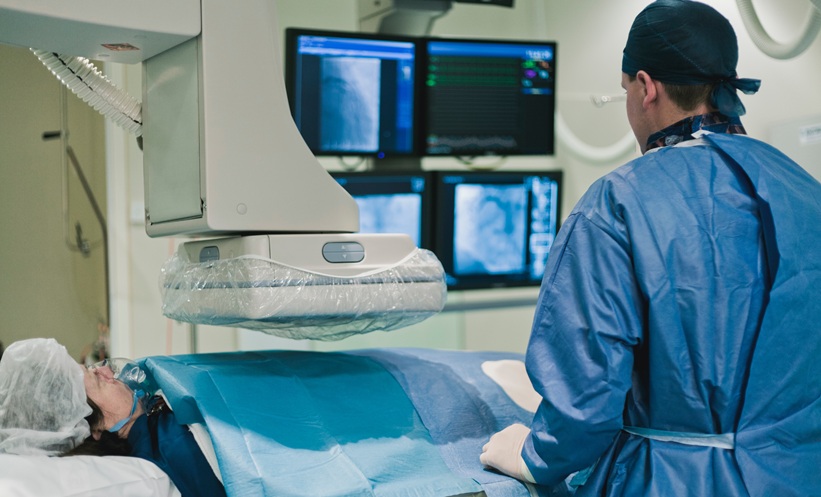
ROUTINE cardiovascular risk assessment during coronary angiography could identify previously undiagnosed conditions and enable earlier treatment, according to a new prospective study.
Researchers found that many patients with coronary artery disease (CAD) had cholesterol and other modifiable risk factors outside recommended targets, highlighting an opportunity to improve preventative care during cardiac catheterisation.
Identifying Cardiovascular Risk During Angiography
The Catheterisation Laboratory Evaluation of Atherosclerosis Risk factors (CLEAR) study enrolled 585 consecutive patients undergoing day-case coronary angiography at Tallaght University Hospital, Dublin, Ireland, between 2020 and 2022.
Researchers collected information on lipid profiles, glycated haemoglobin (HbA1c), blood pressure, smoking status, and existing medications.
Blood test results were made available to clinicians on the day of the procedure, allowing them to identify patients with risk factors outside European Society of Cardiology guideline targets and initiate appropriate interventions.
Of the 585 participants, 497 (85%) were found to have CAD, ranging from minor plaque burden to severely narrowed coronary arteries that required intervention.
Most Patients Had Cholesterol Above Target
Among patients with CAD, 77% had low-density lipoprotein (LDL) cholesterol above the recommended target of 1.4 mmol/L, while 70% had non-high-density lipoprotein cholesterol above target.
Additionally, 19% were active smokers, and 14% had HbA1c levels above the recommended threshold.
The assessment also identified 18 patients with CAD who had previously undiagnosed diabetes.
Of these, 16 (89%) were started on glucose-lowering medication on the day of their procedure and referred for specialist diabetes care.
The findings demonstrate how routine assessment during angiography can identify both inadequately controlled cardiovascular risk factors and previously unrecognised metabolic disease.
Earlier Intervention in the Catheterisation Lab
Among patients with CAD and LDL cholesterol above target, 54% received an intervention on the day of angiography, including initiation or adjustment of lipid-lowering treatment.
Interventions were also recorded in 56% of patients with non-HDL cholesterol above target, 44% of active smokers, and 31% of patients with elevated HbA1c.
The frequency of lipid-lowering interventions increased during the study, suggesting that integrating risk assessment into routine catheterisation procedures may encourage changes in clinical practice.
However, the study was conducted at a single centre and did not include a control group or assess long-term cardiovascular outcomes.
The researchers conclude that incorporating systematic risk-factor assessment into coronary angiography could provide an opportunity for earlier intervention, potentially helping to reduce the progression of atherosclerotic disease.
Reference
Cunneen B et al. Let’s be CLEAR: Cath Lab Evaluation of Atherosclerotic Risk is a disease modifying opportunity. Br J Cardiol. 2026;33:115–8. DOI:10.5837/bjc.2026.043.
Featured image: Image Supply Co on AdobeStock