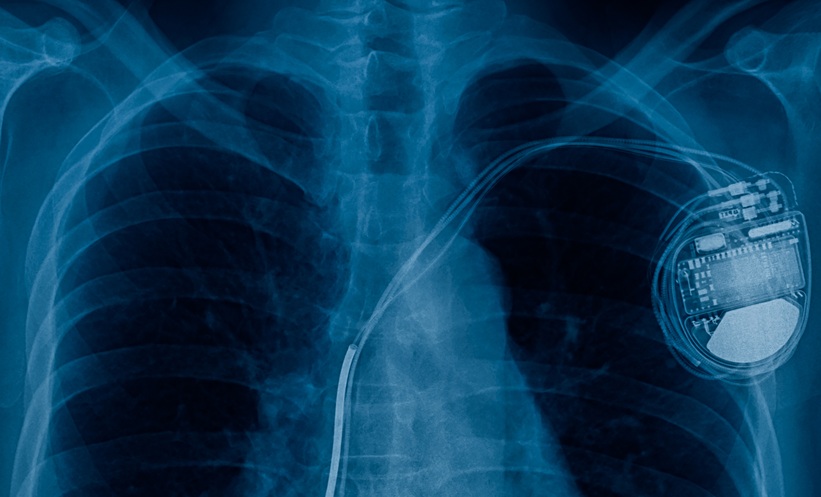
EARLIER IMPLANTATION of cardiac contractility modulation (CCM) therapy was associated with better outcomes in selected patients with symptomatic chronic heart failure, an observational registry study suggests.
Researchers compared patients receiving CCM relatively soon after a qualifying heart failure diagnosis with those receiving it later. Both groups experienced improvements in functional status and left ventricular function, while earlier implantation was associated with additional advantages in survival and heart failure hospitalisations.
The findings raise questions about the timing of device therapy, but do not establish that earlier implantation itself caused the differences observed.
Comparing Earlier and Later Treatment
The analysis used the Mannheim Cardiac Contractility Modulation Observational Registry, known as MAINTAINED.
It included 131 CCM recipients aged 70 years or younger at implantation. Patients were grouped according to the interval between their first diagnosis of heart failure meeting the study’s CCM criteria and device implantation.
The earlier group comprised 50 patients implanted within 13 months, while the later group included 81 patients implanted at 13 months or beyond.
Average time to implantation differed substantially: approximately 5.9 months in the earlier group compared with 92 months in the later group.
Researchers assessed survival, New York Heart Association functional class, left ventricular ejection fraction and heart failure-related hospitalisations for up to 60 months.
Improvements in Both Groups
Functional status improved in both groups. Average New York Heart Association class fell from approximately 3.0 to 2.0 among earlier recipients and from approximately 3.0 to 2.25 among later recipients.
Left ventricular ejection fraction also improved in both groups, with a larger numerical increase reported among patients receiving earlier implantation.
Reported mean survival was 55.2 months in the earlier group compared with 52.8 months in the later group. The researchers also recorded fewer heart failure hospitalisation events among earlier recipients, at 39 compared with 110 in the later group.
These figures describe hospitalisation events, which may include repeated admissions, rather than the proportion of individual patients admitted.
Timing Requires Further Investigation
The results suggest that the interval before CCM implantation deserves further study. However, the observational design means patients were not randomly assigned to earlier or later treatment.
Differences in disease duration, patient characteristics or treatment history could therefore contribute to the outcomes. The unequal group sizes also need to be considered when interpreting raw hospitalisation counts.
The findings apply to the selected registry population, including its age restriction, and should not be treated as proof of benefit for every patient with heart failure.
The authors conclude that CCM may improve functional status and ventricular remodelling at either stage, with earlier implementation potentially offering additional benefits that require further evaluation.
Reference
Yuecel G et al. Timing of cardiac contractility modulation therapy implementation. Clinical Cardiology. 2026;49(11):e70507.